Rongsheng Service World Wide

Outstanding Services ServicesServices

Sincere service to every customer.

Exclusive Customer Profile

Every customer's question will be recorded. Establish exclusive service information for customers.

Problem Analysis

Targeted analysis of customer working conditions and product requirements. Initially construct solutions and product quotations.

Quick Response

After fully preparing the product quotation, we will give you the fastest and accurate response.

Rongsheng Service World Wide

Outstanding Features FeaturesFeatures

Customers satisfaction is the thing that we are trying to accomplish.

Business Growth

For customers to reduce production costs, to improve their economic efficiency.

Service Network

Our refractory materials have served customers in more than 60 countries around the world.

Products Performance

Refractory bricks and monolithic refractories have excellent performance.

Safe Production

Rongsheng Kiln Refractory has get the Certificate Of OHSAS conforms & EMS conforms.

Product Packaging

Generally, wooden pallets are used for refractory bricks, and 1-ton packages are used for monolithic refractories.

24X7 Online Service

Free online consultation and obtain the latest prices of Rongsheng refractory products.

Rongsheng Service World Wide

Recently Articles ArticlesArticles

High-Purity Electrofused Mullite Castable Precast Refractory for Steel Rolling Heating Furnaces

The working conditions of certain critical components of industrial kilns, such as high-temperature burner bricks, burner brick upper crossbeams, and the furnace bottom of steel rolling mills, are extremely harsh. The working temperatures of burner bricks and burner brick upper crossbeams often exceed 1500℃, subjecting them not only to high-temperature melting damage but also to the impact of high-speed flame gas flow, their own weight, and the load-bearing capacity. The erosion of iron oxide scale and molten slag mainly damages the furnace bottom of steel rolling mills. In industrial furnaces with frequent start-ups and shutdowns, these components are subjected to stress damage caused by rapid heating and cooling.

Only refractory materials that are both resistant to high temperatures and possess excellent thermal shock stability can meet these requirements. Phosphate castables, high-alumina cement castables, and refractory plastics failed to achieve the desired results. After repeated experiments, high-purity electrofused mullite castable precast refractory achieved satisfactory results.

Theoretical Basis for Material Selection of Precast Refractory Castables in Steel Rolling Heating Furnaces

Why is high-purity electrofused mullite chosen as the main raw material? This is determined by the properties of mullite. Mullite is the only stable compound in the Al₂O₃-SiO₂ binary system. From the Al₂O₃-SiO₂ phase equilibrium, it can be seen that the composition of mullite is between 3Al₂O₃·2SiO₂ and 2Al₂O₃·SiO₂. The composition (by weight) of mullite (A₃S₂) itself is 72.8% Al₂O₃ and 28.2% SiO₂. The composition of the saturated solid solution is 78% Al₂O₃ and 22% SiO₂. That is, the mullite solid solution can contain up to 6% Al₂O₃. Compare the properties of solid solutions in this range below, and the typical composition of mullite 3Al₂O₃·2SiO₂. It has a high melting point (1910℃), high hardness, low high-temperature creep value, and good resistance to chemical corrosion.

Sources of Mullite Raw Materials

Natural mullite is rare among natural minerals. Only extremely small quantities of β-mullite and γ-mullite have been found, and their production is far from meeting the large-scale needs of production. Furthermore, the veins are generally very thin, difficult to mine, and the purity is often insufficient, making them rarely usable.
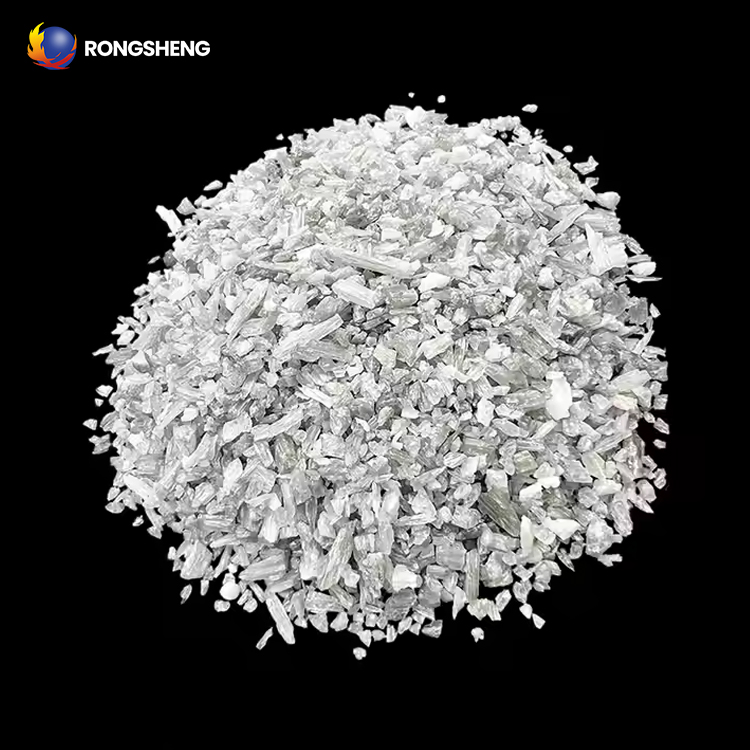
Fused Mullite Refractory Raw Material

Free Quote

    Free Quote

    Your Name (required)


    Your Email (required)

    Your Phone

    Required Products (required)

    Enquiry Information

    There are two methods for the artificial synthesis of mullite: ① sintering method; ② electrofusion method.

    The sintering method involves finely grinding the raw materials required for mullite synthesis, forming them into pellets, and then calcining them at high temperatures in a kiln. Impurities inevitably enter during the production process, and it is difficult to reach the ideal high temperature during calcination, resulting in incomplete reactions, poor crystallization, and poor high-temperature stability.

    The electrofusion method for producing mullite involves strictly mixing raw materials such as industrial alumina, sintered high-quality bauxite, high-purity silica, and silica in a specific ratio, then loading them into an electric arc furnace. After melting at temperatures above 1850℃, the mixture is slowly cooled and crystallized. Because an electric arc is used as the heat source, very few impurities are introduced during the electrofusion process. As long as the purity of the raw materials is controlled, the product quality is relatively easy to manage, and high-purity electrofused mullite can be produced. The quality of high-purity electrofused mullite raw materials is the guarantee of the quality of the finished product.

    Performance of High-Purity Electrofused Mullite Castable Precast Refractory

    The main characteristic of high-purity electrofused mullite castable Precast Refractory is its excellent thermal shock resistance. Their thermal shock resistance is significantly better than that of other refractory materials. However, their compressive strength is not high, reaching only 51 MPa, while their thermal shock resistance is several times that of other refractory materials. This may be because the mullite crystal phase forms primary bonds at 850℃, producing a needle-like interstitial layer, which blocks the fracture layer that occurs within the Precast Refractory during surface water cooling tests. Therefore, high-purity electrofused mullite castable Precast Refractory can withstand thermal shock damage when used in steel rolling furnaces.

    How to Improve Thermal Shock Resistance in Corundum-Mullite Castables?

    Corundum-mullite castables are characterized by high load softening temperature and good creep resistance among high-temperature refractory materials. However, pure corundum products have a relatively large coefficient of thermal expansion, resulting in less than ideal thermal shock resistance. Pure mullite products, on the other hand, have a smaller coefficient of thermal expansion and better thermal shock resistance.
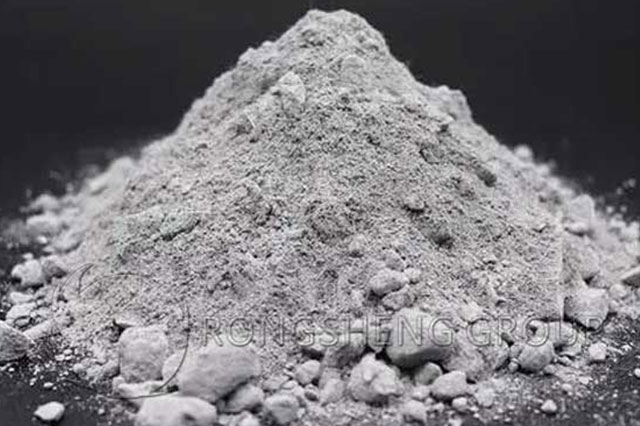
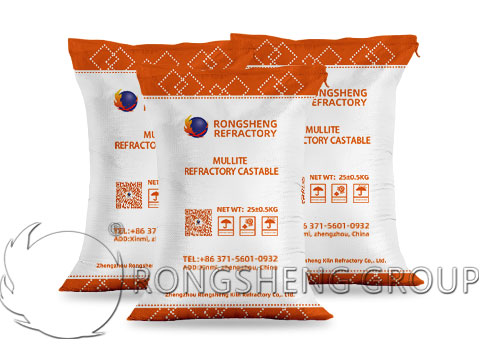
    Rongsheng Corundum Mullite Refractory Castable
    Rongsheng Corundum Mullite Refractory Castable

    Free Quote

      Free Quote

      Your Name (required)


      Your Email (required)

      Your Phone

      Required Products (required)

      Enquiry Information

      Corundum-mullite castables are composed of mullite and corundum phases. When the mass ratio of mullite to corundum is 75:25, it coincides with the eutectic melting point at 1840℃ in the SiO2-Al2O3 phase. Therefore, a mullite to corundum ratio of 75:25 is optimal for improving thermal shock resistance. This is because mullite has a lower coefficient of thermal expansion than corundum, and the coefficient of thermal expansion in composite materials is always greater for the former than the latter. The thermal expansion mismatch between mullite and corundum within the composite material leads to microcracks, increasing the material’s fracture absorption energy and thus improving the castable’s thermal shock resistance.

      Using a low eutectic point aggregate composition can negatively impact the creep resistance of castables, as the creep rate is minimized at this point. When the mullite to corundum ratio is approximately 75:25, the aggregate significantly affects the product’s coefficient of thermal expansion and thermal expansion mismatch. When microcracks develop in the castable, they propagate under thermal shock stress, simultaneously causing transgranular fracture of the aggregate and consuming a large amount of energy. This inhibits the propagation of the main crack and also affects the thermal shock stability of the corundum-mullite castable.

      Of course, corundum castables also exhibit good thermal shock resistance. This is because the different aggregate-to-binder ratios lead to variations in thermal shock stability. The coefficient of thermal expansion of corundum-mullite castables significantly impacts thermal shock stability; microcracks caused by thermal expansion mismatch can actually improve the castable’s thermal shock resistance.

      In summary, a mullite-to-corundum ratio of 75:25 in the process mix provides the best thermal shock stability. An apparent porosity of around 20% is highly beneficial for the thermal shock stability of castables. Therefore, controlling the apparent porosity of corundum-mullite castables to around 20% further enhances thermal shock stability.

      Rongsheng Refractory Materials Manufacturer offers environmentally friendly, professional, fully automated monolithic refractory material production lines, specializing in the production of integral refractory castable linings for high-temperature industrial furnaces. Our newly commissioned factory also specializes in producing various precast refractory components. If your industrial furnace requires lining material replacement or lining repair, Rongsheng’s professional technical team can customize a lining material solution based on the actual operating conditions of your industrial furnace. Contact Rongsheng for a free quote and solution.
        Get Free Quote

        Your Name (required)

        Your Email (required)

        Your Phone

        Required Products (required)

        Enquiry Information

        Refractory Configuration and Optimization for a 5000t/d Clinker Line (3)

        Refractory materials are developing towards environmental friendliness, strong adaptability, and long service life. Rongsheng Refractory Materials Factory supplies refractory materials for kilns used in 5,000 t/d clinker production lines. Rongsheng Refractory Materials Manufacturer leverages its innovative capabilities in refractory castables while focusing on customer needs, aiming to provide high-quality, long-life refractory lining materials for high-temperature industrial furnaces. Contact Rongsheng for free solutions.

        Refractory Lining Configuration for a 5,000 t/d Cement Clinker Production Line

        This article focuses on the refractory configuration for a 5,000 t/d cement clinker production line. The cement firing system involves a complex chemical process from raw meal to clinker, going through stages such as preheating in the preheater, decomposition in the calciner, high-temperature calcination, and cooling. The refractory materials used in each stage must be adapted to this process.

        Analysis of Certain Defects in the Current Configuration and Improvement Plans

        (1) Preheater System

        1. Severe scaling at the smoke chamber and precalciner necking, impacting ventilation.
          • Cause: The production line was designed to produce 5,000 tons per day, but actual production typically reached 5,500 tons, resulting in an overload of over 10%. This increased the kiln’s thermal load and the likelihood of scaling at the kiln tail. Furthermore, the increased use of anthracite and low-quality coal resulted in less than ideal combustion, increasing the likelihood of incomplete combustion and the rate of scaling. In short, scaling can be caused by a variety of factors, including operational factors, fuel, and raw material issues. In severe cases, it can lead to the cessation of rotary kiln operation.
          • Improvement Plan: In actual production, scaling at the kiln tail is not limited to the smoke chamber, but can sometimes extend to the precalciner necking and the fifth-stage drum discharge chute. Therefore, it is recommended to expand the scope of anti-scaling castables, such as using anti-scaling castables throughout the entire section below the fifth-stage drum discharge chute.
        Anti-Scaling Refractory Castable
        Anti-Scaling Refractory Castable

        Free Quote

          Free Quote

          Your Name (required)


          Your Email (required)

          Your Phone

          Required Products (required)

          Enquiry Information

          1. The castables on the top of the cyclone and decomposition furnace are prone to falling off, posing a production safety hazard.
            • Causes: Poor anchorage and welding quality, design flaws, and excessively rapid cooling can all cause the top castables to fall off, resulting in numerous fatalities on the production line.
            • Improvement Solution: Correct the design flaws, eliminate the calcium silicate board interposition, and use only lightweight castables. Use ceramic anchors and anchor bricks, etc.
          1. The kiln tail tongue is prone to damage.
            • Cause: Due to the erosion of high-temperature materials and corrosion from the kiln tail flue gas, the steel plate under the kiln tail tongue is easily damaged, which in turn damages the kiln tail tongue, significantly impacting kiln operation.
            • Improvement Solution: Use prefabricated components and eliminate the bottom steel plate to extend service life.
          1. Small-scale repairs are labor-intensive and time-consuming.
            • Cause: After two years of operation in a new kiln, some refractory materials in the preheater system may be partially damaged. Because the preheater is hollow, scaffolding must be erected during construction, which reduces maintenance time.
            • Improvement plan: Using spray paint for construction can save time and energy, and should be promoted vigorously.

          (2) Rotary Kiln System

          1. The kiln mouth castable is easily damaged, resulting in a long construction time.
            • Cause: Because the kiln mouth is prone to deformation, the castable is currently cast as a single piece. However, the casting cycle is long, and the baking time may be insufficient. As a result, the kiln mouth refractory cycle is significantly lower than that of other parts of the kiln.
            • Improvement: Using plastic castables eliminates the need for formwork, saving construction time. Curing and baking are unnecessary, making it suitable for routine maintenance.
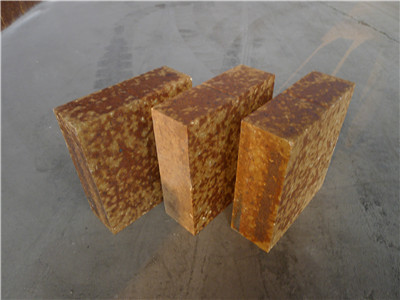
          Magnesia Aluminum Spinel Bricks
          Magnesia Aluminum Spinel Bricks

          Free Quote

            Free Quote

            Your Name (required)


            Your Email (required)

            Your Phone

            Required Products (required)

            Enquiry Information

            1. Firing zone magnesia-chrome bricks does not meet environmental requirements.
              • Cause: Magnesia-chrome bricks react easily with sulfur in cement rotary kilns, generating some toxic hexavalent chromium ions, which can cause water pollution. Consequently, European countries have imposed very strict restrictions on the production and use of magnesia-chrome bricks.
              • Improvement: Using dolomite bricks, magnesia-iron spinel bricks, and magnesia-alumina spinel bricks.
            1. Spinel bricks have a large thermal conductivity, causing the kiln body temperature to rise.
              • Cause: Spinel bricks are currently used near the No. 2 wheel rim and have a good service life. However, their main drawback is their high thermal conductivity, which increases the drum temperature and poses a risk to kiln operation. This also results in significant heat loss.
              • Improvement: Use high-quality silica-molybdenum bricks.
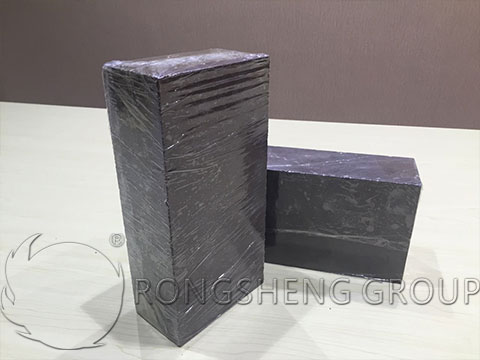
            Rongsheng Silicon Carbide Mullite Bricks
            Rongsheng Silicon Carbide Mullite Bricks

            Free Quote

              Free Quote

              Your Name (required)


              Your Email (required)

              Your Phone

              Required Products (required)

              Enquiry Information

              (3) Short Burner Head Life

                • Cause: Due to the harsh operating environment of the coal injection pipe, such as large temperature differences, a thin refractory layer, a strong reducing atmosphere, and high-temperature radiation, the head has a short service life.
                • Improvement: The head is prefabricated and manufactured in advance, with adequate curing and baking, for optimal performance.

              (4) The top castable of the kiln hood is prone to partial detachment

              Cause: See the top of the preheater.

              (5) Cooler System

              1. Susceptible Wear of the Low Wall
                • Cause: The high-temperature clinker exiting the rotary kiln is directly rubbed against the low wall during cooling, and the alternating contact between hot and cold air causes rapid wear of the low wall.
                • Improvement: Use highly wear-resistant castables.
              1. Susceptible detachment of the top castable
                • Cause: See the top of the preheater.

              (6) Tertiary air duct bends are prone to wear.

                • Cause: The hot air from the kiln head cooler contains a large amount of clinker particles, which rub against the castable at the bend. Typically, castables only last three months.
                • Improvement: Use highly wear-resistant castables.


              (The end)

                Get Free Quote

                Your Name (required)

                Your Email (required)

                Your Phone

                Required Products (required)

                Enquiry Information

                Refractory Configuration and Optimization for a 5000t/d Clinker Line (2)

                Refractory materials are developing towards environmental friendliness, strong adaptability, and long service life. Rongsheng Refractory Materials Factory supplies refractory materials for kilns used in 5,000 t/d clinker production lines. Rongsheng Refractory Materials Manufacturer leverages its innovative capabilities in refractory castables while focusing on customer needs, aiming to provide high-quality, long-life refractory lining materials for high-temperature industrial furnaces. Contact Rongsheng for free solutions.

                Refractory Lining Configuration for a 5,000 t/d Cement Clinker Production Line

                This article focuses on the refractory configuration for a 5,000 t/d cement clinker production line. The cement firing system involves a complex chemical process from raw meal to clinker, going through stages such as preheating in the preheater, decomposition in the calciner, high-temperature calcination, and cooling. The refractory materials used in each stage must be adapted to this process.

                (3) Kiln Head Hood

                The kiln head hood connects the rotary kiln to the cooler and serves as the inlet for kiln air and tertiary air. Air pressure is extremely unstable, making positive pressure a common feature of the entire kiln system. Gas temperatures range from 800-1300°C, with significant temperature fluctuations. Furthermore, the impact of clinker particles is intense, making the top and inlet areas susceptible to damage. Therefore, thermal shock resistance and wear resistance should be considered when selecting materials.

                1. High-Alumina High-Strength Wear-Resistant Castable

                Amount: 180 tons

                Technical Performance:

                Application Location: Round top

                1. Calcium Silicate Board

                Amount: 7.2 tons

                Technical Performance: See above

                Application Location: All refractory linings

                (4) Burner

                Because the burner is located in the high-temperature gas between the kiln mouth and the cooler, and the pulverized coal burns near the burner head, it is significantly affected by the high-temperature radiation and reducing atmosphere. The chemical composition of coal significantly influences combustion, making the burner head plate susceptible to damage. The refractory material used in this area requires high refractoriness and wear resistance, as well as enhanced thermal shock stability and spalling resistance.

                RS Mullite Castable Manufacturer
                RS Mullite Castable Manufacturer

                Free Quote

                  Free Quote

                  Your Name (required)


                  Your Email (required)

                  Your Phone

                  Required Products (required)

                  Enquiry Information

                  1. Mullite Castable

                  Quantity: 5 tons

                  Technical Performance:

                  Application Area: Burner head hood where it enters the kiln

                  (5) Rotary Kiln

                  As a rotating drum that calcines raw materials into clinker at high temperatures, the lifespan of its refractory materials often determines the production cycle, making it a key and challenging aspect of refractory material management in cement plants. After preheating and approximately 90% decomposition, the raw material enters the kiln from the kiln outlet, where its temperature gradually rises to over 1450°C, completing the calcination process and entering the cooler. A 74-meter rotary kiln can be broadly divided into five thermal stages. Because the refractory materials within the rotary kiln must be fixed to the continuously rotating drum, the strength of the refractory bricks must not fall below a certain threshold due to the following factors:

                  1. There is a certain degree of slippage or sliding tendency between the refractory bricks and the shell, generating friction. The refractory bricks must possess a certain strength to resist damage from this friction.
                  2. A rotary kiln is not an absolutely rigid structure when viewed axially. Because the rotary kiln drum has a certain curvature between its support points, it experiences periodic bending in sync with its rotation during operation. Because the three-roller rotary kiln utilizes a statically indeterminate structure, the different expansion rates of each roller group due to temperature differences can cause deviations in the kiln shell’s coaxiality, generating significant additional loads. Furthermore, the 4% inclination of the kiln shell also generates downward stress during rotation.
                  3. The shell is not a perfect circle in the radial direction, but rather an elliptical shape. Deformation is greatest at the wheel belts, and this deformation places additional pressure on the refractory bricks. Due to the kiln’s own weight and rotation, the kiln undergoes periodic elliptical deformation, synchronized with the rotation, placing alternating loads on the refractory bricks. When this deformation or elliptical deformation reaches a certain value, it can exceed the internal stresses in the refractory bricks, causing premature failure. Therefore, refractory materials with insufficient strength must be used in rotary kilns; they must meet basic strength requirements.
                  4. In addition to the aforementioned mechanical stresses, the refractory materials within the kiln are also subject to the effects of high-temperature gases and liquid clinker. It can be roughly divided into five or six working zones, which require different refractory materials for laying.

                  Refractory Configuration for a 5,000-ton Rotary Kiln:

                  1. Mullite Castable

                  Usage: 15 tons

                  Technical Performance: See above (RT-70MC)

                  Applicable Area: 0-0.6 m

                  1. High-Abrasion-Resistant Bricks

                  Usage: 8 tons

                  Technical Performance:

                  Applicable Area: 0.6-1.6 m

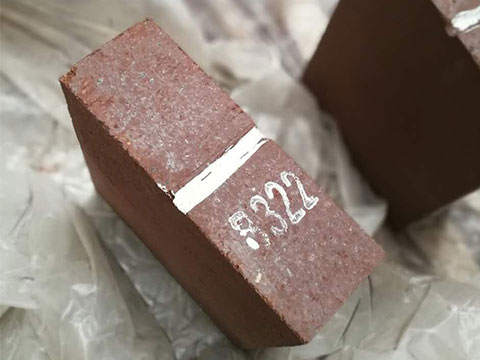
                  RS Direct Bonded Magnesia Chrome Bricks
                  RS Direct Bonded Magnesia Chrome Bricks

                  Free Quote

                    Free Quote

                    Your Name (required)


                    Your Email (required)

                    Your Phone

                    Required Products (required)

                    Enquiry Information

                    1. Direct-Bonded Magnesia-Chrome Bricks

                    Usage: 340 tons

                    Technical Performance:

                    Applicable Area: 1.6-25 m/35-45 m

                    Spinel Refractory Bricks
                    Spinel Refractory Bricks

                    Free Quote

                      Free Quote

                      Your Name (required)


                      Your Email (required)

                      Your Phone

                      Required Products (required)

                      Enquiry Information

                      1. Spinel Bricks

                      Usage: 99 tons

                      Applicable Area: 25-35 m

                      1. Anti-Spalling Bricks

                      Usage: 242 tons

                      Applicable Area: 45-73.2 m

                      1. High-Alumina Castables

                      Usage: 8.5 tons

                      Technical Performance: See above

                      Applicable Area: 73.2-74 m

                      (6) Cooler

                      The cooler uses air to cool the hot clinker leaving the kiln from 1400°C to below 80°C. Due to the large temperature difference between the front and rear sections, the most vulnerable parts are concentrated in the front wall and the lower wall. Furthermore, the overhanging beams at the interface with the kiln head are also susceptible to premature damage due to the erosion of high-temperature gases.

                      Grate coolers are stationary relative to the refractory shell, so insulation materials with low strength but low thermal conductivity can be used on the outer layer. The cooler’s inner surface must withstand thermal erosion and high-temperature abrasion caused by contact with high-temperature clinker at 300-1450°C, so the selected refractory materials must have strong wear resistance. Furthermore, the first stage cooler must also withstand high thermal loads.

                      Because the grate cooler has large vertical walls, the use of special anchoring refractory bricks is crucial when constructing the refractory brickwork to strengthen the connection between the bricks and the shell to prevent collapse of the vertical walls.

                      Currently, the most commonly used refractory castables are:

                      1. High-strength alkali-resistant castable

                      Usage: 20 tons

                      Technical properties: See above (RT-13NL)

                      Application: Section 3 and top

                      1. High-alumina castable

                      Usage: 106 tons

                      Technical properties: See above (RT-16)

                      Application: Section 2 and 3 side walls and parapet

                      1. High-heat high-alumina castable

                      Usage: 183 tons

                      Application: Cooler front wall and Section 1 parapet


                      (To be continued…3)

                        Get Free Quote

                        Your Name (required)

                        Your Email (required)

                        Your Phone

                        Required Products (required)

                        Enquiry Information

                        We work in partnership with all the high-temp Furnace Lining solutions

                        There are experienced refractory material technical teams to solve kiln lining problems.