Search for:
How Should the Raw Materials and Binders for Basic Refractory Gunning Mixes be Correctly Selected?

The use of basic refractory gunning mixes to repair steelmaking converters, electric arc furnaces, and ladles while they are in a hot state—thereby extending their service life—has become a widely adopted practice in the global steel industry. It serves as a highly effective technical measure for protecting furnace linings.
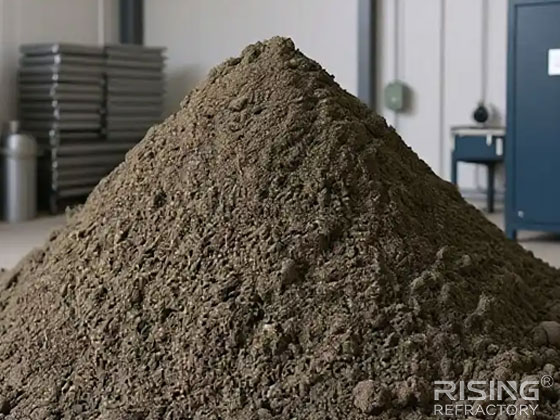
Basic Refractory Gunning Mixes

Free Quote

    Free Quote

    Your Name (required)


    Your Email (required)

    Your Phone

    Required Products (required)

    Enquiry Information

    Performance Characteristics of Gunning Mixes

    Gunning mixes are essential materials for extending the service life of furnace linings. In general, a gunning mix should possess the following basic properties:

    • (1) An adhesion rate of greater than 80%.
    • (2) No spalling or cracking of the gunned surface after the first heat of steel is tapped.
    • (3) A residual amount of at least 50% on the gunned surface after one heat of operation.

    High-quality gunning mixes must meet the following requirements:

    • (1) Uniform flow characteristics when passing through gunning equipment.
    • (2) Good adhesion, solidification, and hardening properties.
    • (3) Minimal rebound (material bounce-back).
    • (4) Favorable physical properties for the applied layer (high bulk density, low porosity, and high strength).
    • (5) Good sintering capability.
    • (6) Excellent refractory performance.
    • (7) Strong resistance to erosion.

    It is evident that the application performance (adhesion, sintering, etc.) and erosion resistance (slag resistance, wear resistance, etc.) of a gunning mix depend on the composition of the raw materials, the particle size distribution, and the properties of the binder system. Furthermore, the rate of rebound directly impacts economic efficiency.

    To obtain a high-performance gunning mix, its properties can be adjusted through three fundamental approaches:

    • (1) Careful selection of raw materials.
    • (2) Optimization of particle size distribution.
    • (3) Selection of an appropriate binder system.

    Main Raw Materials for Basic Gunning Mixes

    Basic gunning mixes are typically composed of MgO-based or MgO-CaO-based materials, with MgO-based compositions being the most common. To ensure that magnesia-based gunning mixes are both effective and economical, simply choosing the cheapest blend is rarely the best approach. High-quality magnesia-based gunning mixes, combined with modern application techniques, can significantly extend the service life of furnaces in the steel industry without compromising production capacity. Consequently, it is essential to select high-purity raw materials.
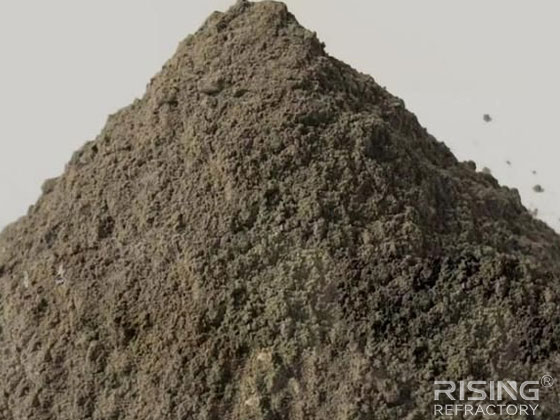
    Magnesia Refractory Gunning Mixes
    Magnesia Refractory Gunning Mixes

    Free Quote

      Free Quote

      Your Name (required)


      Your Email (required)

      Your Phone

      Required Products (required)

      Enquiry Information

      High-grade, phosphate-bonded magnesia gunning mixes generally utilize dead-burned magnesia with an MgO content of approximately 95%–97% and a high CaO/SiO₂ ratio. In cases where the CaO/SiO₂ ratio is low, additional CaO should be incorporated. Under these conditions, it is also critical to ensure that the total content of Fe₂O₃ and Al₂O₃—denoted as Σ(Fe₂O₃+Al₂O₃)—does not exceed 1.5%. For high-quality gunning mixes, this value should be kept below 1.0%.

      When using dead-burned magnesia with a CaO/SiO₂ ratio greater than 2—supplemented with CaO-rich dead-burned magnesia—to produce phosphate-bonded gunning mixes, hydration can occur, potentially leading to the spalling of excessively thick gunning layers. Appropriate preventive measures must therefore be taken; surface coating (applied to MgO-CaO grains or CaO-rich dead-burned magnesia) is a particularly effective technique.

      High-quality gunning mixes require high-calcium additives to facilitate the formation of high-melting-point phases (such as calcium phosphates or dicalcium silicates), while preventing the creation of low-melting-point silicates. These high-calcium additives, which react with the binder, are most effective when distributed in the form of fine powder.

      Gunning mixes designed for long service life should contain free CaO (fCaO) in addition to high-purity raw materials. By incorporating extra calcium, the basicity of infiltrating slag is increased, which helps prevent the formation of low-melting-point silicates caused by the penetration of other phases, thereby extending the service life of the gunned layer.

      Theoretically, the additional fCaO is typically introduced in the form of fine sintered dolomite powder. However, given that this material is prone to hydration, the resulting volume expansion can lead to the failure of the gunning layer. Therefore, it is more appropriate to use an MgO-CaO aggregate containing approximately 20% free CaO (fCaO). In this type of MgO-CaO aggregate, the CaO is encapsulated by periclase, which imparts a relatively high resistance to hydration.

      Binders and Binder Combinations

      The selection of binders for basic hot-gunning mixes must meet the following requirements:

      • (1) Optimal adhesion, characterized by rapid hardening and solidification.
      • (2) Sufficient strength of the gunning mix throughout the entire temperature range in which chemical bonding is active.
      • (3) Minimal reduction in the slag-erosion resistance of the gunning mix caused by the binder.

      Typically, gunning mixes utilize chemical binders. Since these binders influence adhesion, they are required to stabilize the gunned layer as quickly as possible. Stabilization can be achieved either physically—by increasing the (apparent) viscosity of the fine-powder/water slurry between the particles—or chemically—by accelerating the solidification reaction. The amount of binder used should be sufficient to keep the gunned layer stable after drying and as the temperature rises, up until the point where sintering occurs, without significantly compromising the layer’s resistance to corrosion.

      Common binders include sodium silicate (water glass), phosphates, and composite systems based on these substances.

      1. Silicate Binders

      Silicates are used as binders in wet-gunning mixes, specifically in the form of water-soluble silicates (water glass). These are cost-effective and widely applicable—notably in the production of special steels (where phosphorus contamination of the molten steel must be avoided). Modern water glass formulations have been developed with optimized dissolution and solidification rates; for instance, using water glass with an SiO₂/Na₂O molar ratio of 2.7 as a binder yields excellent results.

      2. Phosphate Binders

      Compared to phosphates, silicates (water glass) offer inferior adhesion when used as binders for basic gunning mixes. Furthermore, they exhibit poorer high-temperature strength and thermal shock resistance, leading to limited durability (specifically, poor resistance to erosion by basic slags). This is particularly true when low-grade magnesia is used as the raw material. Extensive research and practical application data indicate that phosphate-based binders are the most ideal bonding systems for basic gunning mixes.

      3. Alkali-Silicate-Phosphate Binders

      Combining the two aforementioned types of binders results in an alkali-silicate-phosphate composite bonding system. Although this system sets relatively slowly, it yields high high-temperature strength by facilitating the formation of significant quantities of sodium-calcium silico-phosphate (a silicophosphate mineral phase) within the gunning layer. When used in basic oxygen furnaces (BOFs), gunning mixes employing this composite bonding system perform comparably to those using phosphate-based binders. However, this type of mix is ​​particularly well-suited for electric arc furnaces (EAFs), where the lining is subjected to rapid temperature fluctuations—conditions that are especially pronounced near water-cooled panels.

      4. Cement-Based Binders

      The primary drawbacks of basic gunning mixes that utilize cement-based binders are poor adhesion at high temperatures and inadequate volume stability during rapid heating. These issues can be mitigated by incorporating organic acids; the addition of an organic acid induces flocculation shortly after dispersion, thereby ensuring excellent high-temperature adhesion. Furthermore, the addition of small amounts of a dispersant and an anti-spalling agent can improve volume stability during rapid heating.

      Magnesia-based gunning mixes that use high-alumina cement as a binder adhere to the substrate in a plastic state. It can be inferred that when bonding occurs via a liquid-phase intermediate layer, a higher-viscosity layer offers greater resistance to shear stress; this enhances the material’s overall stress resistance and strengthens its bond with the substrate. Consequently, the gunning layer becomes more stable, ultimately resulting in superior durability. Such gunning mixes are particularly well-suited for the repair of localized damage in the linings of steel ladles and secondary refining vessels.

      Additionally, there are instances where calcium phosphate, sodium phosphate, and sodium silicate are used in combination, as well as cases involving the combined use of calcium phosphate and aluminum sulfate.
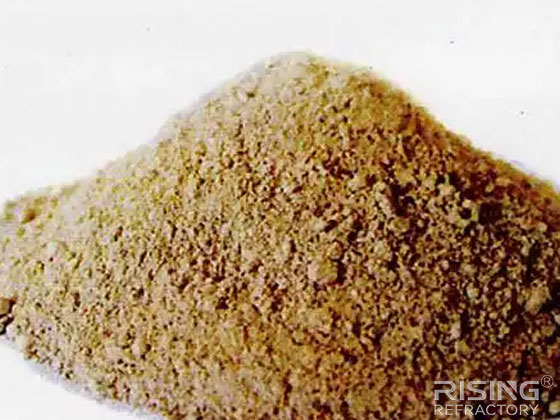
      Refractory Gunning Mixes
      Refractory Gunning Mixes

      Free Quote

        Free Quote

        Your Name (required)


        Your Email (required)

        Your Phone

        Required Products (required)

        Enquiry Information

        Optimization of Basic Gunning Mix Formulations

        Basic gunning mixes are primarily used for the hot repair of steelmaking equipment; therefore, their formulations must be tailored to the specific steel grades being produced, operational conditions, and the type of equipment. In other words, different gunning mixes should be selected based on the distinct requirements of each application. Users can generally make their selection according to their specific smelting conditions and equipment characteristics.

        • (1) Under high-basicity smelting conditions, it is advisable to use phosphate-bonded magnesia-based gunning mixes with a relatively high CaO content (approximately 6%). These materials offer superior resistance to erosion by basic slag and exhibit greater durability compared to silicate-bonded magnesia-based gunning mixes.
        • (2) MgO-CaO-based gunning mixes (containing 8%–12% CaO) that utilize a polyphosphate-CaO-SiO₂ binder system provide even greater resistance to basic slag erosion and are, therefore, referred to as “long-life” gunning mixes.
        • (3) Magnesia-based gunning mixes bonded with silicates (such as water glass)—produced using high-purity magnesia with a low CaO/SiO₂ ratio—demonstrate excellent resistance to erosion by acidic (low-basicity) slag.
        • (4) When magnesia with a low CaO/SiO₂ ratio is used as the raw material, the resulting gunning mixes—regardless of whether a phosphate or silicate binder is employed—exhibit strong and comparable resistance to acidic slag. However, the low CaO content (and the resulting lack of free CaO, or fCaO) slows the curing rate of phosphate-bonded magnesia-based mixes. Consequently, such mixes (derived from low-CaO/SiO₂ magnesia) are difficult to apply in thick layers. This issue can be addressed by incorporating an appropriate amount of a CaO-bearing substance.
        • (5) Magnesia-based gunning mixes that employ a composite binder system—consisting of both silicates and phosphates—offer greater versatility and are thus known as “universal” gunning mixes. These mixes are particularly well-suited to the operational conditions of steel ladles.
        • (6) Magnesia-alumina gunning mixes—formulated with cement as a binder, an organic acid as a flocculant, and small amounts of a dispersant and an anti-stripping agent—are suitable for localized gunning repairs in secondary refining units and offer good durability.

        Based on the above discussion, the following conclusions can be drawn:

        • (1) For different applications—such as basic oxygen furnaces (BOFs), electric arc furnaces (EAFs), and ladles—it is necessary to select specific grades and types of basic gunning mixes, tailored to the distinct operating conditions of each.
        • (2) In BOFs, phosphate-bonded MgO-based or MgO-CaO-based gunning mixes are typically used to achieve a long service life. However, if the operating temperature is too low, the gunning mix layer may fail to sinter sufficiently and subsequently spall off. In such cases, it is advisable to use an MgO-CaO-based gunning mix with a phosphate-CaO-SiO₂ bonding system, which is better suited to these operating conditions.
        • (3) Silicate-bonded MgO-based gunning mixes are primarily used in EAFs and can also be applied in ladles (at moderate temperatures). When high-purity dead-burned magnesia is used as a raw material to enhance corrosion resistance, the binder content should be appropriately increased, and specific additives should be incorporated; otherwise, the gunning mix layer may spall, preventing the desired performance.
        • (4) Magnesia-based gunning mixes that utilize a composite binder—consisting of both silicates and phosphates—exhibit high adaptability and can be considered “universal” gunning mixes. These are particularly well-suited to the operating conditions of steel ladles.
        • (5) Cement-bonded MgO-Al₂O₃-based gunning mixes, when modified with the addition of flocculants, dispersants, and anti-spalling agents, can also be used in ladles and secondary refining equipment.
          Get Free Quote

          Your Name (required)

          Your Email (required)

          Your Phone

          Required Products (required)

          Enquiry Information

          Why is There No Standardized Furnace Designed for Copper Smelting?

          Copper smelting furnaces come in various types, including flash furnaces, Australian furnaces, SKS furnaces, silver furnaces, and Noranda furnaces. Many people might wonder after reading this: since all these furnace types can complete matte smelting, why isn’t there a single furnace type suitable for all copper smelters? The reason is simple: copper smelting isn’t a “furnace selection competition,” but rather a “system matching battle.” Flash furnaces emphasize large-scale continuous operation and stable concentrate; top-blown furnaces emphasize strong stirring and adaptability to complex materials; bottom-blown furnaces emphasize the internal reaction of the molten pool and flue gas conditions; and side-blown furnaces emphasize continuous organization and control of the side reaction zone. There is no absolutely optimal furnace type, only what is suitable or unsuitable.

          Conclusion: There is no one-size-fits-all furnace, only system compatibility.

          Many people, when discussing furnace types, like to ask: Which furnace is the best? This question is actually difficult to answer. Copper smelting isn’t about choosing a single “one-size-fits-all” piece of equipment, but rather selecting a complete process system. The quality of a furnace depends not only on the furnace itself, but also on: the raw material conditions; the stability of the concentrate grade; the suitability of sulfur, iron, and silicon content; the level of impurities; the proportion of return material and dust; the compatibility of the flue gas acid production system; how the slag is handled; whether it’s connected to a converter or continuous blowing; the affordability of investment and operating costs; and the level of on-site operation and maintenance. Therefore, different furnace types are not simply a matter of advanced versus outdated. More accurately, they solve different problems.

          Flash Furnace: Suitable for stable concentrates and large-scale continuous production.

          The core characteristic of flash smelting is that the ore reacts in the air. Dried fine-grained copper concentrate and oxygen-enriched air enter the reaction tower, where oxidation, exothermic reaction, melting, and preliminary matte formation are rapidly completed in a suspended state. The advantages of flash furnaces are obvious: fast reaction speed; high thermal efficiency; high degree of continuous operation; better SO₂ conditions in the flue gas; and suitability for large-scale production. This is why the Outokumpu flash furnace has become one of the important mainstream furnace types in modern copper smelting.

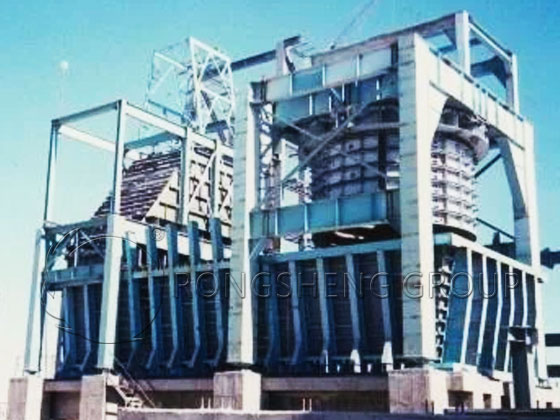
          Flash Furnace
          Flash Furnace

          However, flash furnaces also have their own prerequisites: they rely heavily on dry ore, stable particle size, stable batching, and good injection organization. In other words, they are well-suited for processing concentrates with stable conditions and thorough preparation, but they also have relatively high requirements for raw material fluctuations, complex material proportions, and the preparation system.

          So, what are flash furnaces suitable for? Flash furnaces are suitable for large-scale, efficient, and continuous production under stable concentrate conditions.

          Top-blown furnaces: Suitable for strong stirring and handling complex materials

          Typical examples of top-blown furnaces are the Åbo furnace and the ISA furnace. Its core is the top-immersion lance. The lance is inserted into the molten pool from the top of the furnace, injecting oxygen-enriched air, fuel, etc., into the molten pool.

          The keyword for top-blown furnaces is: strong stirring. Once the molten pool is agitated, the contact between gas, liquid, and solid is significantly enhanced, leading to increased heat and mass transfer. Materials entering the molten pool do not float quietly on the surface and react slowly; instead, they are quickly drawn into the melt to participate in the reaction. Therefore, top-blown furnaces are highly adaptable to complex copper-containing materials, return materials, fumes, and cold materials.


          However, top-blown furnaces are not a “one-size-fits-all” solution. Attention must be paid to lance lifespan, lance position, molten pool splashing, slag entrainment, and subsequent settling and depletion pressure. Strong agitation is an advantage, but it also results in more thorough mixing of slag and matte, requiring careful handling of copper content and separation issues in the slag.

          So, what are top-blown furnaces suitable for? Top-blown furnaces are suitable for systems requiring strong agitation, high adaptability to complex materials, and a high proportion of return materials and fumes. Their advantage is not being the “cleanest,” but rather their ability to “quickly draw complex materials into the reaction.”

          Bottom-blown furnace: Suitable for organizing reactions from within the molten pool

          A representative bottom-blown furnace is the SKS furnace, also known as the Shuikoushan oxygen bottom-blown smelting furnace. Its core characteristic is that oxygen enters the molten pool from the bottom. More specifically, oxygen enters the copper matte layer from the bottom, forming rising bubbles, molten circulation, and intense reactions within the molten pool.

          The advantages of a bottom-blown furnace are: sufficient gas-liquid contact; deep reaction within the molten pool; better oxygen utilization conditions; relatively small flue gas volume; and better SO₂ flue gas conditions. These characteristics are beneficial for subsequent acid production and environmental control.

          However, the most challenging aspect of a bottom-blown furnace is also clear: the bottom gas supply system. Because oxygen enters from the bottom, the oxygen lance, tuyeres, bottom refractory materials, sealing, and maintenance are all crucial. Problems with the bottom oxygen supply system are difficult to resolve. Simultaneously, due to the strong agitation during bottom blowing, attention must still be paid to slag copper content, Fe₃O₄, slag viscosity, and slag-matte separation.

          So, what is a bottom-blown furnace suitable for? Bottom-blown furnaces are suitable for systems emphasizing internal molten pool reactions, flue gas acid production conditions, and environmental control, but they require high stability in the gas supply from the furnace bottom. Their advantage lies in deepening the reaction from within the molten pool; their challenge also lies at the furnace bottom.

          Side-blown furnaces: Suitable for continuous operation and control of the side reaction zone

          Representative side-blown furnaces include the Baiyin furnace, Noranda furnace, and Vanyukov furnace. Their core characteristic is that gas enters the molten pool from the side of the furnace body. Side blowing is neither from top to bottom nor bottom to top, but rather from the side tuyeres, driving the melt to form a lateral flow and reaction zone.

          The advantages of side-blown furnaces are: relatively intuitive furnace structure; flexible reaction zone layout; suitability for continuous operation; and strong material adaptability. For example, the Baiyin furnace emphasizes the separation of the smelting and settling zones, with a strong reaction at the front and clarification and separation at the back. The Noranda furnace is a horizontal furnace body, organizing the reaction and settling along its length. The Vanyukov furnace emphasizes slag-blown smelting, relying on side-blown oxygen-enriched gas to enhance slag agitation and reaction.

          However, side-blown furnaces also present typical challenges: erosion in the tuyeres area; slag line scouring; furnace lining life; localized overheating; copper content control in the slag; and internal flow organization.

          So, what are side-blown furnaces suitable for? Side-blown furnaces are suitable for systems with continuous side-blown reactions, flexible process organization, and the ability to accept and manage tuyeres and furnace lining maintenance pressures. The advantages and disadvantages of side-blown furnaces actually stem from the same source: the strong molten pool disturbance caused by lateral air supply.

          Choosing a furnace type shouldn’t be based solely on the furnace itself.

          Often, a plant’s choice of furnace type isn’t based on just the furnace itself, but on the entire production line. For example: Is there a stable dry ore system at the front end? Is the raw material complex? Is the return material ratio high? Can the flue gas sulfuric acid production system match? Is the downstream a conventional converter or continuous blowing? Does the slag have a settling electric furnace or a slag depletion system? What are the local oxygen, electricity, and fuel costs? How stringent are the environmental protection requirements? Is there sufficient operational and maintenance capability on site? These factors combined determine whether a furnace type is truly suitable for a particular plant. Therefore, you’ll see: some plants are suited to flash furnaces; some to top-blown furnaces; some to bottom-blown furnaces; and some to side-blown furnaces. It’s not that everyone’s judgment is different, but rather that each smelter faces different challenges.

          Furnace Selection: Essentially System Matching

          Copper smelting is not a victory for a single piece of equipment, but a balance of the entire system. The furnace type is only one component. What truly needs matching are: the raw material system; the smelting system; the blowing system; the slag treatment system; the flue gas acid production system; the environmental protection system; the energy system; and the operation and management system. Looking only at the furnace itself easily leads to one-sided judgments. For example, a certain furnace type might have a strong reaction, but if the subsequent slag depletion cannot keep up, the copper content in the slag may be high. A certain furnace type might have excellent flue gas conditions, but if oxygen costs are too high, its economics may not be suitable. A certain furnace type can handle complex feedstocks, but if maintenance is difficult and on-site management cannot keep up, problems will arise. A certain furnace type has high single-furnace capacity, but if the front-end feed preparation system is unstable, it is difficult to operate stably for a long time. Therefore, furnace selection is not simply “which is the best,” but rather: which is the most suitable for the entire system.

          • Flash Furnace: Large and precise. Suitable for stable concentrate production, large-scale, efficient, and continuous production.
          • Top-blown Furnace: Flexible and powerful. Suitable for strong stirring, complex materials, return materials, and fume control.
          • Bottom-blown furnace: Deep and stable. Suitable for organizing reactions from within the molten pool, with better flue gas conditions.
          • Side-blown furnace: Wide and flexible. Suitable for continuous processing and control of the side reaction zone.

          Ultimately, furnace selection must return to raw materials, scale, environmental protection, investment, and process configuration.

          In conclusion,

          Copper smelting cannot rely on only one type of furnace. This is not because the technology is immature, but because copper smelting faces different raw materials, processes, and on-site conditions. Flash furnaces have their advantages; top-blown furnaces have their applicable scenarios; bottom-blown furnaces have their characteristics; and side-blown furnaces also have their place. It’s not about which furnace type is best, but rather, under a series of comprehensive conditions such as specific raw materials and scale, which furnace type is most suitable!

            Get Free Quote

            Your Name (required)

            Your Email (required)

            Your Phone

            Required Products (required)

            Enquiry Information

            Brand Name and Logo Upgrade !!!