Rongsheng Well Block Refractory Material – Quality Guaranteed
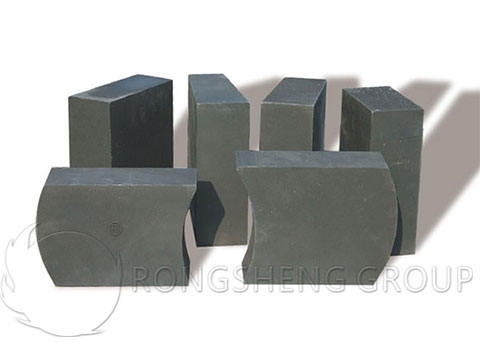
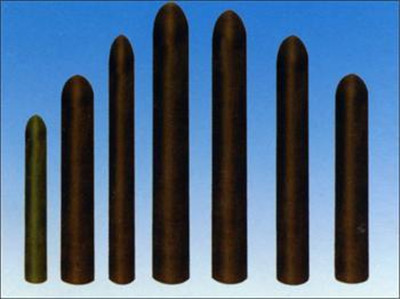
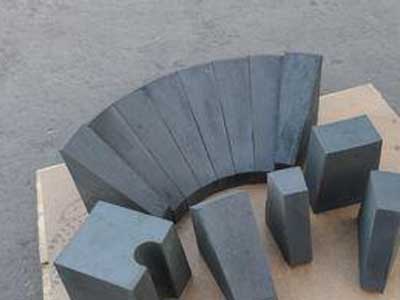
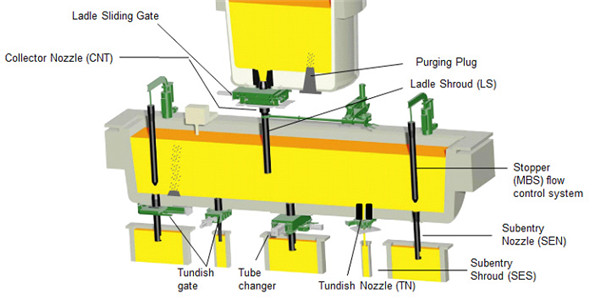
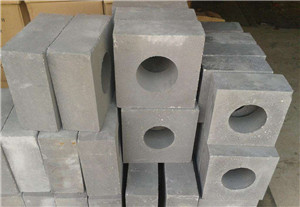
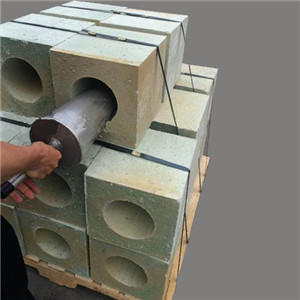
A seat brick is a refractory brick installed at the bottom of a steel ladle to fix the nozzle brick. The well block refractory brick is square in shape, hence also called a square brick. Its functions are to fix the nozzle position, facilitate nozzle removal and installation, support the lower end of the stopper rod during pouring, and ensure that the stopper rod slides along the curved surface towards the nozzle after pouring to cut off the flow.

Application and Classification of Well Block Refractory Bricks
Well block refractory bricks are mainly used in conjunction with nozzles in continuous casting tundishes. They are mostly used at the bottom of the ladle and tundish to protect the internal nozzles and permeable bricks. Well block refractory bricks have high corrosion resistance and are used in conjunction with zirconium sizing nozzles.
Initially, well block refractory bricks could be made of clay, high-alumina, or unfired high-alumina materials. Later, well block refractory bricks were classified according to changes in the usage environment and the materials used:
- (1) Al2O3-Cr2O3 well block refractory bricks. Original high-alumina well block refractory bricks had poor heat spalling resistance. Using corundum as the main raw material, adding appropriate amounts of alumina, spinel, chromium oxide, etc. to the matrix can produce Al2O3-Cr2O3 well block refractory bricks with good heat spalling resistance and strong corrosion resistance. This material has a long service life and can be used synchronously with the ladle. Currently, most well block refractory bricks used are Al2O3-Cr2O3 well block refractory bricks.
- (2) Magnesia well block refractory bricks. Precast well block refractory bricks were prepared by adding fused corundum powder (below 1μm) and magnesium oxide to the original alumina base material. Because the material is an alumina castable containing magnesium oxide, the cement content is extremely low, increasing the service life by 40%. The main reasons are: the fine corundum powder containing magnesium oxide densifies the matrix, improving erosion resistance; the matrix density and low cement content increase the material’s high-temperature strength, enhancing its resistance to thermal shock and mechanical spalling; and the magnesium oxide and alumina in the matrix largely form spinel at high temperatures, thus inhibiting slag penetration and improving erosion resistance. The magnesia base bricks are precast, reducing brick joints and simplifying construction.
Characteristics of Nozzle Well Block Refractory Bricks
- High-Temperature Corrosion Resistance: Refining steel ladles requires extremely strict temperature and time control, often exceeding 1750℃.
- High-Temperature Abrasion Resistance: Forced stirring is used in various ladle refining methods, which severely impacts the high-temperature abrasion resistance of the well block refractory bricks.
Well Block Refractory Bricks Installation
Before installing the well block refractory bricks at the taphole, the bottom should be leveled with ramming material to ensure the taphole cylinder and the masonry layer are on the same plane. When laying separate well block refractory bricks, the mating surfaces of each brick must be evenly coated with mortar. The inner holes of the well block refractory bricks must be uniform; on-site correction is necessary if required to ensure proper installation of the taphole tube bricks. Considering that the well block refractory bricks consist of multiple pieces, ramming material should be filled from both sides simultaneously around the taphole well block refractory bricks to prevent rotation.
Main Components of Permeable Bricks, Nozzle Well Block Refractory Bricks, and Castables
In the steelmaking industry, steelmakers commonly use refractory materials such as permeable bricks, nozzle well block refractory bricks, electric furnace covers, castables, guide sand, and magnesia-carbon bricks in their ladles and refining furnaces. These refractory materials differ significantly in their main components and additives. Chemically, refractory materials are composed of minerals, such as corundum, mullite, and magnesia. Their main components include alumina and magnesia.
The main components of refractory materials are the matrix components that constitute their refractory properties and form the basis of their characteristics, directly determining the properties of the finished refractory product. For example, permeable bricks require high-quality ore and are manufactured through strict and reasonable processes to ensure that the service life of the permeable bricks used by steelmakers meets requirements. The main components of refractory materials can be oxides (alumina and magnesia, etc.) or elements or non-oxide compounds (carbon, silicon carbide, etc.).
Based on the properties of their main components, refractory materials can be classified into three categories: acidic, neutral, and basic. Acidic refractories mainly contain acidic oxides such as silicon dioxide, with silicic acid or aluminum silicate as the primary components. They will form salts under high temperatures and alkaline conditions. Basic refractories mainly contain magnesium oxide and calcium oxide. Common refractory products include guide sand and ladle slide plates. Neutral refractories are strictly speaking carbonaceous and chromium-based refractories. High-alumina refractories (alumina content greater than 45%) tend towards acidic neutrality. Chromium-based refractories are alkaline but tend towards neutrality. Common high-alumina refractories include permeable bricks, nozzle well block refractory bricks, and electric furnace covers.
Rongsheng Refractory Factory researches, develops, produces, and sells permeable bricks, nozzle well block refractory bricks, castables, and other refractory materials. With patented formulas, unique designs, and strict adherence to every process standard, we provide high-quality refractory lining materials for high-temperature industrial furnaces. Contact Rongsheng to get free samples and quotes.