Why is There No Standardized Furnace Designed for Copper Smelting?
Copper smelting furnaces come in various types, including flash furnaces, Australian furnaces, SKS furnaces, silver furnaces, and Noranda furnaces. Many people might wonder after reading this: since all these furnace types can complete matte smelting, why isn’t there a single furnace type suitable for all copper smelters? The reason is simple: copper smelting isn’t a “furnace selection competition,” but rather a “system matching battle.” Flash furnaces emphasize large-scale continuous operation and stable concentrate; top-blown furnaces emphasize strong stirring and adaptability to complex materials; bottom-blown furnaces emphasize the internal reaction of the molten pool and flue gas conditions; and side-blown furnaces emphasize continuous organization and control of the side reaction zone. There is no absolutely optimal furnace type, only what is suitable or unsuitable.
Conclusion: There is no one-size-fits-all furnace, only system compatibility.
Many people, when discussing furnace types, like to ask: Which furnace is the best? This question is actually difficult to answer. Copper smelting isn’t about choosing a single “one-size-fits-all” piece of equipment, but rather selecting a complete process system. The quality of a furnace depends not only on the furnace itself, but also on: the raw material conditions; the stability of the concentrate grade; the suitability of sulfur, iron, and silicon content; the level of impurities; the proportion of return material and dust; the compatibility of the flue gas acid production system; how the slag is handled; whether it’s connected to a converter or continuous blowing; the affordability of investment and operating costs; and the level of on-site operation and maintenance. Therefore, different furnace types are not simply a matter of advanced versus outdated. More accurately, they solve different problems.
Flash Furnace: Suitable for stable concentrates and large-scale continuous production.
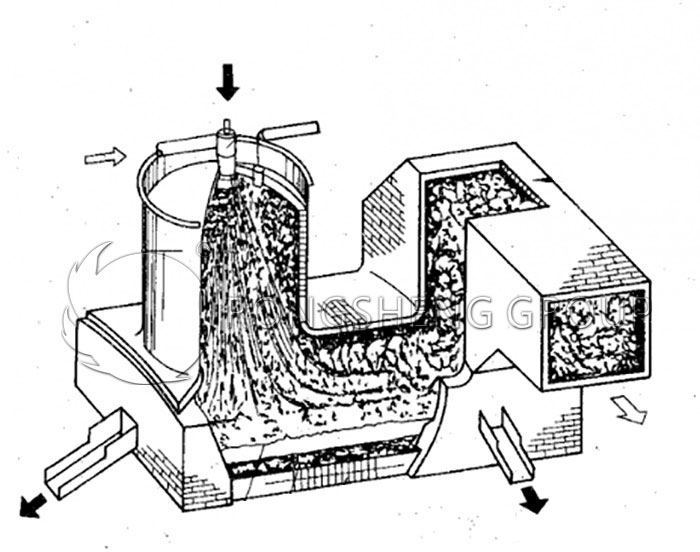
The core characteristic of flash smelting is that the ore reacts in the air. Dried fine-grained copper concentrate and oxygen-enriched air enter the reaction tower, where oxidation, exothermic reaction, melting, and preliminary matte formation are rapidly completed in a suspended state. The advantages of flash furnaces are obvious: fast reaction speed; high thermal efficiency; high degree of continuous operation; better SO₂ conditions in the flue gas; and suitability for large-scale production. This is why the Outokumpu flash furnace has become one of the important mainstream furnace types in modern copper smelting.
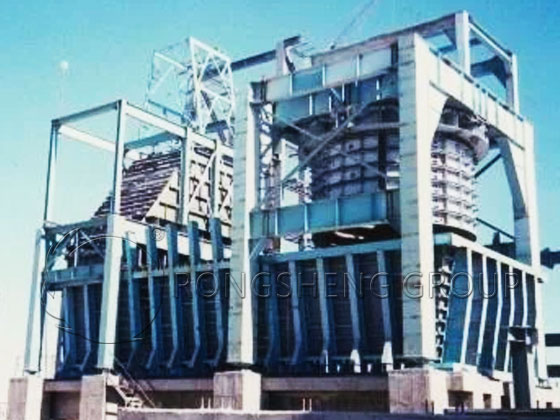
However, flash furnaces also have their own prerequisites: they rely heavily on dry ore, stable particle size, stable batching, and good injection organization. In other words, they are well-suited for processing concentrates with stable conditions and thorough preparation, but they also have relatively high requirements for raw material fluctuations, complex material proportions, and the preparation system.
So, what are flash furnaces suitable for? Flash furnaces are suitable for large-scale, efficient, and continuous production under stable concentrate conditions.
Top-blown furnaces: Suitable for strong stirring and handling complex materials
Typical examples of top-blown furnaces are the Åbo furnace and the ISA furnace. Its core is the top-immersion lance. The lance is inserted into the molten pool from the top of the furnace, injecting oxygen-enriched air, fuel, etc., into the molten pool.
The keyword for top-blown furnaces is: strong stirring. Once the molten pool is agitated, the contact between gas, liquid, and solid is significantly enhanced, leading to increased heat and mass transfer. Materials entering the molten pool do not float quietly on the surface and react slowly; instead, they are quickly drawn into the melt to participate in the reaction. Therefore, top-blown furnaces are highly adaptable to complex copper-containing materials, return materials, fumes, and cold materials.
However, top-blown furnaces are not a “one-size-fits-all” solution. Attention must be paid to lance lifespan, lance position, molten pool splashing, slag entrainment, and subsequent settling and depletion pressure. Strong agitation is an advantage, but it also results in more thorough mixing of slag and matte, requiring careful handling of copper content and separation issues in the slag.
So, what are top-blown furnaces suitable for? Top-blown furnaces are suitable for systems requiring strong agitation, high adaptability to complex materials, and a high proportion of return materials and fumes. Their advantage is not being the “cleanest,” but rather their ability to “quickly draw complex materials into the reaction.”
Bottom-blown furnace: Suitable for organizing reactions from within the molten pool
A representative bottom-blown furnace is the SKS furnace, also known as the Shuikoushan oxygen bottom-blown smelting furnace. Its core characteristic is that oxygen enters the molten pool from the bottom. More specifically, oxygen enters the copper matte layer from the bottom, forming rising bubbles, molten circulation, and intense reactions within the molten pool.
The advantages of a bottom-blown furnace are: sufficient gas-liquid contact; deep reaction within the molten pool; better oxygen utilization conditions; relatively small flue gas volume; and better SO₂ flue gas conditions. These characteristics are beneficial for subsequent acid production and environmental control.
However, the most challenging aspect of a bottom-blown furnace is also clear: the bottom gas supply system. Because oxygen enters from the bottom, the oxygen lance, tuyeres, bottom refractory materials, sealing, and maintenance are all crucial. Problems with the bottom oxygen supply system are difficult to resolve. Simultaneously, due to the strong agitation during bottom blowing, attention must still be paid to slag copper content, Fe₃O₄, slag viscosity, and slag-matte separation.
So, what is a bottom-blown furnace suitable for? Bottom-blown furnaces are suitable for systems emphasizing internal molten pool reactions, flue gas acid production conditions, and environmental control, but they require high stability in the gas supply from the furnace bottom. Their advantage lies in deepening the reaction from within the molten pool; their challenge also lies at the furnace bottom.
Side-blown furnaces: Suitable for continuous operation and control of the side reaction zone
Representative side-blown furnaces include the Baiyin furnace, Noranda furnace, and Vanyukov furnace. Their core characteristic is that gas enters the molten pool from the side of the furnace body. Side blowing is neither from top to bottom nor bottom to top, but rather from the side tuyeres, driving the melt to form a lateral flow and reaction zone.
The advantages of side-blown furnaces are: relatively intuitive furnace structure; flexible reaction zone layout; suitability for continuous operation; and strong material adaptability. For example, the Baiyin furnace emphasizes the separation of the smelting and settling zones, with a strong reaction at the front and clarification and separation at the back. The Noranda furnace is a horizontal furnace body, organizing the reaction and settling along its length. The Vanyukov furnace emphasizes slag-blown smelting, relying on side-blown oxygen-enriched gas to enhance slag agitation and reaction.
However, side-blown furnaces also present typical challenges: erosion in the tuyeres area; slag line scouring; furnace lining life; localized overheating; copper content control in the slag; and internal flow organization.
So, what are side-blown furnaces suitable for? Side-blown furnaces are suitable for systems with continuous side-blown reactions, flexible process organization, and the ability to accept and manage tuyeres and furnace lining maintenance pressures. The advantages and disadvantages of side-blown furnaces actually stem from the same source: the strong molten pool disturbance caused by lateral air supply.
Choosing a furnace type shouldn’t be based solely on the furnace itself.
Often, a plant’s choice of furnace type isn’t based on just the furnace itself, but on the entire production line. For example: Is there a stable dry ore system at the front end? Is the raw material complex? Is the return material ratio high? Can the flue gas sulfuric acid production system match? Is the downstream a conventional converter or continuous blowing? Does the slag have a settling electric furnace or a slag depletion system? What are the local oxygen, electricity, and fuel costs? How stringent are the environmental protection requirements? Is there sufficient operational and maintenance capability on site? These factors combined determine whether a furnace type is truly suitable for a particular plant. Therefore, you’ll see: some plants are suited to flash furnaces; some to top-blown furnaces; some to bottom-blown furnaces; and some to side-blown furnaces. It’s not that everyone’s judgment is different, but rather that each smelter faces different challenges.
Furnace Selection: Essentially System Matching
Copper smelting is not a victory for a single piece of equipment, but a balance of the entire system. The furnace type is only one component. What truly needs matching are: the raw material system; the smelting system; the blowing system; the slag treatment system; the flue gas acid production system; the environmental protection system; the energy system; and the operation and management system. Looking only at the furnace itself easily leads to one-sided judgments. For example, a certain furnace type might have a strong reaction, but if the subsequent slag depletion cannot keep up, the copper content in the slag may be high. A certain furnace type might have excellent flue gas conditions, but if oxygen costs are too high, its economics may not be suitable. A certain furnace type can handle complex feedstocks, but if maintenance is difficult and on-site management cannot keep up, problems will arise. A certain furnace type has high single-furnace capacity, but if the front-end feed preparation system is unstable, it is difficult to operate stably for a long time. Therefore, furnace selection is not simply “which is the best,” but rather: which is the most suitable for the entire system.
- Flash Furnace: Large and precise. Suitable for stable concentrate production, large-scale, efficient, and continuous production.
- Top-blown Furnace: Flexible and powerful. Suitable for strong stirring, complex materials, return materials, and fume control.
- Bottom-blown furnace: Deep and stable. Suitable for organizing reactions from within the molten pool, with better flue gas conditions.
- Side-blown furnace: Wide and flexible. Suitable for continuous processing and control of the side reaction zone.
Ultimately, furnace selection must return to raw materials, scale, environmental protection, investment, and process configuration.
In conclusion,
Copper smelting cannot rely on only one type of furnace. This is not because the technology is immature, but because copper smelting faces different raw materials, processes, and on-site conditions. Flash furnaces have their advantages; top-blown furnaces have their applicable scenarios; bottom-blown furnaces have their characteristics; and side-blown furnaces also have their place. It’s not about which furnace type is best, but rather, under a series of comprehensive conditions such as specific raw materials and scale, which furnace type is most suitable!