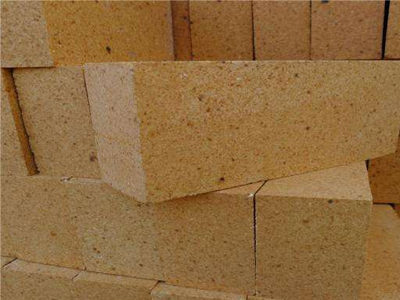
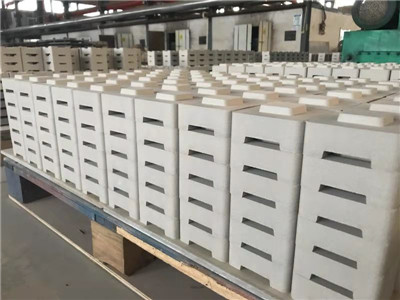
Zirconium-Containing Refractory Materials
Zirconium-containing raw materials typically possess high melting temperatures, strong corrosion resistance, excellent thermal shock resistance, and high chemical stability. Consequently, they serve as high-performance refractory materials and are widely used across sectors such as metallurgy, construction, and the chemical industry. Refractory materials containing zirconium are frequently employed in glass furnaces, metallurgical equipment, cement kilns, and various other types of industrial furnaces and kilns.
Zirconium-Containing Refractories for Glass Furnaces
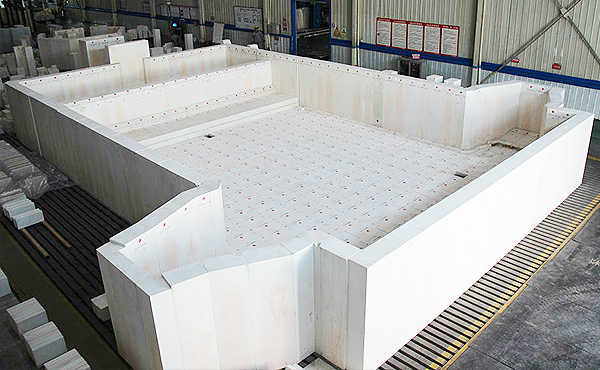
Zirconium-containing refractories are primarily used in the melting section, superstructure, sidewalls, and throat channels of glass-melting furnaces. Key types include dense zircon bricks, fused-cast zirconia-corundum (AZS) bricks, fused-cast zircon-mullite bricks, and rebonded AZS bricks.
Dense Zircon Bricks
Based on their apparent porosity, zircon bricks are categorized into high-density (ZS-G) and dense (ZS-Z) types.
- Characteristics: High density and low porosity.
- Applications: Breastwalls in the melting section of glass tank furnaces, skewbacks, and sealing layers for furnace bottoms.
- Primary Raw Material: Fine zircon sand.
- Manufacturing Process: Prepared as a slurry, cast into shapes, and fired at high temperatures.
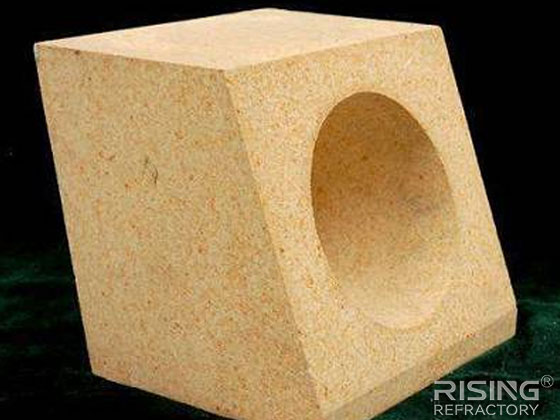
Fused-Cast Zirconia-Corundum (AZS) Products
Fused-cast zirconia-corundum, also known as AZS (representing Al₂O₃, ZrO₂, and SiO₂), is an essential refractory material for critical components in glass-melting furnaces. Internationally, these products are typically classified into grades such as Zr-33, Zr-36, and Zr-41, corresponding to ZrO₂ contents of 33%, 36%, and 41%, respectively.
- Characteristics: High resistance to corrosion by molten glass.
- Applications: Commonly used in the melting section and sidewalls of glass-melting furnaces.
- Primary Raw Materials: Industrial-grade alumina, zircon concentrate, and additives (such as soda ash or borax). In addition to zircon, ZrO₂ can also be introduced via zirconium oxide, baddeleyite, or desilicated zircon.
- Manufacturing Process: Raw materials are melted in an electric arc furnace, cast into shapes, annealed, and then mechanically machined to produce the final components.
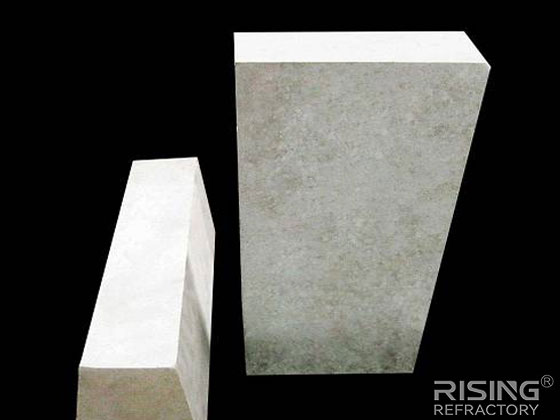
Fused-Cast Zircon-Mullite Products
The primary mineral phases in fused-cast zircon-mullite products consist of mullite, baddeleyite, corundum, and a certain proportion of glassy phase. Characteristics: Dense crystalline structure, high load-softening temperature, good thermal shock resistance, high mechanical strength at both room and elevated temperatures, excellent wear resistance, high thermal conductivity, and superior resistance to corrosion by molten slag and molten glass.
- Applications: Used in areas such as the walls of glass-melting furnaces; also widely applied in metallurgical heating furnaces, soaking pits, and the discharge ports of calcium carbide furnaces—wherever high wear resistance is required.
- Primary Raw Materials: Industrial-grade alumina, zircon concentrate, and additives (such as soda ash).
- Manufacturing Process: Produced by melting raw materials in an electric arc furnace, casting the melt into shapes, annealing, and performing mechanical machining.
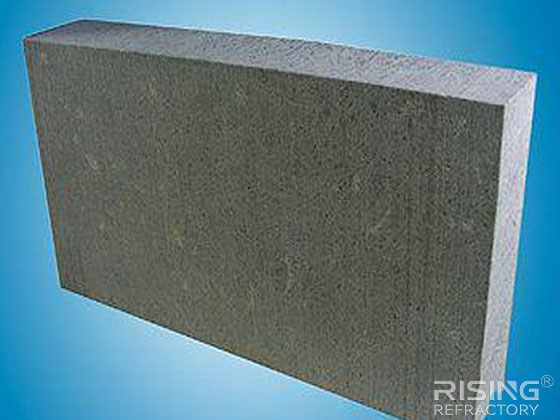
Rebonded AZS Products
- Applications: Used for constructing the bottoms and walls of glass-melting tanks, as well as checker bricks for regenerators.
- Primary Raw Materials: Fused AZS materials (e.g., scrap, offcuts, or reclaimed/used bricks from fused zirconia-corundum or fused zirconia-mullite blocks).
- Manufacturing Process: Produced by crushing the raw materials, forming them into shapes, and firing.
In addition to the products mentioned above, other materials used in glass furnaces include fired AZS bricks, fused-cast zirconia bricks (with a ZrO₂ content exceeding 90%), and zirconia-containing ramming mixes.
Zirconium-Containing Refractories for the Metallurgical Industry
Refractories manufactured using zirconium-bearing raw materials are widely employed in the metallurgical industry. In this sector, the addition of a certain amount of zirconium dioxide (ZrO2) to common refractory materials—such as corundum-based, high-alumina, or magnesia-carbon refractories—can enhance their chemical stability, thermal shock resistance, and mechanical strength. Based on their composition, these materials can be categorized into several types, including zircon-based, zirconia-based, alumina-zirconia-carbon, zirconia-carbon, calcium zirconate-based, and zirconium boride-based refractories.
Zircon Refractories
Zircon refractories typically contain over 60% ZrO2, with an apparent porosity ranging from 16% to 23%. Their bulk density generally increases in proportion to their ZrO2 content.
- Characteristics: High-temperature resistance, excellent resistance to acidic slag, minimal erosion, low slag adhesion, a low coefficient of thermal expansion, and good thermal shock resistance.
- Applications: These materials are well-suited for use as linings in steel ladles. They can be installed in critical areas—such as zones subject to direct impact from molten steel, the slag line, and the vicinity of nozzles—and are also used for ladle nozzles, tundish nozzles, and well blocks (nozzle seating blocks).
- Primary Raw Materials: Zircon concentrate, often supplemented as needed with binding clay, pyrophyllite, chromium oxide, or zirconium dioxide.
- Manufacturing Process: Because zircon grains are typically too fine for direct brick production, the raw zircon—along with a portion of binding clay—is first mixed and formed into “green” (unfired) blanks via semi-dry pressing. These blanks are dried and then calcined at temperatures not exceeding 1550°C. The resulting material is subsequently crushed to produce coarser clinker particles, which are then used in the final batch formulation for brick manufacturing.
Zirconium Oxide Refractories
Zirconium oxide refractories generally refer to products in which ZrO2 is the primary constituent. In some contexts, items such as zircon-based nozzles and well blocks are also classified under the category of zirconia-based refractories.
- Characteristics: High-temperature resistance, resistance to chemical erosion, and resistance to mechanical scouring (erosion by flowing molten metal or slag). Applications: Primarily used for metering nozzles in continuous steel casting (for small billets), long nozzles, slag-line sleeves for submerged entry nozzles (SENs), and crucibles for melting precious metals and their alloys—such as platinum, rhodium, and iridium.
- Key Raw Materials: These include zircon (in various particle sizes) and a range of zirconia-based materials—such as stabilized, partially stabilized, and monoclinic zirconia (baddeleyite) of varying purity levels. Specific particle size requirements depend on the chosen forming method.
- Manufacturing Methods: A wide variety of products are produced using diverse forming techniques, including slip casting, hot-pressure casting, mechanical pressing, and isostatic pressing.
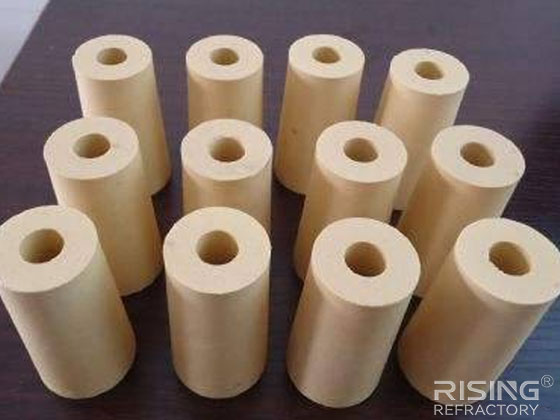
Alumina-Zirconia-Carbon (Al-Zr-C) Products
Alumina-Zirconia-Carbon products are an evolution of alumina-carbon-based materials. The ZrO₂ content varies depending on the specific application, typically ranging from 2% to 11%.
- Characteristics: Compared to their alumina-carbon counterparts, these products offer superior oxidation resistance, thermal shock stability, erosion resistance, and higher mechanical strength, resulting in a longer service life.
- Applications: Primarily used for components such as sliding gate nozzle plates for ladles (or tundishes), long nozzles, stopper rods, and submerged entry nozzles (SENs).
- Key Raw Materials: The method of incorporating zirconia varies by application. It is typically added in the form of zircon-mullite, though zirconia, zirconia-corundum, or zircon concentrate may also be used.
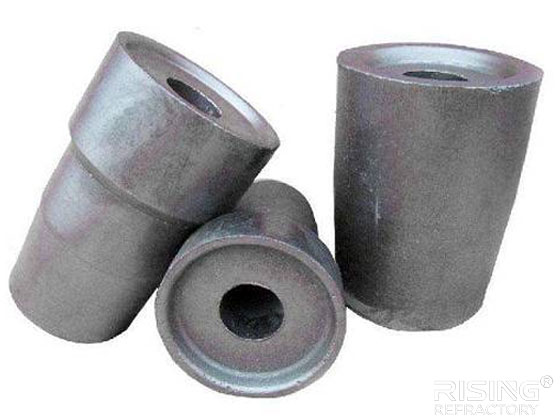
Zirconia-Carbon (Zr-C) Products
Zirconia-Carbon products typically contain between 50% and 80% ZrO₂.
- Characteristics: They exhibit excellent resistance to corrosion, which significantly extends the service life of the components.
- Applications: Zirconia-Carbon products are generally not used as standalone components; rather, they are incorporated as composite sections—most commonly in the slag-line area of long nozzles or submerged entry nozzles (SENs).
- Key Raw Materials: Partially stabilized zirconia, monoclinic zirconia, graphite, etc.
- Manufacturing Methods: Typically produced using resin as a binder and formed via isostatic pressing.
Calcium Zirconate-Graphite Products
- Application: Primarily used as a lining for composite submerged entry nozzles (SENs). It effectively reduces clogging—caused by the deposition of alumina ($Al_2O_3$) from molten steel onto the inner walls of the nozzle during the casting process—thereby improving operational conditions and increasing the number of consecutive heats (heats per sequence) in continuous casting.
- Key Raw Materials: Calcium zirconate, graphite, silicon carbide, etc.
- Manufacturing Method: Produced via isostatic pressing, using a composite charging technique where the material is combined with other constituent materials during the forming process.
Zirconium Boride-Graphite Products
- Characteristics: Offer superior erosion resistance compared to zirconia-carbon (Zr-C) products.
- Application: Primarily used as a lining for composite submerged entry nozzles (SENs), though their current usage is not yet widespread.
- Key Raw Materials: Zirconium boride, aluminum nitride, metallic aluminum, graphite, silicon carbide, etc.
Refractory Materials for Other Industries
In addition to those mentioned above, a wide variety of zirconium-containing refractory materials are used across various other industries. Examples include chrome-alumina-zirconia bricks for coal-water slurry pressurized gasifiers, zirconia hollow-sphere bricks for high-temperature kiln linings, and zirconia refractory fibers and their products.
Chrome-Alumina-Zirconia Bricks
- Characteristics: High strength, high refractoriness, and excellent resistance to corrosion and erosion; capable of withstanding extremely harsh operating conditions.
- Applications: Primarily used as linings for coal-water slurry pressurized gasifiers.
- Key Raw Materials: Chromium oxide, fine alumina powder, and high-purity fine zirconia powder.
- Manufacturing Process: Raw materials and binders are thoroughly mixed and then pressed into shape. The resulting green bricks are dried and subsequently fired at temperatures between 1700°C and 1800°C.
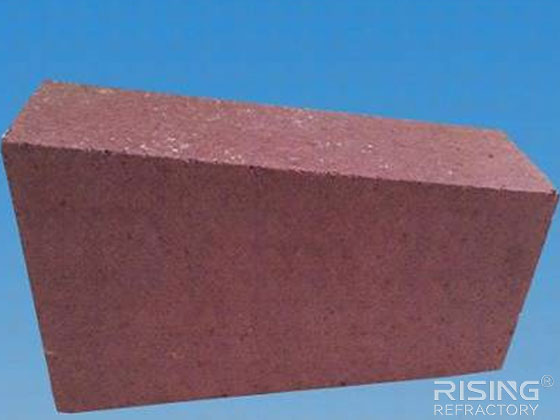
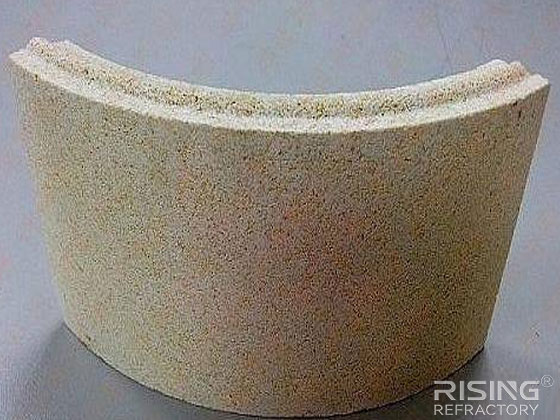
Zirconia Hollow-Sphere Bricks
- Characteristics: High-performance, high-temperature thermal insulation refractories with a maximum safe operating temperature of 2200°C.
- Applications: Used as high-temperature lining materials—capable of direct contact with flames—in thermal equipment across industries such as metallurgy, petrochemicals, and electronics.
- Key Raw Materials: Zirconia hollow spheres are produced by mixing zirconia with a stabilizer (such as calcium oxide, yttrium oxide, or magnesium oxide), melting the mixture via an electric arc, and then blowing the molten material with compressed air. Zirconia hollow-sphere bricks are manufactured by combining these hollow spheres with fine zirconia powder and a boric acid aqueous solution (as a binder). The mixture is shaped through vibration-pressing, and the green bricks are dried before being fired at 1700°C–1800°C.
Zirconia Refractory Fibers
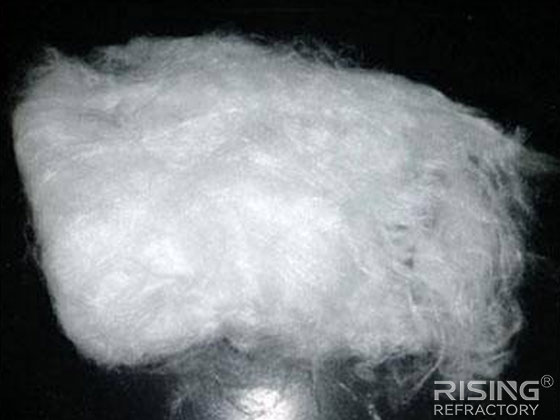
Zirconia refractory fibers—also known as polycrystalline zirconia fibers or stabilized ZrO₂ fibers—are an excellent high-temperature thermal insulation material. They can be used at temperatures up to 1600°C, which is significantly higher than the maximum operating temperature of commonly used aluminum silicate fibers. Characteristics: High refractoriness, low thermal conductivity, good chemical stability, and strong resistance to erosion.
- Applications: Can be further processed into various refractory fiber products for use as high-temperature, high-efficiency thermal insulation materials—for example, as linings for high-temperature electric furnaces, filters for molten metal, or carriers for high-temperature catalysts.
- Primary raw material: Zirconia.
- Manufacturing method: Produced through a specialized forming process, followed by drying and subsequent heat treatment.
Widespread Application of Zirconium-Containing Refractory Materials
Due to their exceptional properties, zirconium-containing raw materials have found extensive use in the field of refractories. Beyond the materials previously mentioned, these raw materials can also be incorporated—in smaller quantities—into shaped refractory products or castables to enhance performance characteristics such as erosion resistance and thermal shock stability. Currently, the demand for zirconium-containing refractories is steadily growing across scientific research, the defense industry, and various other industrial sectors. As a highly promising type of specialty refractory material, its scope of application is set to expand even further.