Performance Advantages of Silicon Carbide Lithium Battery Saggers
Against the backdrop of the rapid development of new energy vehicles and energy storage industries, the demand for lithium batteries has exploded. As the core container in the sintering process of lithium battery cathode materials (such as ternary materials and lithium cobalt oxide), the performance of the sagger directly affects sintering efficiency, material quality, and production costs. Traditional alumina saggers are gradually becoming insufficient to meet the demands due to problems such as rapid high-temperature wear and short lifespan. Silicon carbide (SiC) lithium battery saggers, with their unique material properties, are becoming a key direction for industry upgrading. This article will analyze silicon carbide lithium battery saggers from two dimensions: performance advantages and market prospects.
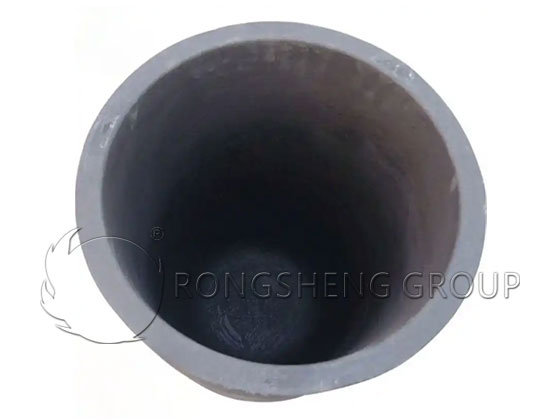
Performance Advantages of Silicon Carbide Lithium-ion Battery Saggers: High-Efficiency Sintering
Silicon carbide is a ceramic material composed of silicon (Si) and carbon (C), whose crystal structure endows it with excellent physicochemical properties. It exhibits significant advantages in the field of lithium-ion battery saggers:
-
Ultra-High Temperature Resistance and Thermal Stability
The sintering temperature of lithium-ion battery cathode materials typically needs to reach 800-1000℃ (some high-nickel ternary materials even exceed 1200℃). Traditional alumina saggers are prone to crystal phase transformation at this temperature, leading to volume shrinkage and cracking. Silicon carbide, however, has a melting point as high as 2700℃ and almost no crystal structure change below 1400℃. Its coefficient of thermal expansion is only 4.5×10⁻⁶/℃ (compared to 8×10⁻⁶/℃), enabling it to withstand extreme high temperatures for extended periods without deformation or cracking, significantly extending its service life.
-
Extreme Corrosion Resistance: Resistant to Molten Salt and Atmosphere Erosion
During sintering, the sagger needs to come into contact with molten materials such as lithium salts (e.g., lithium carbonate) and transition metal oxides, while being exposed to air or an inert atmosphere. Alumina saggers are prone to reacting with alkaline substances, gradually corroding their surface, leading to rough inner walls and material contamination. Silicon carbide has extremely strong chemical stability, resisting acid and alkali erosion from room temperature to high temperatures (except for hydrofluoric acid), and does not react with lithium salts, maintaining a smooth inner wall for a long time, preventing impurities from contaminating the cathode material and improving product purity.
-
High Thermal Conductivity and Low Energy Consumption: Accelerated Sintering, Cost Reduction and Efficiency Improvement
Silicon carbide has a thermal conductivity as high as 120-150 W/(m·K) (compared to only 20-30 W/(m·K) for alumina), enabling rapid heat transfer, resulting in a more uniform temperature distribution within the sintering furnace, shortening heating time, and improving production efficiency. Meanwhile, its low heat capacity reduces heat accumulation and lowers sintering energy consumption (actual energy savings of approximately 15%-20%), meeting the cost reduction and efficiency improvement needs of the lithium battery industry.
-
Ultra-long lifespan: Overall cost reduction of over 60%
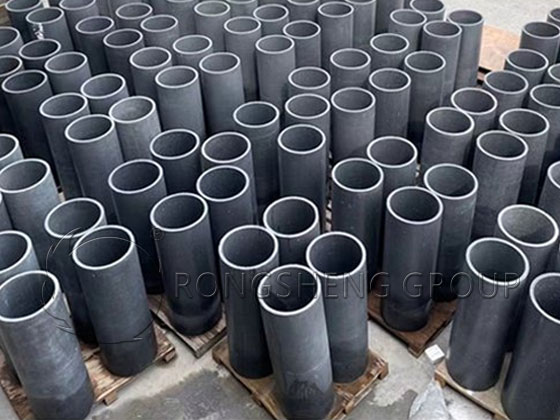
Traditional alumina crucibles, due to high-temperature wear and corrosion during continuous use, have an average lifespan of only 30-50 cycles. Silicon carbide crucibles, with their high-temperature and corrosion resistance, can achieve a lifespan of 200-300 cycles (some high-end products exceed 500 cycles). Although the cost per crucible is 30%-50% higher than alumina, the overall cost of use is reduced by over 60%, resulting in significant economic benefits.
Application Areas of Silicon Carbide Saggers
-
Explosive Downstream Demand: A “Must-Have” for New Energy Vehicles and Energy Storage
According to data from GGII (Gaogong Lithium Battery Research Institute), global lithium battery shipments are growing, with power lithium batteries accounting for over 70%. As the core cost unit of lithium batteries (accounting for approximately 40%), the cathode material requires a huge amount of saggers during its sintering process. Estimating the demand of tens of millions of saggers per GWh of ternary cathode material, the annual demand in the power lithium battery sector alone is enormous. With the rapid growth of global energy storage installations, the sagger market will further expand.
-
Dual Catalysts of Policy and Technology: Accelerated Replacement Process
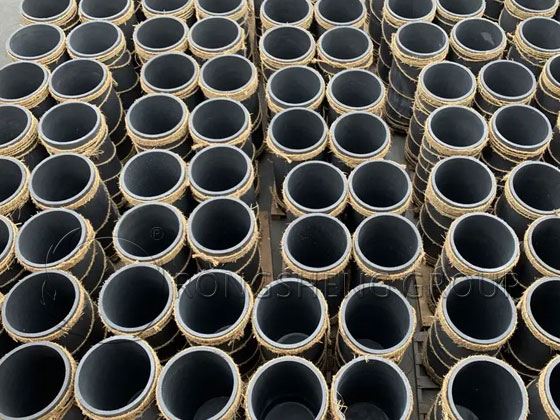
High-nickel content and single-crystal material are becoming the upgrade directions for cathode materials. High-nickel materials require higher sintering temperatures (above 1200℃), placing more stringent demands on sagger performance. Traditional alumina can no longer meet these requirements, making silicon carbide saggers the inevitable choice. Furthermore, leading battery manufacturers (such as CATL and BYD) and cathode material manufacturers (such as Ronbay Technology and Dangsheng Technology) have accelerated the adoption of silicon carbide crucibles, driving the industry’s substitution process.
-
Technological Iteration: Breakthroughs in Cost Reduction and Scale
Early silicon carbide crucibles were limited in large-scale application due to their complex manufacturing process (requiring high-temperature sintering and surface coating treatment) and high cost. In recent years, companies have reduced the cost per unit by optimizing sintering processes (such as pressureless sintering + reactive infiltration) and developing low-cost raw materials (recycled silicon carbide micropowder). Simultaneously, some manufacturers have achieved higher production capacity, and large-scale production further reduces costs.
Core Carrier for Industrial Upgrading
Silicon carbide lithium-ion battery crucibles, with their advantages of high temperature resistance, corrosion resistance, and long lifespan, have solved the pain points of traditional crucibles, becoming the “upgraded standard” in the sintering process of lithium-ion battery cathode materials. With the rapid growth of the downstream lithium-ion battery industry, policy support for high-end materials, and continuous breakthroughs in manufacturing technology, the silicon carbide crucible market is poised for explosive growth. According to industry forecasts, the global lithium-ion battery crucible market size will increase, with silicon carbide crucibles also accounting for a larger share, becoming a key link in the new energy industry chain that combines technological barriers and market potential.