Search for:
What Types of Special Kiln Furniture are Used to Support Ceramic Blanks?

Sintering vessels are specialized kiln furniture used to support the fired ceramic blanks or to hold powders, such as cathode materials, magnetic powders, and high-purity ceramic materials, which are calcined and synthesized before undergoing heat treatment in roller kilns, pusher kilns, or tunnel kilns. Depending on the firing process of the user, this kiln furniture will be subjected to different heating conditions, and the material of these products depends on the type of sintered body and the heat treatment process.

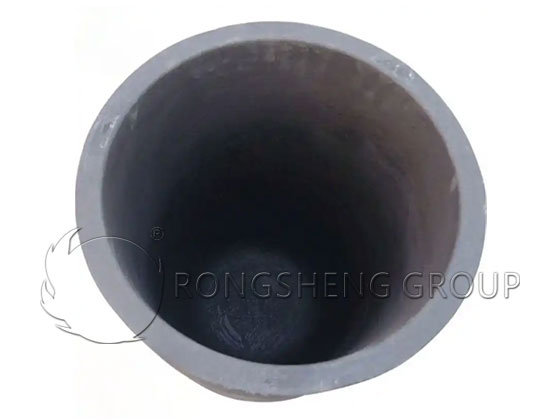
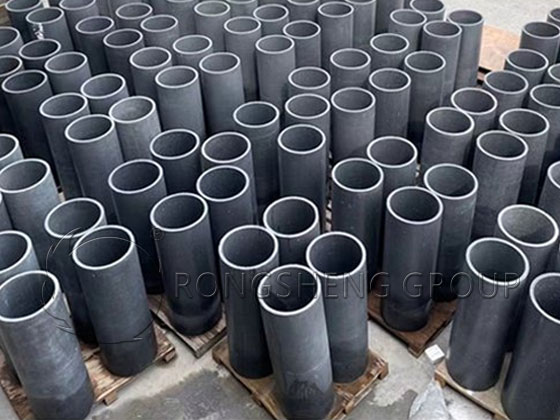
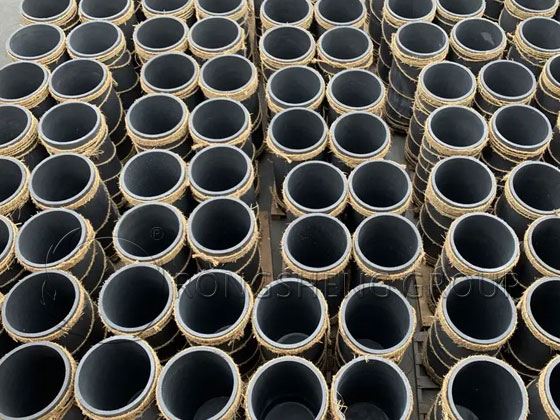
Saggers/Crucibles

Saggers are used to hold powders (lithium-ion battery cathode materials, magnetic powders, high-purity ceramic powders) for heat treatment in roller kilns, pusher kilns, and tunnel kilns. They are generally formed using extrusion, machine pressing, casting, and isostatic pressing processes, with the appropriate forming process selected based on the composition and structure of the product. Widely used materials include cordierite-mullite, corundum-mullite, silicon carbide, and graphite. Their application is most prevalent in the synthesis of lithium-ion cathode materials.

Cordierite Mullite Sagger

Free Quote

    Free Quote

    Your Name (required)


    Your Email (required)

    Your Phone

    Required Products (required)

    Enquiry Information

    Cordierite-mullite saggers are widely used in the field of lithium-ion battery cathode materials due to their excellent thermal shock resistance and economic efficiency.

    Aluminum-silicon saggers generally have a short lifespan due to the strong alkalinity and low melting point of lithium carbonate/lithium hydroxide, which are highly corrosive to acidic refractory materials.

    Corundum saggers are mainly used for calcining some high-purity powders in environments with less severe thermal shock conditions and high operating temperatures. For example, the calcination of high-purity alumina powder requires the sagger to be fired at 1800℃, using alumina active powder with an Al2O3 content of 99.9wt% and low-sodium white corundum. The binder uses low-ash content (Ash ≤ 0.01wt%), ensuring effective impurity control throughout the raw material process, and achieving a low coefficient of thermal expansion through sufficient high-temperature firing.

    Graphite and silicon carbide saggers possess high thermal conductivity, high-temperature resistance, and excellent thermal shock resistance. While their oxidation resistance is poor, they exhibit excellent resistance to alkaline corrosion under reducing atmospheres. Graphite saggers are commonly used as containers for loading materials during high-temperature sintering in reducing atmospheres, applied in lithium iron phosphate sintering and electromagnetic material sintering. Traditional graphite saggers are produced through machining, which is inefficient and costly. Silicon carbide saggers are also widely used in pharmaceuticals, fine chemicals, engineering metallurgy, and pickling industries.

    Firing Plates

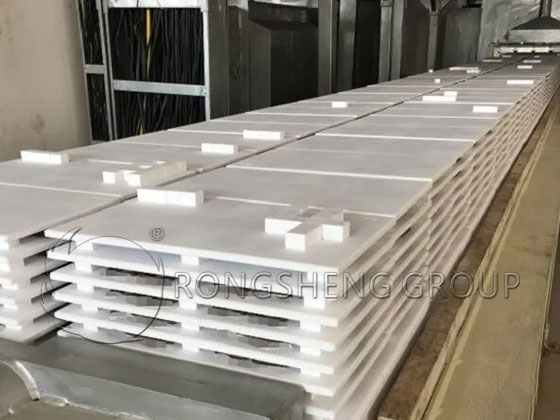
    Firing plates must withstand the thrust of movement and the friction of loading and unloading products during service, and must not crack under thermal cycling. While meeting the thermal shock resistance requirements, improving the bending and crack resistance of the firing plate is crucial. The firing plate material must have excellent chemical inertness and not react with the products it supports. Firing plate materials include alumina, zirconium oxide, and composite materials, mainly used in electronic ceramics and special ceramics.

    Corundum Firing Plate
    Corundum Firing Plate

    Free Quote

      Free Quote

      Your Name (required)


      Your Email (required)

      Your Phone

      Required Products (required)

      Enquiry Information

      Corundum firing plates refer to high-end kiln furniture with α-Al₂O₃ as the main crystalline phase. They possess excellent properties such as high strength, corrosion resistance, high temperature resistance, and wear resistance. They exhibit minimal deformation at high temperatures (>1650℃), but have high sintering temperatures and poor thermal shock stability. During the firing process of lead zirconate titanate piezoelectric ceramics, corundum firing plates face phenomena such as central warping, surface layered powdering, and peeling.

      Zirconia is a corrosion-resistant, high-temperature refractory oxide. Zirconia sintering plates are frequently used as sintering pads in dielectric ceramics, powder metallurgy, chip capacitors, and ferrite magnetic materials to prevent parts from sticking together during sintering and to prevent the loss of electromagnetic properties of electronic components.

      The firing temperature of conductive ceramics and device ceramics is generally between 1400 and 1650℃, and they are mostly corundum-mullite, corundum, or composite materials.

      Barium titanate ceramics are a star product in the electronic ceramics industry. Sintering is a crucial step in its preparation process, determining the densification and microstructure of barium titanate; therefore, the quality of the sintering plate is particularly important. Because barium titanate has a low melting point (1625℃), high density, and is alkaline, traditional aluminosilicate kiln furniture easily reacts with it, leading to product contamination. Foreign kiln furniture manufacturers have applied plasma spraying technology to the sintering plate preparation process. The firing plate features a corundum-mullite interlayer and a zirconium oxide cladding coating, offering high thermal shock resistance and preventing reaction or adhesion with the fired chip-type multilayer ceramic capacitors.

      With industrial development, the variety of products fired has increased, expanding the application areas of kiln furniture beyond ceramics to include fine chemicals and lithium-ion batteries. The performance requirements for kiln furniture materials, considering the characteristics of the fired products, are no longer limited to mechanical strength and thermal shock stability. Some applications also require excellent corrosion resistance and non-contamination of the fired products. Different corrosive media necessitate different requirements for kiln furniture materials. For example, in the production of lithium-ion battery cathode materials, kiln furniture materials must possess excellent thermal shock stability and resistance to alkaline lithium compounds. In the production of piezoelectric ceramics, kiln furniture materials must resist lead and its compounds.

      Rongsheng High-Performance Corundum-Mullite Kiln Furniture

      With the rapid development of science and technology and the economy, magnetic materials, functional ceramics, and electronic ceramics have been widely used in information, electronics, machinery, and chemical industries. This has also driven the rapid growth in demand for high-performance corundum-mullite kiln furniture materials.

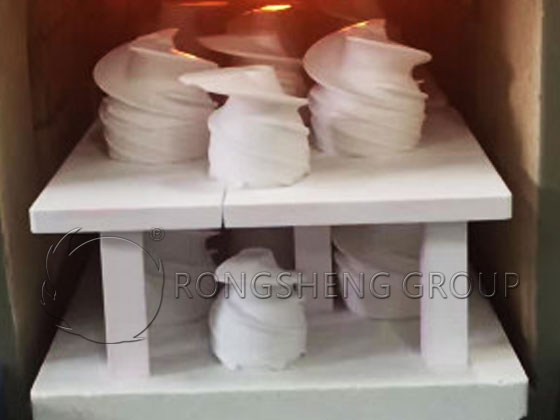
      Kiln furniture is a special type of refractory material, primarily serving to support and protect fired products. Product forms mainly include pushers, firing supports, and saggers. During service, kiln furniture is subjected to high temperatures, compression, friction, and thermal cycling, and its damage often manifests as fracture or deformation. Therefore, the key performance requirements for kiln furniture materials lie primarily in their high-temperature mechanical properties, which determine their performance, such as high-temperature flexural strength, high-temperature creep resistance, and thermal shock resistance. Improving these performance characteristics involves the design of the material’s microstructure and its resistance to damage under complex stress conditions under high-temperature loads. This requires in-depth research and development in areas such as raw material selection, matrix material treatment, process control, and thermal stress distribution.

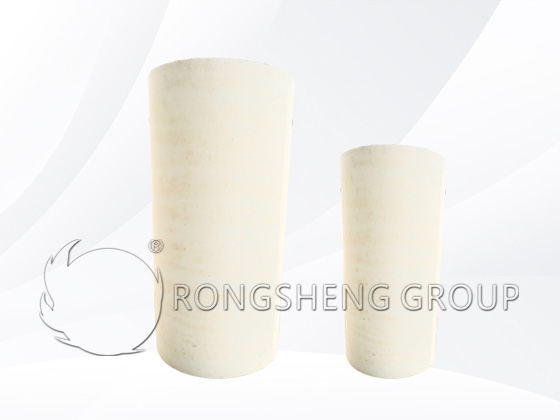
      Through rational selection of raw materials, optimized microstructure design, scientific product firing process, and stress distribution calculation, high-performance corundum-mullite kiln furniture has been developed. It can be widely used in the sintering of structural ceramics, electronic ceramics, and powder metallurgy parts.

      High-performance Corundum Mullite Kiln Furniture
      High-performance Corundum Mullite Kiln Furniture

      Free Quote

        Free Quote

        Your Name (required)


        Your Email (required)

        Your Phone

        Required Products (required)

        Enquiry Information

        Technical Advantages of High-Performance Corundum-Mullite Kiln Furniture

        1. Operating temperature up to 1750℃.
        2. Strong creep resistance.
        3. Meets the requirements of environments with strong thermal shock.

        Applications of Corundum-Mullite Kiln Furniture

        Corundum-mullite kiln furniture is an essential consumable refractory material in the ceramics industry, characterized by high demand and wide application. It is mainly used in the sintering of high-tech ceramics and powder metallurgy parts, such as electronic ceramics (MLCCs, varistors, magnetic materials, filters), Al2O3 structural ceramics (substrates, ceramic films, spark plugs, grinding media), ZrO2 structural ceramics (zirconia knives, mobile phone backplates, bearings, fiber optic ferrules), stainless steel, titanium alloys, etc.

        High-performance corundum-mullite kiln furniture is used in pusher kilns to fire zirconia knives. High-performance corundum-mullite kiln furniture is used in pusher kilns to fire alumina ceramics.

          Get Free Quote

          Your Name (required)

          Your Email (required)

          Your Phone

          Required Products (required)

          Enquiry Information

          The Influence of Binder on the Properties of Silicon Carbide Mortar

          Silicon carbide fire mortar is used for the construction or bonding of silicon carbide bricks in blast furnaces, silicon carbide bricks in blast furnace cooling walls, silicon carbide bricks in aluminum electrolysis cells, and silicon carbide bricks in ceramic kilns. Currently, silicon carbide fire mortar mainly uses liquid phenolic resin as a binder, which is mixed evenly in a certain amount before construction. The overall structure after construction must have good structural stability and airtightness, and be able to withstand various physicochemical reactions at high temperatures, so that the equipment can operate safely and stably. During the production, transportation, and use of fire putty, pure phenolic resin is brittle, highly toxic, has a high curing temperature, slow speed, and is prone to cracking and has low wear resistance after curing. This results in low production efficiency, high energy and equipment consumption, and the need to dissolve and dilute it with flammable and explosive materials during the mixing process, which seriously pollutes the environment and causes adverse effects. To solve these problems, three binders were used in the experiment, and comparative tests were conducted on three aspects: cone penetration, bonding time, and bonding strength.

          Rongsheng Silicon Carbide Mortar
          Rongsheng Silicon Carbide Mortar

          Free Quote

            Free Quote

            Your Name (required)


            Your Email (required)

            Your Phone

            Required Products (required)

            Enquiry Information

            Raw Materials and Proportions of Silicon Carbide Mortar Used in the Experiment

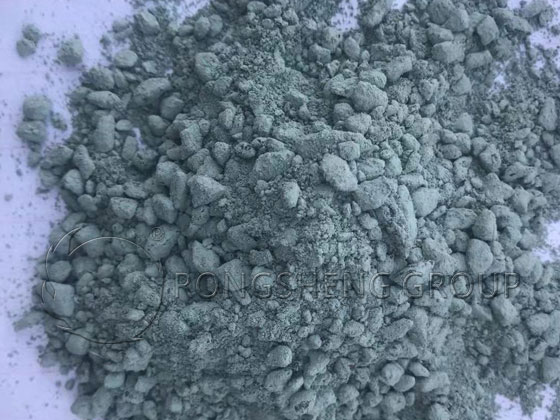
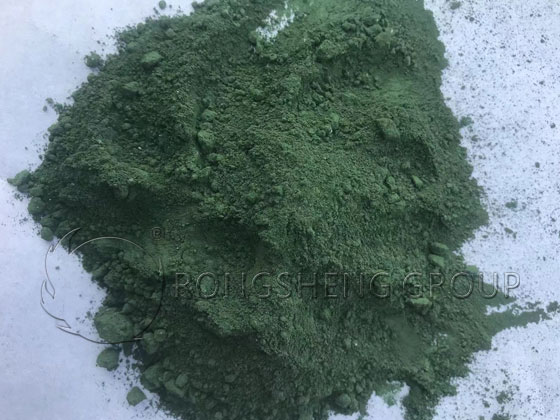
            The main raw materials used in the experiment included: silicon carbide particles (0.5–0 mm) and fine powder (≤0.074 mm) with a w(SiC) content of 98.3%; clay fine powder with a w(Al₂O₃) content of 34.2% and a w(SiO₂) content of 48.3%; alumina sol solid fine powder with a w(Al₂O₃) content of 32.3%; Secar 71 cement fine powder; solid water glass fine powder with a modulus of 2.8; and additives.

            The aggregate to fine powder was prepared according to a mass ratio of 40:60, and three different binders were added. The samples were numbered A, B, and C, where A represents alumina sol solid, B represents Secar 71 cement, and C represents solid water glass. The numbers correspond to the amount of binder added.

            Sample Preparation and Performance Testing

            According to the sample composition formula, the prepared materials were poured into a small mixer and dry-mixed for 1 minute. Then, 10% (w) water was added and mixed for 3 minutes, then an appropriate amount of water was added and mixed for another 3 minutes to form a slurry. The cone penetration, bonding time, and flexural bonding strength of each formulation sample were determined according to GB/T 22459—2008 (drying at 110℃ for 24 hours and charring at 1300℃ for 3 hours).

            Performance of Silicon Carbide Firemortar with Different Binders

            • (1) Silicon carbide firemortar using alumina sol as a binder exhibited the best cone penetration after 1 hour of standing. Silicon carbide firemortar using solid water glass as a binder showed the best cone penetration after 0.5 hours. However, silicon carbide firemortar using Secar 71 cement as a binder rarely achieved ideal cone penetration.
            • (2) In silicon carbide firemortar, when using alumina sol and solid water glass as binders, the bonding time of samples with binder additions between 4% and 10% (w) was within the national standard requirements. However, when using Secar 71 cement as a binder, the bonding time requirement was only met when the binder addition was 2% (w).
            • (3) Silicon carbide firemortar exhibited the best flexural bond strength after baking and heat treatment when the alumina sol solid addition was 8% (w). The flexural and bond strength properties were best when the solid water glass content was 6% (w) after drying and heat treatment. However, the strength of the Secar 71 cement sample after drying was too low, while the strength after heat treatment increased with the increase in content.
            Silicon Carbide Mortar for SiC Bricks
            Silicon Carbide Mortar for SiC Bricks

            Free Quote

              Free Quote

              Your Name (required)


              Your Email (required)

              Your Phone

              Required Products (required)

              Enquiry Information

              What type of refractory mortar is used for laying corundum-silicon carbide composite bricks?

              When laying corundum-silicon carbide composite bricks, it is essential to use refractory mortar of the same material, namely corundum-silicon carbide refractory mortar. This is because refractory mortars of the same material have identical performance characteristics and can resist the same furnace atmosphere under the same high temperatures or erosion conditions. There are various types of corundum-silicon carbide composite bricks, including precast bricks and sintered corundum-silicon carbide bricks.

              Precast bricks do not require refractory mortar. This is because precast bricks are generally produced in small quantities and are cast according to specific brick shapes for specific locations, thus requiring no refractory mortar for laying.

              Sintered corundum-silicon carbide composite bricks, however, are sintered at high temperatures and are generally used in areas of high furnace lining temperature and severe erosion and wear. The required quantity is larger than for precast bricks. Therefore, refractory mortar of the same material must be used for laying them, with the refractory mortar acting as a bonding material to seal the gaps between the bricks.

              What phenomena occur with refractory mortar under high temperatures?

              When preparing corundum-silicon carbide refractory mortar, the amount of silicon carbide added to the corundum-silicon carbide composite bricks must be considered. Generally, the proportion of silicon carbide added to the mortar should match the proportion added to the refractory bricks. This ensures that the performance is essentially the same for the same material. If too much silicon carbide is added, the bonding during construction will be poor, making construction impossible. Forcibly adding a binder to adjust the amount will affect the later strength. If an unbalanced proportion of silicon carbide is not used, or if refractory mortar without silicon carbide is used, the mortar will crack and fall off at high temperatures. Falling mortar will cause the brick layer to settle, leading to furnace shutdowns for maintenance and production delays.

              Therefore, corundum-silicon carbide composite bricks must be laid with corundum-silicon carbide refractory mortar. This ensures that the material, atmosphere, operating temperature, and resistance to erosion and abrasion are identical.

                Get Free Quote

                Your Name (required)

                Your Email (required)

                Your Phone

                Required Products (required)

                Enquiry Information