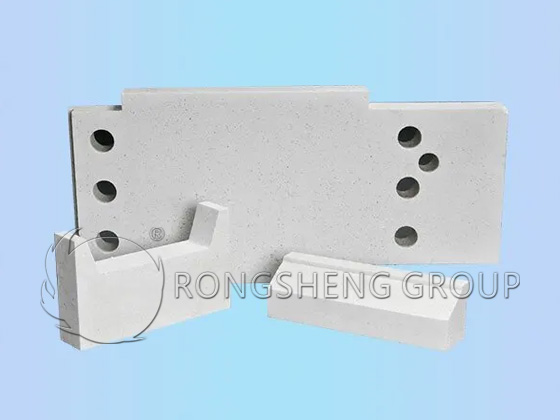
Causes and Preventive Measures for Cracking in Glass Kiln Lip Bricks
Glass Kiln Lip Bricks are a relatively special type of irregularly shaped refractory material. Their service life is affected by every aspect, including the raw material composition, forming and manufacturing process, and assembly. Especially during the hammering and ignition processes, the bricks must withstand temperature differences of hundreds of degrees Celsius. Therefore, whether using a single brick or combining several lip bricks, cracking is a potential problem. The causes of cracking in lip bricks and preventative measures are listed below.
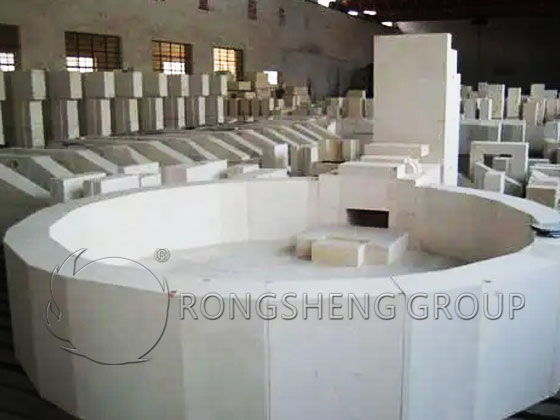
- ① The brick material itself has low compressive strength, poor thermal stability, and a high coefficient of thermal expansion. When subjected to thermal shock, the tensile strength of the brick is less than the expansion thermal stress, causing it to break. To eliminate this factor, in addition to designing a good formula and selecting good materials, the contact surfaces between the fixing screws and the retaining iron used to fix the lip brick and the lip brick should be padded with flexible material, and the iron parts should not directly contact the brick body.
- ② The firing temperature is low, and the dehydration stage of crystal water is short. During the high-temperature dehydration process of the crystal water inside the brick body, the original structure is destroyed and new minerals are generated. To avoid this situation, in addition to avoiding components with a large amount of mineral structural water when determining the lip brick formula, the brick blank must be fully dried after casting before being fired in the kiln. Furthermore, the heat preservation time should be increased in the dehydration temperature range of crystal water according to the mineral composition.
- ③ The lip brick is backed by the tail brick, and there are fixing screws on the front and sides acting on the brick body. When heated, forces from four directions act on the local area of the brick body. The fixing screws restrict the expansion and movement of the brick body, but they can also easily cause the brick body to crack under external forces. Preventive Measures: After the lip brick is fixed to the overflow port support, secure the support with jacking screws and bolts, but do not tighten it completely; leave an expansion gap. Then, heat it with fire, slowly raising the temperature to above 700℃ to allow the lip brick to fully expand. Tighten the jacking screws again before the lead-in.
- ④ Insufficient pre-use baking time prevents the removal of free water from the brick. To eliminate this factor, place the lip brick in a high-temperature environment before use to fully remove free water, or preheat the kiln during on-site construction.
- ⑤ Using deformed lip brick supports may cause cracks or even breakage of the lip brick. Therefore, deformed lip brick supports, especially those with deformed contact surfaces with the lip brick, should not be used.
Lip Brick Replacement
After a period of operation in a rolled glass production line, if defects appear in the glass due to erosion or wear of the lip brick, it needs to be replaced.
Before replacing the lip brick, it must be baked at a high temperature for at least 72 hours to remove free water remaining in the brick due to processing, transportation, or other reasons. Baking can be done using a natural drying method: the brick is placed next to the kiln, relying on the heat emitted by the kiln for baking. Because it is natural baking, it requires a long time and can only remove some free water, so the baking is not thorough. Alternatively, a preheating furnace baking method can be used. A kiln is built with refractory materials, and the lip brick is heated according to a heating curve, baked at 200-300℃ for 24 hours, and then assembled to the overflow port. After the calender is positioned and installed, the temperature is further increased to 1100℃ for the lead-in operation. This method requires specialized hoisting and installation tools. It is also more difficult to operate at high temperatures, but it ensures that the lip brick will not crack. Online baking can also be used: after the lip brick and calender are positioned and installed at the forming port, they are baked using a spray gun. This method uses gradual heating, allowing sufficient time for the free water and crystal water in the lip brick to be fully drained. This method reduces the probability of the lip brick cracking or even shattering.
Before replacing the lip brick, prepare the following tools: pipe wrench, Allen wrench, wrench, pliers, level, measuring tape, 1-3mm sheet metal, square timber, mullite fiber paper, etc.
When removing the lip brick from the calender, first use a sledgehammer and pneumatic hammer to remove the old lip brick. Then, use an electric scraper to clean the tail brick thoroughly, ensuring there is no residual glass or unevenness on the surface. After applying a 3-5mm thick layer of high-temperature mullite fiber paper to the contact surface of the tail brick, assemble the lip brick on the lip brick support as required, or install the lip brick already assembled on the support at the tail brick location. Finally, push the calender into position, check for any problems, and then slowly heat the lip brick to the guide plate with a spray gun to complete the replacement operation.