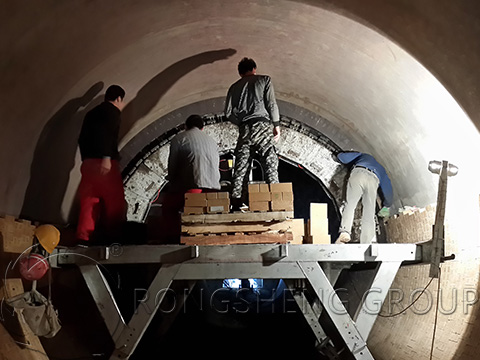
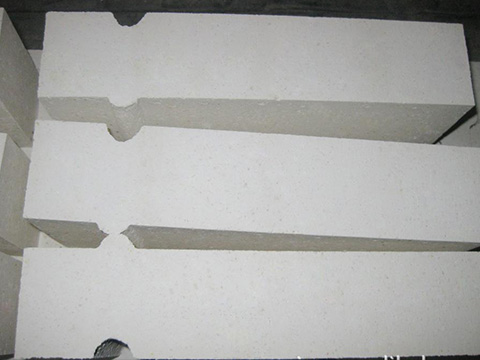
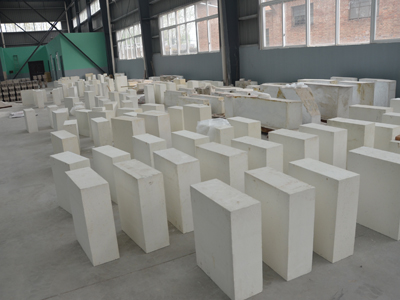
Refractory material is an important material to ensure the normal operation of cement rotary kiln. Its performance, design level and masonry process will affect its service life, kiln operation rate and clinker quality. Many factors, such as the stress experienced by the refractory material during the operation of the cement kiln system, will affect the refractory used in rotary kiln. Generally, the design of rotary kiln refractory lining in the rotary kiln firing system needs to be selected according to certain principles according to the variety and performance of the cement kiln refractory materials.
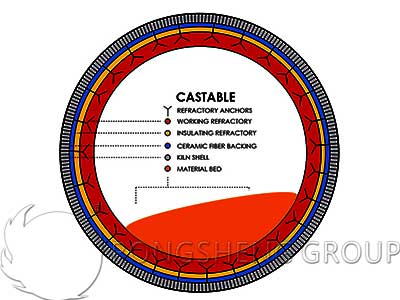
Castable Refractory Lining for Rotary Kiln
A castable refractory lining configuration with a working layer, insulating layer, and a ceramic fiber backing.
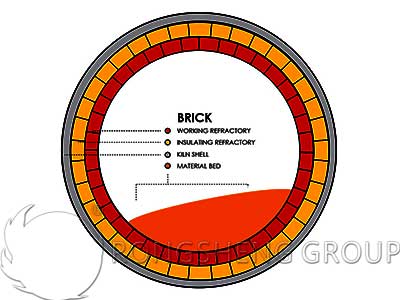
Refractory Bricks Lining for Cement Rotary Kiln
A typical refractory brick lining configuration with a working layer and an insulating layer.
The selection principles of Rotary Kiln Refractory Lining are as follows:
① Choose refractory materials according to the production method and kiln type.
② Use refractory materials according to the specifications of the kiln.
③ Select refractory materials according to the nature of the raw materials and fuels used.
④ Choose refractory materials according to the heat load in the kiln.
⑤ Select refractory materials according to the stress distribution and thermal distribution in the kiln.
Cement rotary kiln is the most advanced rotary kiln on the market. After years of technical innovation and practical application, the selection of refractory used in rotary kilns has also accumulated rich experience. More refractory products for the rotary kiln refractory lining, such as spinel refractory, dolomite refractory. Please Contact RS for more details.
Refractory cement for boiler, when the boiler is repaired, the models and specifications of refractory concrete are also different according to the different parts used. For example, when repairing the furnace wall, 0-3mm high-aluminum aggregate and refractory cement are mixed 1: 1. If your thermal equipment needs refractory cement, where to buy refractory cement for boiler? Rongsheng refractory cement manufacturer will serve you wholeheartedly.
RS Refractory Cement for the Refractory Lining Construction
As a monolithic refractory, refractory cement is often used as a refractory lining and also as a castable refractory cement. Refractory cement is mainly used in coke ovens, glass furnaces, blast furnace hot air furnaces and other industrial furnaces. Application industries include: metallurgy, building materials, machinery, petrochemicals, glass, boilers, electricity, steel, cement, etc.
In the boiler industry, 0-3mm high-aluminum aggregate and refractory cement are mixed 1: 1 when repairing the furnace wall. Among them, high-aluminum aggregates are also called refractory aggregates and powders. The furnace arches are made of refractory concrete with 4-15mm mixed aggregate. The refractoriness of the mixed refractory castable can reach 1700 degrees. The level of refractoriness is closely related to the aluminum content of refractory aggregates. The amount of refractory cement depends on the tonnage of the boiler. The larger the tonnage, the greater the amount. A 10-ton coal-fired boiler or hot water boiler uses approximately 5 tons of refractory cement.
Generally speaking, as long as it is a refractory dealer or a refractory manufacturer, it will sell refractory cement. If your boiler has a large demand for refractory cement, you can directly contact the refractory manufacturer. If your demand is not very large, you can directly contact your local dealer to purchase. If you buy a small amount of refractory cement through the manufacturer, it is not cost-effective in terms of freight.
Rongsheng is an experienced manufacturer of refractories. Our refractory products, including castables, refractory cement, and refractory bricks, have been exported to more than 60 countries and regions around the world. In the Philippines, Laos, Vietnam, Canada, Australia, and other places, we have our refractories project.
As a refractory cement manufacturer, Rongsheng’s refractory bricks and castable products can reach the international quality level. In addition, Rongsheng has an independent production plant for refractory bricks and castables. Our workshop is equipped with advanced production equipment and an experienced technical R & D team. If you need to build new boiler equipment or refurbish the refractory lining of the boiler equipment, please contact us.
Refractory cement for a boiler is also divided into many types, mainly because the aluminum content is different. Generally, the price of CA-50 refractory cement is around 1500, and the cheaper one can reach around 1200. The price of the most expensive refractory cements, CA-80 and 70, can reach 56,000 tons. The prices of refractory cement listed here are from the Internet and are for reference only. The specific price is subject to the time of purchase. For cheap refractory cement Philippines, please contact Rongsheng Refractory Cement Manufacturer.
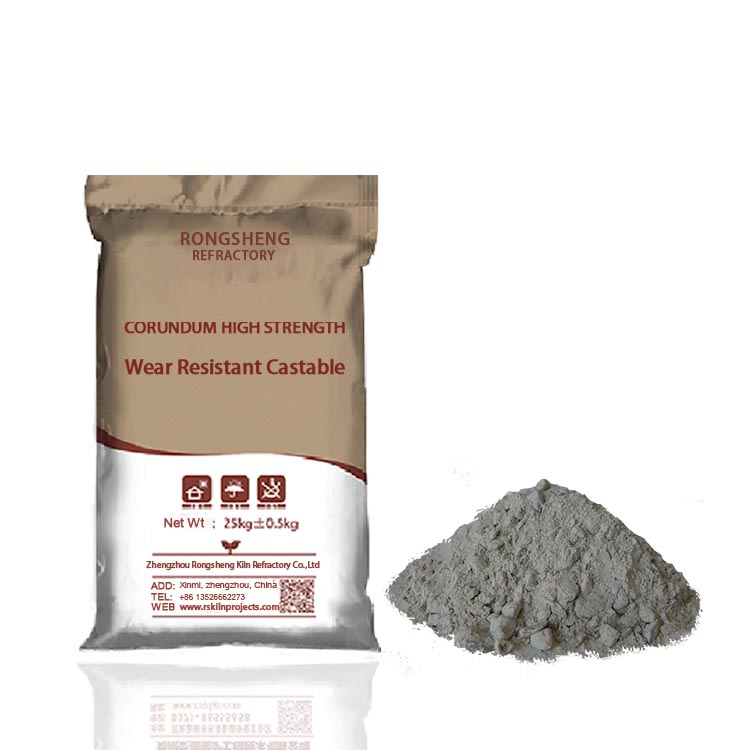
High-strength Corundum Castable are fire-resistant crafts with Al2O3 content exceeding 90%, with corundum as the main crystal phase, and blended with appropriate thickeners, coagulants, stainless steel plate chemical fibers, and compounded according to strict secret recipes. It has many characteristics such as good high temperature compressive strength, wear resistance, erosion resistance, high heat transfer, thermal shock resistance, corrosion resistance, good air tightness and early strength by the High-strength Corundum Castable RS Refractories Manufacturer. Email us for more details.
Corundum series castable refractory products are a type of unshaped refractory insulation materials that are relatively common in production and application at this stage. Corundum is a high-strength abrasion-resistant and refractory castable raw material. The key is to use corundum as the stone and particulate material plus some fusion agent to prepare the refractory castable. Compared with high aluminum refractory castable and mullite refractory castable, it has higher impact toughness and cavitation resistance. It is mainly used as lining raw materials for various furnaces such as heating furnaces, hot blast furnaces for ironmaking blast furnaces, heat treatment furnaces, and porcelain kiln. The castables are mainly used in metallurgical industry and industrial furnaces, and are also widely used in crude oil, chemical plants, decorative building materials, electrical engineering and mechanical equipment industrial furnaces and thermal insulation equipment. It is mainly used to construct a variety of general buildings such as heat treatment furnace linings.
(1) Adding steel fiber and water reducing agent to the castable can produce steel fiber castable with good heat resistance and strong wear resistance. Mostly used for heat treatment furnace hearth, tapping trough and cement rotary kiln mouth.
(2) According to customer requirements, using this series of product castables can be used to produce and process a variety of prefabricated components.
High-strength Corundum Castable Physical and Chemical Indicators
Instructions for use of High-strength Corundum Castable
1. Before construction of the refractory castables project, be sure to check whether the nails are firmly welded. Use high temperature resistant nails at around 500 ℃. The surface of the nails should be coated with paint or plastic tape to buffer the surging ground stress after heat.
2. The pouring material should be stored in a warehouse with a cover to prevent the return of moisture. The storage period cannot exceed six months.
3. It can be applied in the working temperature range of -5 ℃ ~ 30 ℃.
4. In the application, be sure to use a forced mixer or mortar mixer to mix materials, and do not use manual service to mix materials. The mixing utensils need to be cleaned and tidy in advance. Do not infiltrate other dirt such as lime powder, grit, fly ash cement.
5. Be sure to use clean drinking water for mixing, strictly control the water demand, and perform measurement verification.
6. Add the big bag material first, then the small bag material, and then add the water. The water flow rate refers to the water demand of each model. After mixing with water for 3 minutes, tap water can be removed from the blender by holding the ginseng pellets. Under the condition that the slurry can be shaken, tap water is required to achieve higher compressive strength.
7. During the application, all the raw materials in the bag should be cleaned, and some of the applications cannot be removed. It is forbidden to mix different types of castables.
8. The construction time can be up to 30 minutes. The solidified blocks can not be mixed with water and used, and should be abolished. Large and medium-sized stirring rods are used to vibrate, which exceeds the compaction density. The massage stick must be reserved. In case that the massage stick is abnormal, the reserved stick can be turned on immediately.
9. The lining can be dismantled every day after construction, and it can be maintained in natural gas every day. If it needs to be delivered, it can be baked.
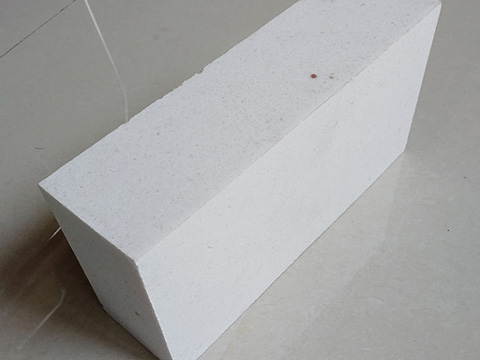
Due to the characteristics of its raw materials, sillimanite bricks have a low thermal expansion rate, resistance to metallurgical slag and various glass liquids, and high temperature abrasion resistance. Therefore, the physical and chemical properties of sillimanite bricks are better than those of high-alumina bricks, with a fire resistance of 1770 ~ 1830 ℃ and a load softening starting point of 1500 ~ 1650 ℃. It is mainly used for forming the liquid hole of the glass pool kiln, the lining of the blast furnace, the throat and the ceramic industrial kiln furniture.
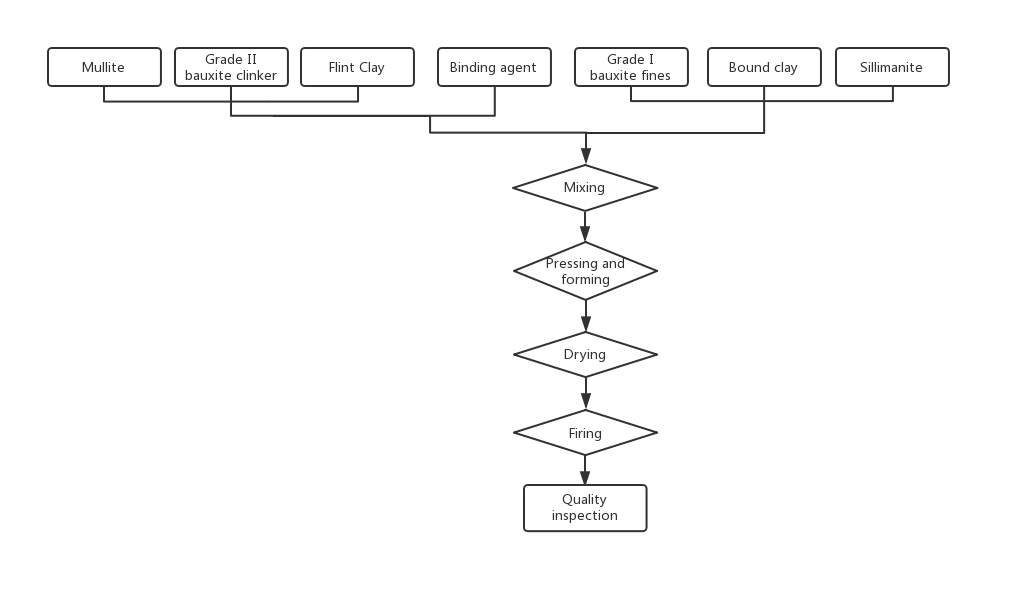
The blast furnace sillimanite bricks produced by the plant are based on sillimanite and mullite, alumina clinker and cokestone clinker as aggregates. It is made by adding an appropriate amount of bound clay and mixing with the granules at an appropriate ratio, after mixing, high pressure molding and proper firing temperature.
Physical and Chemical Index of Sillimanite Bricks for Blast Furnace
Items
Sillimanite Bricks (#1)
Apparent Porosity (%)
15.3
Bulk Density (g/cm3)
2.58
Cold Crushing Strength (MPa)
120.9
Refractoriness (℃)
>1810
Refractoriness Linear Change (%)
(1500℃, 2h)
+0.17
KD
1590
T2
1660
Thermal Shock Resistance
(1000,WaterQuenching, Cycle)
>15
The Main Chemical Composition of Sillimanite Bricks Raw Materials
Items
Al2O3
Fe2O3
TiO2
K2O+Na2O
Sillimanite
57.33
1.71
0.91
0.49
Grade II bauxite clinker
67.68
1.30
1.65
0.30
Grade I bauxite fines
82.50
2.40
–
–
Mullite
76.17
0.40
0.27
0.50
Flint Clay Clinker
44.61
1.20
–
–
Production Process of Sillimanite Bricks for Blast Furnace
The firing temperature of sillimanite brick is between 1350 ~ 1400 ℃. This is a major feature of process parameters. Firing is performed in a tunnel kiln. And in summary, the addition of sillimanite to high-alumina materials (such as rocky soil, mullite, etc.) can produce high-quality refractories.
Sillimanite bricks for blast furnaces. The parts used are furnace bottom protection brick, furnace throat lining and tuyere combination brick.
The brick is made of sillimanite, andalusite and sintered mullite as the main raw materials, and some ultrafine powders and binders are added. The bricks are fired in a tunnel kiln by high pressure molding or vibration pressure molding. The firing temperature is 1390 ~ 1400 ℃, and the heat preservation time is 10 ~ 16h.
The proportion of sillimanite bricks: sillimanite 30% to 40%, andalusite + mullite 35% to 55%, super alumina 10% to 15%, raw clay 5% to 10%.
Physical and Chemical Index of Sillimanite Bricks for Blast Furnace
Items
Refractoriness(℃)
Apparent Porosity (%)
Bulk Density (g/cm3)
Cold Crushing Strength (MPa)
T2
Thermal Shock Resistance
(1000,WaterQuenching, Cycle)
Al2O3
Fe2O3
Refractoriness Linear Change (%)
(1500℃, 2h)
Thermal Expansion (1000℃,%)
Sillimanite Bricks (#1)
>1790
13
2.58
99.6
1610
>30
61.28
0.86
0
–
The sillimanite bricks produced by the plant use sillimanite and andalusite composite materials. Particle size of sillimanite concentrate: 0.250 ~ 0.149mm, about 10% ~ 20%, 0.149 ~ 0.104mm, about 27% ~ 60%, 0.104 ~ 0.074mm, about 12% ~ 28%, and less than 0.074mm, about 30% ~ 48%. This particle size is used as an intermediate particle when making bricks.
The decomposition temperature of andalusite is different from that of sillimanite. At the calcination temperature of about 1400 ° C, the sillimanite crystals in the product have not been transformed, and the transformation of andalusite crystals is not complete. Therefore, during use, these crystals continue to undergo the micro-expansion accompanied by mullite , Which is enough to offset the shrinkage caused by the increase of the liquid phase amount of the product at high temperature, and improve the load softening temperature of the product. At the same time, high pressure molding plays a role in reducing porosity and increasing strength.
In summary: Over the years, users have reported good use and can better meet the needs of the light industry, building materials, and metallurgical industries. Due to the good physical and chemical properties, low cost, and significant economic and social benefits of Sillimanite Bricks products, its development prospects are very broad. The Sillimanite Bricks products need to further improve its physical and chemical properties.
Low cement castable, also named as low cement castable refractory, is a kind of unshaped refractory castable. This Low cement castbales are made of superfine power, aluminate cement, anti detonant and water reducer. RS Kiln Refractory Manufacturer supply customers with high quality castable refractory, Email to us for the free quote, and you will get the lower price here!
Low-cement, ultra-low cement refractory castables refer to castable refractories with a calcium aluminate cement addition of less than 8%. According to the American ASTM regulations, the CaO content in low cement castables is less than 2.5%, generally between 1.0% and 2.5%. When the CaO content is less than 1.0%, it is called an ultra-low cement castable. Unlike ordinary refractory castables, some or most of the calcium aluminate cement in the matrix of low cement and ultra low cement castables is replaced by ultrafine powder with the same or similar chemical composition as the main material. At the same time, an appropriate amount of dispersant (water reducing agent) and a certain delayed coagulant are added.
Low cement castables refractory material has the merits of high density, low porosity rate, good hot strength, high refractoriness and high refractoriness under load. Besides, the low cement refractory castable has strong mechanical spalling resistance, shock resistance and corrosion resistance ability.
High density
Low porosity rate
Good high temperature strength
High refractoriness
High refractoriness under load
Strong in mechanical spalling resistance, shock resistance and corrosion resistance.
Due to the Properties of Low cement castable high alumina, it is widely used in the following thermal equipments. Such as heating furnace in metallurgical industry, boilers in power industry and building material industrial furnace.
RS refractory manufacturer is a professional supplier of refractory castable for steel industry, petrochemical industry, cement industry, glass industry, etc. We RS Refractory Factories, produced not only various refractory bricks, also own the newly established castable refractory production line, 150 tons per day. If you are looking for high strength castables, low cement castables refractory density, mullite refractory castable, lightweight insulation castables, etc. Please quote us by filling the message box or to the contact us page. Make an ideal purchase plan for refractory castables, Rongsheng will never let you down!
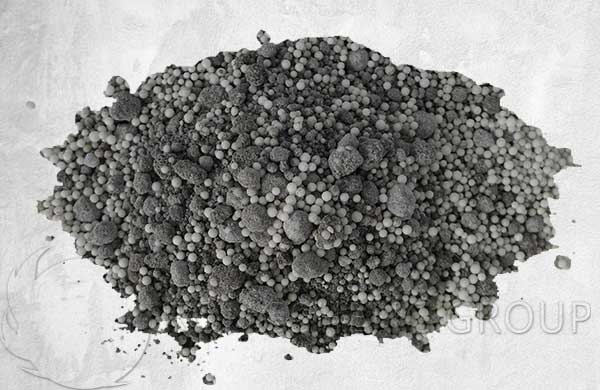
The Lightweight Castable Refractory is a castable unshaped refractory material prepared by adding water or a solution containing a binder during construction by using light refractory aggregate, refractory powder, binder and admixture. It is generally used as a thermal insulation lining for thermal equipment to reduce energy consumption by heat preservation. Therefore, it is also called Lightweight Insulating Castable Refractory.
Lightweight Insulating Castable Refractories Features
Lightweight Insulating Castable Refractories have good thermal insulation properties due to their small bulk density and low thermal conductivity. At the same time, lightweight insulation refractory castables have other unique features for thermal insulation lining of various thermal equipment, and some lightweight castables can also be used directly for work lining.
Feature 1: Light weight, high compressive strength, acid and acid gas corrosion.
Feature 2: heat insulation, heat preservation, low water absorption
Feature 3: Simple construction, it is the most ideal product for the construction of alkali corrosion resistant parts under high temperature.
Feature 4: Good workability, strong adhesion, long initial setting time and long operation time, strong strength growth, strong impermeability, no need for acid treatment, easy to ensure the dense and fullness of masonry gray joints, can significantly improve The airtightness and integrity of the lining wall of the chimney and the corrosion resistance of the lining are ideal cementing materials for high chimneys, high temperature flue and duct lining, and can also be used for acid resistant pools in petroleum, chemical, nonferrous metallurgy and other industries. Acid resistant engineering such as tanks.
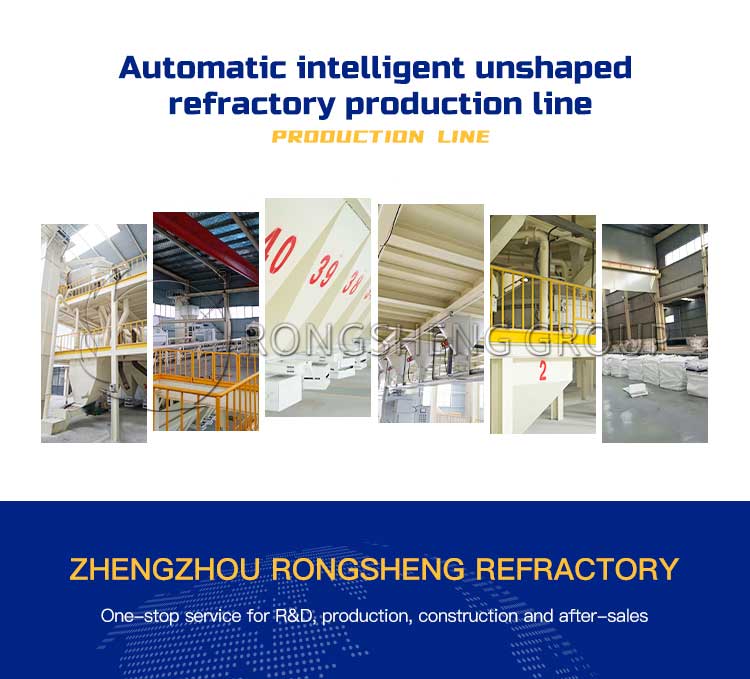
The refractory castable production line of Rongsheng Refractory Manufacturer has been fully put into operation. The daily production capacity is 150 tons. In addition to the visible production strength, Rongsheng’s technical strength cannot be underestimated. Rongsheng’s technical team will consolidate the customized castable refractory lining according to the working conditions of the customer’s thermal equipment to improve the use of refractory materials, extend the life of the lining of the kiln, and greatly save costs and energy consumption.
If you are in need of refractory castables, such as Lightweight Insulating Castable Refractory, please contact us and we will provide you with more choices, lower prices, and faster delivery!
Refractory Castables with a true porosity not less than 45% are called insulating castale refractory. Insulating castale refractories are composed of refractory lightweight aggregates and powders, binders or admixtures. Insulation refractory castables are classified into light aggregate refractory castables, foam refractory castables and aerated refractory castables.
The aggregate of the insulating refractory castable is divided into: coarse aggregate, particle size 10~3mm, loose bulk density less than 1.0g/cm3; fine aggregate, particle size less than 3mm, loose bulk density less than 1.2g/cm3.
Lightweight aggregates mainly include expanded perlite, ceramsite, porous clinker, floating beads, pumice vermiculite, and alumina hollow spheres.
The foam refractory castable consists of refractory lightweight aggregate, binder and foaming agent. The foaming agent is used most in rosin soap.
The gas-filling agent in the aerated refractory castable is produced by reacting certain metal powder with acid to form hydrogen, or dolomite, periclase and gypsum (as a stabilizer) with sulfuric acid, or by generating acetylene reaction with calcium carbonate and water. The gas is such that the cast body is a porous lightweight body.
The insulating castale refractories isolate the heat transfer and is generally used in the tundish part of the kiln to save energy. Rongsheng insulating refractory castables refractory manufacturer, produces and sells a variety of unshaped refractory materials, welcome to quote the price and learn more about the insulating castale composition of insulating castale refractory.
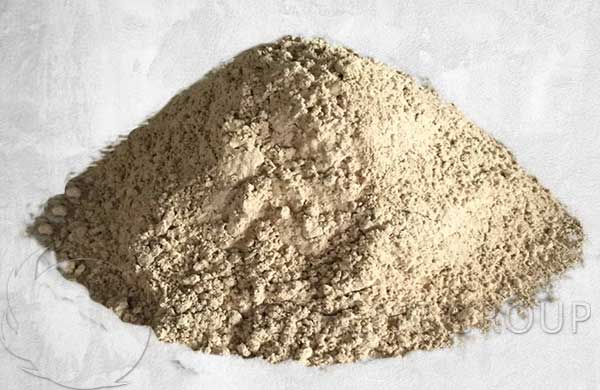
The raw materials of high-quality bauxite and high-quality lime are mixed in a certain proportion; after sintered, the clinker with aluminate as the main component is obtained; the clinker is further ground into fine powder; Finally, a fire-resistant hydraulic cementitious material called Castable Refractory Cement is produced. Refractory Cement has a refractoriness of not less than 1580°C. According to the composition, it can be divided into alumina refractory cement, low calcium aluminate refractory cement, calcium magnesium aluminate cement and dolomite refractory cement.
Refractory cement is also be called furnace cement. Refractory cement can be used to bond various refractory aggregates (such as corundum, calcined high alumina bauxite, etc.) into refractory mortar or concrete for lining of cement rotary kiln and other industrial furnaces.
Precautions after Construction of Refractory Cements Lining
After the refractory cement lining is completed, an boiler-drying is required to evaporate excess water. Avoid the explosion of the boiler when start-up operation, and extend the service life of the refractory lining.
When the refractory cement lining is on baking, it should be slowly heated to avoid excessive temperature rise to prevent local bursting. When it comes to cooling of the refractory cement lining, it should also be slow, and avoid forced ventilation.
Castable Refractory Cement Manufacturer
Rongsheng Castable Refracory Cement Manufacturer has experienced more than 10 years in the refractory industry and currently has a refractory brick production plant and a castable production plant, and a separate office. RS unshaped refractory production line has been put into production, fully automatic, efficient production process, to provide you with high quality refractory cement and other castable products. To get Castable Refractory Cement Price, please contact our sales manager, Make a free quote.
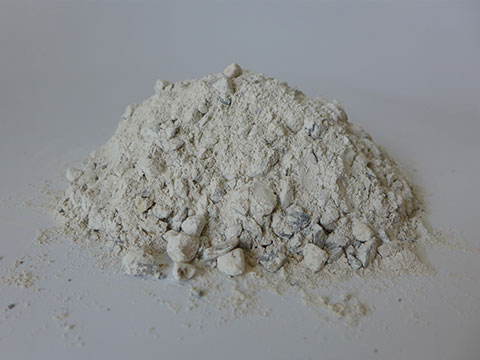
Corundum castable is made from corundum aggregate, fines, binders and additives. Corundum castable has the advantages of high mechanical strength, excellent abrasion resistance, high refractoriness, good slag corrosion resistance, low creep rate and so on. Al2O3 content in corundum castable is above 90%. Raw materials used for corundum castable production are: tabular corundum, white corundum, brown corundum and so on. Composite corundum castable such as chrome corundum castable, application of corundum castable, zirconia corundum castable are widely used in different industrial furnaces areas.
Corundum castable used in heating furnace tapping spout are composed of fused corundum( brown corundum or sub-white corundum) aggregate, fused corundum powder, a-Al2O3 micro powder, SiO2 micro powder, Cr2O3 micro powder( or zircon micro powder) and high purity calcium aluminate cement.
Application of Corundum Castable
Corundum refractory castable is widely used in steel ladle working lining, sliding nozzle valve, tapping nozzle, electric arc furnace cover triangle zone and so on. Besides, corundum castable are also used in places where need good abrasion resistance, for example, rotary kiln, coal injection tube, circulating fluidized bed boiler, RH furnace immersion tube outer lining, petrochemical industry high temperature catalytic cracking reactor working lining, etc.
Sometimes, black silicon carbide is added into corundum castable raw materials, so the wearing resistance is greatly improved, it is very suitable for CFB boilers.
Corundum Castable Physiochemical Index
Item
Corundum castable
High alumina castable
Model
GYJ-90
GLJ-80
Refractoriness / ℃
1810
1790
Bulk Density / g/cm3 ≥
2.85
2.85
Al2O3 % ≥
90
80
Thermal shock resistance (1100℃) /times ≥
80
70
Alkali resistance >
2
1
110℃ Wear resistance ,≤
6
6
Modulus of rupture, (110℃, 3h) Mpa ≥
13
10
Crushing Strength (110℃, 3h) Mpa ≥
110
100
Corundum Castable Manufacturer Supplier
RS Group Kiln Refractory Bricks is the manufacturer & supplier of corundum castable. Our corundum castable is with high quality and competitive price. Contact RS Group for more details.
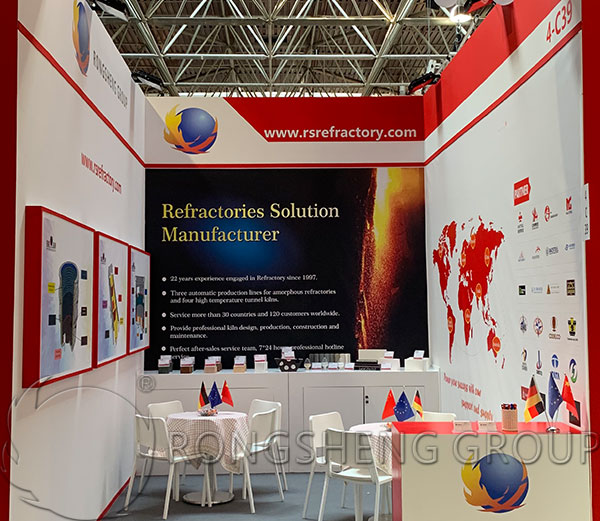
After intense preparations, RS Group’s exhibition staff arrived at GIFA 2019. We are ready to show the world the advantages of RS refractory products and our production technology. The following is the RS Group GIFA 2019 Exhibition Time.
RS Group exhibition site uses the Chinese red witch is the characteristics of Chinese. Our refractory bricks models and RS products brochures are on display. Welcome the you from all over the world to get a glance of RS refractory products.
At our exhibition, Rongsheng Group will welcome visitors with the fullest enthusiasm. Our products, such as firebricks, unshaped refractories, graphite electrodes, insulating refractories and so on are with competitive. Our service, contains the customization, refractory products cn be designed for the special working conditions. Our technology, with refractory projects design, construction and maintenance, etc.
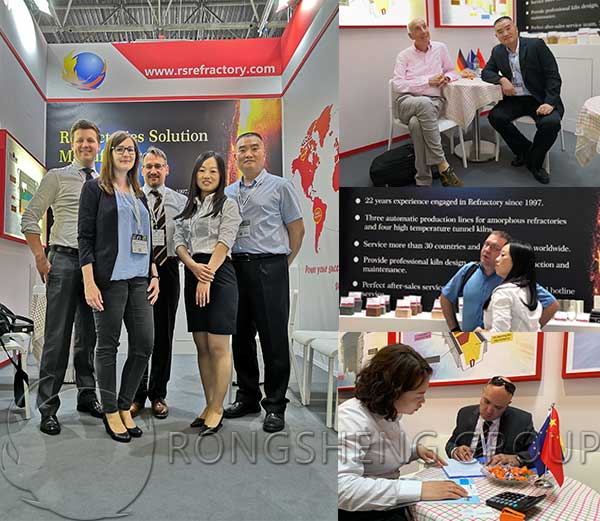
In 25th, yestory, at RS Group booths, there have been many visitors. Under the guidance of our booth staff, the visitors learned more about RS Group’s refractory products and then took photos with them. We look forward to the more visitors in the next following days!
RS Group Visitors at GIFA 2019
If you are attending or want to attend GIFA 2019 in Exhibition center in Dusseldorf, Germany. Don’t miss us, RS Group, Booth No.: Hall 4 – C39. Date: June25 ~ 29, 2019.