
Silica Mullite Bricks are Mainly Composed of These Four Raw Materials
As an alumina-silica refractory material, silica mullite bricks possess superior thermal shock resistance, a high load softening temperature, and excellent erosion resistance, which are key reasons why they can be used in all sections of cement kilns except the firing zone.
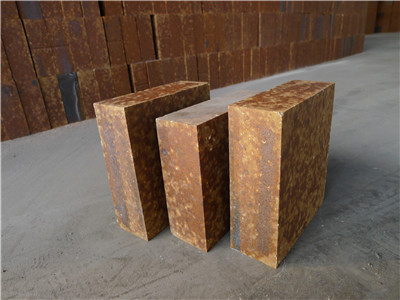
Of course, compared to high-alumina bricks, the superior properties of silica-mullite bricks are due to the presence of silicon carbide components. Silicon carbide, as a non-oxide material, has excellent high-temperature mechanical properties, combining erosion resistance and thermal shock resistance. The main raw materials used in silica mullite bricks are as follows:
High-Alumina Bauxite
High-alumina bauxite is an important mineral resource with significant strategic and practical value worldwide. China has bauxite reserves of 2.5 billion tons, accounting for 2.4% of the world’s total, indicating abundant reserves. China’s bauxite is mainly of the gibbsite-kaolinite type. The ore has high Al₂O₃ and SiO₂ content and low Fe₂O₃ content, making it suitable as a refractory raw material. The mineral composition of high-alumina bauxite is mainly gibbsite and kaolinite. Gibbsite has the chemical formula AlO(OH), belongs to the orthorhombic crystal system, has a density of 3.3~3.5 g/cm³, and a Mohs hardness of 6~7. Kaolinite has the chemical formula Al₂O₃·2SiO₂·2H₂O, is a triclinic silicate mineral, and is also a type of clay mineral. It has strong water absorption, good plasticity, a density of 2.60~2.63 g/cm³, and a hardness of 2~2.5. The structural characteristics of high-alumina bauxite are described below.
Currently, approximately 65% of refractory materials in my country are alumina-silicon-based products, and about 65% of these products use high-alumina bauxite as raw material. Therefore, high-alumina bauxite is an extremely important raw material for the production of Al2O3-SiO2-based refractory materials. The phase composition of high-alumina bauxite clinker consists of corundum, mullite, and cristobalite. Its chemical composition, bulk density, water absorption rate, and mineral uniformity have a decisive influence on the performance of the high-alumina refractory materials produced. High-alumina bauxite clinker is classified into nine grades according to its different physicochemical properties.
Silicon Carbide
Silicon carbide (SiC) is a covalent compound with atoms bonded by covalent bonds. Due to its strong covalent bonds, this material possesses excellent physical properties at both room temperature and high temperatures. Silicon carbide has high refractoriness, reaching 2600℃ in a reducing atmosphere. It has high hardness (Mohs hardness 9~9.5), high thermal conductivity (64.4 W/(m·K) at 500℃), and a low coefficient of thermal expansion of 5.68×10⁻⁶/℃ (1000~2400℃). It also possesses excellent resistance to corrosion, impact, and oxidation.
Although silicon carbide has very good performance at both room temperature and high temperatures, it is extremely rare in nature. Industrially required silicon carbide is mainly synthesized artificially. There are five main methods for artificially preparing silicon carbide:
- 1) Carbothermic reduction of silicon dioxide.
- 2) Elemental synthesis of silicon carbide.
- 3) Molten salt method for producing silicon carbide.
- 4) Preparation of silicon carbide from gaseous compounds.
- 5) Preparation using steam-liquid-solid phase methods, etc.
Among these, silicon carbide used in the industrial production of refractory materials is often prepared using the SiO2 carbon reduction method. When reducing SiO2 with carbon in an electric resistance furnace, below 1250℃, the generated CO cannot oxidize silicon carbide. At higher temperatures, the generated CO then reacts with SiO2, further reducing SiO2 and precipitating free carbon on the crystal surface.
When silicon carbide is introduced into aluminosilicate refractories, it partially oxidizes during firing to form SiO2, creating a glassy phase of a certain thickness on the surface of the product. Due to the oxidation of the surface silicon carbide, a weak reducing atmosphere is created inside the brick. The internal silicon carbide is activated and oxidized, generating SiO gas. When SiO diffuses to the interface, it is re-oxidized back to SiO2. This SiO2, along with other impurities, forms a glassy phase that blocks pores, inhibits further oxidation, and slows down erosion. In addition, some of the SiO2 generated by the oxidation of silicon carbide will also react with the excess Al2O3 in the material at a certain temperature to form mullite.
Silicon carbide also possesses high thermal conductivity, which, when added, improves the material’s thermal conductivity. Furthermore, silicon carbide has a low coefficient of thermal expansion, very close to that of mullite, significantly reducing internal stress generated during rapid temperature changes. This greatly promotes the improvement of the material’s thermal shock resistance. On the other hand, excessive SiC oxidation leads to an excessively thick oxide layer. The oxidation process also generates SiO gas; increased internal gas production weakens the material’s internal structure, potentially damaging it. Excessive silicon carbide oxidation not only reduces the material’s density but also produces more SiO2, whose crystal transformation is highly temperature-sensitive, negatively impacting thermal shock resistance. Therefore, in certain operating environments, adding an appropriate amount of antioxidant is essential to prevent excessive SiC oxidation. One commonly used antioxidant is Si powder. Si, as an element, is highly reactive and oxidizes before SiC to form SiO2. Therefore, as the amount of Si added increases, the oxide layer thickness tends to decrease. However, when the amount of Si added continuously increases beyond 2%, the amount of SiO2 generated by its oxidation increases, leading to excessive secondary mullitization in the material, excessive volume expansion, resulting in a loose material structure, reduced bulk density, and increased porosity. Another commonly used antioxidant is metallic Al powder. Similarly, metallic Al powder will be oxidized to Al2O3 earlier than SiC, inhibiting silicon carbide oxidation. The Al2O3 and SiO2 generated by the oxidation of metallic Al and SiC respectively will begin the mullitization reaction at around 1400℃.
Furthermore, adding metallic aluminum and elemental silicon simultaneously as antioxidants to the product is extremely effective in inhibiting the over-oxidation of SiC. Although elemental Si has a high melting point of 1414℃, its eutectic temperature with metallic Al is only 577℃. Therefore, when both are added as antioxidants in combination, a liquid phase is generated at a lower temperature, which is conducive to ion diffusion and transfer, thereby reducing the reaction formation temperature.
Mullite-High-Silica Glass Multiphase Material
Due to the low sintering temperature of clay clinker, its phase composition generally contains 10%–25% cristobalite. In the last century, foreign countries began to explore ways to dissolve cristobalite from aluminosilicate refractory clinker into the glass phase, resulting in mullite-high-silica glass multiphase materials with a mullite network structure, by focusing on preparation processes and the introduction of additives.
Mullite-high-silica glass multiphase materials are a new type of refractory material composed of crystalline mullite and an amorphous silica-rich glass phase. They possess excellent properties such as a high load softening temperature, a low coefficient of thermal expansion, and excellent thermal shock resistance. Based on the content of alkali metal oxide impurities, mullite-high-silica glass multiphase materials can be divided into two main categories: high impurity content (R₂O 0.2%–2.0%) and low impurity content (R₂O < 0.2%). As a high-SiO₂ content mullite composite, its phase does not contain cristobalite. Furthermore, its tightly bound mullite network structure and high-viscosity silica-rich glass phase significantly improve the material’s performance at high temperatures, particularly its thermal shock resistance.
A mullite-high silica glass multiphase material was prepared using natural kyanite mineral. The sintering temperature was 1500–1600℃, resulting in large mullite grains and a high mullite content. In this material, the mullite content was 75%–80%, and the glass phase was 20%–25%, with relatively uniform phase distribution. The prepared kyanite-based mullite had a bulk density of 1.99–2.11 g/cm³. However, its room-temperature compressive strength reached 163–264 MPa, significantly outperforming similar materials made from kaolin or high-alumina bauxite.
By introducing appropriate additives, clay was calcined to produce a quartz-free mullite-high silica glass phase material. Experiments have shown that using potassium- and sodium-rich natural minerals like feldspar as additives is more beneficial for the synthesis of mullite-high silica glass phase materials. This is because these minerals enable clay to sinter at lower temperatures, are inexpensive and readily available, and help maintain the stability of the mixture’s composition. However, the amount added should not be too large, otherwise it will reduce the material’s refractory properties.
Kyanite-based mullite (KBM) is a type of mullite-high silica glass multiphase material. In China, it is produced by using kyanite ore as the starting material, adding additives, wet grinding, pressure filtration, vacuum extrusion molding, and finally calcination at 1500℃~1650℃. Based on the different Al2O3 contents of the synthesized kyanite-based mullite, it can be divided into series such as KBM45, KBM50, KBM55, and KBM60.
Among them, the basic raw material used for synthesizing KBM45 and KBM50 is low-grade kyanite ore with an Al2O3 content of about 45%. KBM50 incorporates a small amount of industrial alumina to adjust its composition, and its synthesis temperatures are 1500℃ and 1600℃, respectively. KBM55 and KBM60 use medium-grade kyanite ore with an Al2O3 content of approximately 50% as raw material. Different amounts of industrial alumina are added to adjust the Al2O3 content, along with different amounts of composite sintering aids. Their synthesis temperatures are 1600℃ and 1650℃, respectively. Partial physical properties of the four kyanite-based mullite raw materials are also described.
Guangxi White Clay
Guangxi white clay is a type of soft kaolin clay. Its main chemical components are: SiO2 content 45.3%~51.6%, Al2O3 content 26.0%~36.8%, Fe2O3 content 0.65%~2.20%, and K2O+Na2O <1.50%. The main mineral composition of Guangxi white clay is disordered kaolin, sometimes reaching 90%, followed by quartz, generally below 30%. It also contains trace amounts of ilmenite and other minerals. As a binder in refractory materials, Guangxi white clay possesses excellent fluidity, plasticity, and binding properties, making it the highest quality soft refractory clay discovered in my country to date. Guangxi white clay is widely used in the refractory materials industry, including in the production of clay-bonded castables, sprayed refractory materials, refractory bonding clays, and gunning compound additives.