Search for:
These are the Types of Erosion that Glass Furnace Refractory Suffers During the Production Process!

The types and materials of refractory materials used in the glass industry differ from those used in the steel industry. Glass furnace refractory are mainly divided into casting materials, silica materials, and magnesium metal materials, such as silica bricks, clay bricks, high-alumina bricks, sillimanite bricks, mullite bricks, fused mullite bricks, zirconia-corundum bricks, fused corundum bricks, and zirconium-containing refractory bricks, etc. When used in glass furnaces, refractory materials are severely damaged by high temperatures, flames, powder, atmosphere, airflow, and liquid flow, significantly affecting the furnace’s service life. The use of refractory materials in the furnace begins from the start of firing. Improper operation can cause significant, even severe, damage to the refractory materials, requiring special attention. The types of erosion that refractory materials in glass tank furnaces experience during production include:
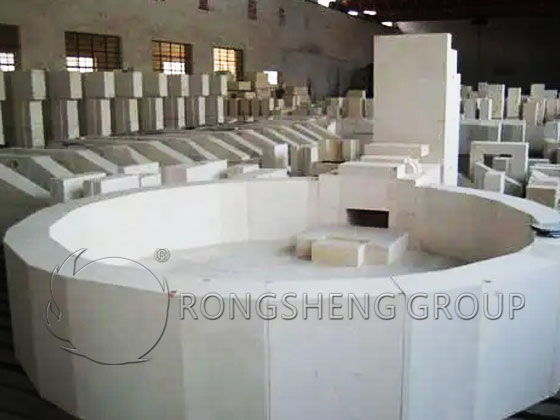
Refractory Bricks for Glass Furnaces
Glass Furnace Refractory – Refractory Bricks

Free Quote

    Free Quote

    Your Name (required)


    Your Email (required)

    Your Phone

    Required Products (required)

    Enquiry Information

    Corrosion

    The powdered feedstock, molten glass, and flame gases within the kiln all corrode refractory materials at high temperatures. Soda ash, sodium sulfate, borates, fluorides, and oxides in the batch react with the refractory surface at high temperatures, forming eutectic or porous substances. These substances then continue to penetrate and diffuse into the brick body through the pores of the refractory material itself or through interfacial replacement reactions, gradually dissolving, peeling off, thinning, deteriorating, and recrystallizing the refractory material. The corrosion mechanisms of the various salts and compounds mentioned above are different; sodium sulfate is much more corrosive than soda ash.

    The corrosive effect of the powdered feedstock on refractory materials is mainly manifested in the erosion of the refractory material by the alkaline vapors emitted from the powder at high temperatures. Examples include the melting and corrosion of the surface of silica bricks, internal “rat holes,” and the de-nephelineization in checker bricks. Furthermore, ultrafine powder particles accumulate in the regenerator checker, forming nodules that block the checker pores, and in severe cases, causing the checker bricks to collapse and be damaged, requiring hot repairs. The corrosive effect intensifies with increasing temperature; every 50-60°C increase in melting temperature shortens the service life by approximately one year. The front wall, charging port, front space of the melting section, pool walls, small furnace, and upper grid of the regenerator are all susceptible to corrosion from the refractory powder.

    The corrosive effect of molten glass on refractory materials is much smaller than that of molten glass. The phase reaction at the interface between molten glass and refractory materials is complex. Molten glass first dissolves free SO₂ in the refractory material. Mullite dissolves at a slower rate, accumulating at the interface between the molten glass and refractory material. Although small mullite crystals dissolve, larger mullite crystals may even grow during use. After the refractory material is eroded, the molten material in contact with it gains SO₂ and Al₂O₃. The molten material then diffuses into the rest of the molten glass. During diffusion, the composition of the molten material changes, with increased SO₂ and alkali content, while β-Al₂O₃ crystals aggregate at the interface. Therefore, at the interface between the refractory material and the molten glass, the first layer is mullite, followed by the β-Al₂O₃ layer, and then the uncorroded refractory material. The dissolution of the refractory material increases the viscosity of the molten glass, promoting the formation of a more difficult-to-move protective layer on the refractory surface, thus reducing further erosion.

    Burn-off

    Under prolonged exposure to high temperatures, refractory materials can be damaged by melting (also known as burn-through) or softening and deformation. Localized overheating in a part of the kiln or insufficient refractoriness of the refractory material can cause it to melt. Sometimes, even if the refractoriness is acceptable, a low load softening temperature can lead to softening and deformation over long-term use, affecting the stability and service life of the entire masonry. The severity of burn-off depends on the temperature and the properties of the refractory material. Small furnace burner arches, small furnace legs, tongues, regenerator arches, melting section kiln arches, and breast walls are prone to burn-off.

    Cracking

    Cracking mainly occurs during the kiln firing stage. During firing, a temperature difference exists within the refractory bricks, generating corresponding mechanical stress. If the heating rate is too rapid, exceeding the allowable ultimate strength of the refractory material, cracks will appear, even breaking into fragments. Electrofused, highly sintered, dense refractory materials are most susceptible to damage. Besides stress caused by temperature differences, the expansion or contraction resulting from changes in the crystal structure of refractory materials also generates stress. When the temperature rises too quickly, the crystal structure changes rapidly, and the volume change is too drastic, generating excessive stress and causing the refractory material to crack. Therefore, the temperature must be increased according to a pre-defined firing curve during kiln firing. After firing, the refractory material is under high temperature for a long time, and its mechanical strength at this operating temperature is much lower than at room temperature. If the mechanical load acting on the refractory material is too large, it will undergo inelastic deformation (similar to the flow of a highly viscous liquid), leading to failure.

    Abrasion

    When molten glass flows along the refractory material, it has a “dripping water wears away stone” effect, grinding grooves into the refractory material; this is mechanical wear. The main wear area is at the surface of the molten glass. Additionally, it is also clearly visible in areas of circulating liquid flow (especially in turbulent areas). Wear is exacerbated by fluctuations in the liquid surface and changes in liquid flow (such as those caused by temperature fluctuations).

    Chemical Erosion

    Chemical erosion mainly includes the following four types:

    ① Erosion caused by the reaction between molten glass and refractory materials.

    This type of erosion is exemplified by the wall bricks of the pool that come into contact with molten glass. The most important type of glass is soda-lime-silica glass. Common bottle and jar glass and flat glass belong to this category. This type of glass is mainly composed of SO₂ (approximately 70%), Na₂O (approximately 15%), CaO (approximately 10%), and small amounts of Al₂O₃ and MgO. To improve the performance of the glass, oxides such as K₂O, L₂O, BaO, and PbO can be introduced based on soda-lime-silica glass. Although there are many types of glass, they can all be simplified to consider the SO₂ content, the alkali metal oxide (Na₂O + K₂O + L₂O) content, and the alkaline earth metal oxide (CaO + MgO + BaO) content. As long as the contents of these three oxides are basically the same, the chemical erosion effect on the refractory materials will also be basically the same. However, the chemical erosion of refractory materials by borosilicate glass differs from that of soda-lime-silica glass. Especially low-alkali or alkali-free borosilicate glass, which has a high content of acidic oxides and a high melting temperature, requires the use of special refractory materials.

    ② Erosion caused by the chemical reaction between glass batch dust and refractory materials.

    This chemical erosion mainly occurs in the upper structure of the melting pool and the regenerator in the furnace. The composition of batch dust varies in different locations. The batch dust near the charging port has a composition basically the same as that of the glass. Due to the high density of silica sand particles, the SO₂ content in the batch dust decreases the further away from the charging port. The amount of batch dust is related to many factors. For the same type of glass batch, the amount of dust is greatly related to the raw material density, particle size, and charging method. Adding water, pressing into cakes, or forming into balls can significantly reduce the amount of batch dust.

    ③ Chemical erosion caused by the reaction between volatiles in the glass batch and refractory materials.

    Volatile substances from glass and batch materials are present in the upper space of the furnace and the middle of the regenerator, chemically eroding the refractory materials in these areas. The volatile components are mainly compounds of alkali metal oxides and boron, as well as fluorides, chlorides, and sulfur compounds. These volatiles react chemically with the refractory materials not only in the gaseous phase but also condense into a liquid phase at low temperatures, reacting with the refractory materials. Sodium compounds, in particular, condense at 1400℃. These condensed liquids penetrate into the pores of the refractory materials through wetting and diffusion. This is especially damaging when the upper structure masonry has cracks or incompletely filled mortar joints.

    ④ Chemical erosion caused by the chemical reaction between fuel ash and combustion products and the refractory materials.

    When burning heavy oil and natural gas, ash is virtually non-existent. While V₂O₅ and NO severely corrode refractory materials, their content in heavy oil is generally very low, having little impact on furnace production. Sulfur in heavy oil and producer gas generates SO₂ during combustion, which reacts with R₂O in volatile components to form sodium sulfite. Sodium sulfite reacts strongly with refractory materials, and this influencing factor must be taken into account during glass production.

    Physical Erosion

    Physical erosion is highly dependent on time and temperature. The most significant physical erosion effects are the scouring action of the molten glass flow and the gravitational force of the refractory material under load. In high-temperature zones, the scouring action of the molten glass flow can multiply the rate of chemical erosion. In low-temperature zones, chemical erosion is minimal, with physical erosion primarily caused by the scouring action of the molten glass flow. In the high-temperature zone of the melting pool, the glass viscosity is low, and the flow is intense. This is especially true with the use of electric flux and bubbling, which further intensifies the flow. The combination of intense scouring and chemical erosion can cause significant damage to the refractory material. Gravity-induced damage mainly occurs in the regenerator checker bricks. With advancements in pool furnace technology, the height of the regenerator has increased, resulting in significant pressure from the checker bricks and grate arches due to the weight of the checker. When chemical erosion damages these checker bricks, stress concentration at the damaged areas leads to further collapse, ultimately causing the entire checker to collapse.
      Get Free Quote

      Your Name (required)

      Your Email (required)

      Your Phone

      Required Products (required)

      Enquiry Information

      Silica Mullite Bricks are Mainly Composed of These Four Raw Materials

      As an alumina-silica refractory material, silica mullite bricks possess superior thermal shock resistance, a high load softening temperature, and excellent erosion resistance, which are key reasons why they can be used in all sections of cement kilns except the firing zone.

      Rongsheng Silica Mullite Bricks Manufacturer
      Rongsheng Silica Mullite Bricks Manufacturer

      Free Quote

        Free Quote

        Your Name (required)


        Your Email (required)

        Your Phone

        Required Products (required)

        Enquiry Information

        Of course, compared to high-alumina bricks, the superior properties of silica-mullite bricks are due to the presence of silicon carbide components. Silicon carbide, as a non-oxide material, has excellent high-temperature mechanical properties, combining erosion resistance and thermal shock resistance. The main raw materials used in silica mullite bricks are as follows:

        High-Alumina Bauxite

        High-alumina bauxite is an important mineral resource with significant strategic and practical value worldwide. China has bauxite reserves of 2.5 billion tons, accounting for 2.4% of the world’s total, indicating abundant reserves. China’s bauxite is mainly of the gibbsite-kaolinite type. The ore has high Al₂O₃ and SiO₂ content and low Fe₂O₃ content, making it suitable as a refractory raw material. The mineral composition of high-alumina bauxite is mainly gibbsite and kaolinite. Gibbsite has the chemical formula AlO(OH), belongs to the orthorhombic crystal system, has a density of 3.3~3.5 g/cm³, and a Mohs hardness of 6~7. Kaolinite has the chemical formula Al₂O₃·2SiO₂·2H₂O, is a triclinic silicate mineral, and is also a type of clay mineral. It has strong water absorption, good plasticity, a density of 2.60~2.63 g/cm³, and a hardness of 2~2.5. The structural characteristics of high-alumina bauxite are described below.

        Currently, approximately 65% of refractory materials in my country are alumina-silicon-based products, and about 65% of these products use high-alumina bauxite as raw material. Therefore, high-alumina bauxite is an extremely important raw material for the production of Al2O3-SiO2-based refractory materials. The phase composition of high-alumina bauxite clinker consists of corundum, mullite, and cristobalite. Its chemical composition, bulk density, water absorption rate, and mineral uniformity have a decisive influence on the performance of the high-alumina refractory materials produced. High-alumina bauxite clinker is classified into nine grades according to its different physicochemical properties.

        Silicon Carbide

        Silicon carbide (SiC) is a covalent compound with atoms bonded by covalent bonds. Due to its strong covalent bonds, this material possesses excellent physical properties at both room temperature and high temperatures. Silicon carbide has high refractoriness, reaching 2600℃ in a reducing atmosphere. It has high hardness (Mohs hardness 9~9.5), high thermal conductivity (64.4 W/(m·K) at 500℃), and a low coefficient of thermal expansion of 5.68×10⁻⁶/℃ (1000~2400℃). It also possesses excellent resistance to corrosion, impact, and oxidation.

        Although silicon carbide has very good performance at both room temperature and high temperatures, it is extremely rare in nature. Industrially required silicon carbide is mainly synthesized artificially. There are five main methods for artificially preparing silicon carbide:

        • 1) Carbothermic reduction of silicon dioxide.
        • 2) Elemental synthesis of silicon carbide.
        • 3) Molten salt method for producing silicon carbide.
        • 4) Preparation of silicon carbide from gaseous compounds.
        • 5) Preparation using steam-liquid-solid phase methods, etc.

        Among these, silicon carbide used in the industrial production of refractory materials is often prepared using the SiO2 carbon reduction method. When reducing SiO2 with carbon in an electric resistance furnace, below 1250℃, the generated CO cannot oxidize silicon carbide. At higher temperatures, the generated CO then reacts with SiO2, further reducing SiO2 and precipitating free carbon on the crystal surface.

        When silicon carbide is introduced into aluminosilicate refractories, it partially oxidizes during firing to form SiO2, creating a glassy phase of a certain thickness on the surface of the product. Due to the oxidation of the surface silicon carbide, a weak reducing atmosphere is created inside the brick. The internal silicon carbide is activated and oxidized, generating SiO gas. When SiO diffuses to the interface, it is re-oxidized back to SiO2. This SiO2, along with other impurities, forms a glassy phase that blocks pores, inhibits further oxidation, and slows down erosion. In addition, some of the SiO2 generated by the oxidation of silicon carbide will also react with the excess Al2O3 in the material at a certain temperature to form mullite.

        Silicon carbide also possesses high thermal conductivity, which, when added, improves the material’s thermal conductivity. Furthermore, silicon carbide has a low coefficient of thermal expansion, very close to that of mullite, significantly reducing internal stress generated during rapid temperature changes. This greatly promotes the improvement of the material’s thermal shock resistance. On the other hand, excessive SiC oxidation leads to an excessively thick oxide layer. The oxidation process also generates SiO gas; increased internal gas production weakens the material’s internal structure, potentially damaging it. Excessive silicon carbide oxidation not only reduces the material’s density but also produces more SiO2, whose crystal transformation is highly temperature-sensitive, negatively impacting thermal shock resistance. Therefore, in certain operating environments, adding an appropriate amount of antioxidant is essential to prevent excessive SiC oxidation. One commonly used antioxidant is Si powder. Si, as an element, is highly reactive and oxidizes before SiC to form SiO2. Therefore, as the amount of Si added increases, the oxide layer thickness tends to decrease. However, when the amount of Si added continuously increases beyond 2%, the amount of SiO2 generated by its oxidation increases, leading to excessive secondary mullitization in the material, excessive volume expansion, resulting in a loose material structure, reduced bulk density, and increased porosity. Another commonly used antioxidant is metallic Al powder. Similarly, metallic Al powder will be oxidized to Al2O3 earlier than SiC, inhibiting silicon carbide oxidation. The Al2O3 and SiO2 generated by the oxidation of metallic Al and SiC respectively will begin the mullitization reaction at around 1400℃.

        Furthermore, adding metallic aluminum and elemental silicon simultaneously as antioxidants to the product is extremely effective in inhibiting the over-oxidation of SiC. Although elemental Si has a high melting point of 1414℃, its eutectic temperature with metallic Al is only 577℃. Therefore, when both are added as antioxidants in combination, a liquid phase is generated at a lower temperature, which is conducive to ion diffusion and transfer, thereby reducing the reaction formation temperature.

        Mullite-High-Silica Glass Multiphase Material

        Due to the low sintering temperature of clay clinker, its phase composition generally contains 10%–25% cristobalite. In the last century, foreign countries began to explore ways to dissolve cristobalite from aluminosilicate refractory clinker into the glass phase, resulting in mullite-high-silica glass multiphase materials with a mullite network structure, by focusing on preparation processes and the introduction of additives.

        Mullite-high-silica glass multiphase materials are a new type of refractory material composed of crystalline mullite and an amorphous silica-rich glass phase. They possess excellent properties such as a high load softening temperature, a low coefficient of thermal expansion, and excellent thermal shock resistance. Based on the content of alkali metal oxide impurities, mullite-high-silica glass multiphase materials can be divided into two main categories: high impurity content (R₂O 0.2%–2.0%) and low impurity content (R₂O < 0.2%). As a high-SiO₂ content mullite composite, its phase does not contain cristobalite. Furthermore, its tightly bound mullite network structure and high-viscosity silica-rich glass phase significantly improve the material’s performance at high temperatures, particularly its thermal shock resistance.

        A mullite-high silica glass multiphase material was prepared using natural kyanite mineral. The sintering temperature was 1500–1600℃, resulting in large mullite grains and a high mullite content. In this material, the mullite content was 75%–80%, and the glass phase was 20%–25%, with relatively uniform phase distribution. The prepared kyanite-based mullite had a bulk density of 1.99–2.11 g/cm³. However, its room-temperature compressive strength reached 163–264 MPa, significantly outperforming similar materials made from kaolin or high-alumina bauxite.

        By introducing appropriate additives, clay was calcined to produce a quartz-free mullite-high silica glass phase material. Experiments have shown that using potassium- and sodium-rich natural minerals like feldspar as additives is more beneficial for the synthesis of mullite-high silica glass phase materials. This is because these minerals enable clay to sinter at lower temperatures, are inexpensive and readily available, and help maintain the stability of the mixture’s composition. However, the amount added should not be too large, otherwise it will reduce the material’s refractory properties.

        Kyanite-based mullite (KBM) is a type of mullite-high silica glass multiphase material. In China, it is produced by using kyanite ore as the starting material, adding additives, wet grinding, pressure filtration, vacuum extrusion molding, and finally calcination at 1500℃~1650℃. Based on the different Al2O3 contents of the synthesized kyanite-based mullite, it can be divided into series such as KBM45, KBM50, KBM55, and KBM60.

        Among them, the basic raw material used for synthesizing KBM45 and KBM50 is low-grade kyanite ore with an Al2O3 content of about 45%. KBM50 incorporates a small amount of industrial alumina to adjust its composition, and its synthesis temperatures are 1500℃ and 1600℃, respectively. KBM55 and KBM60 use medium-grade kyanite ore with an Al2O3 content of approximately 50% as raw material. Different amounts of industrial alumina are added to adjust the Al2O3 content, along with different amounts of composite sintering aids. Their synthesis temperatures are 1600℃ and 1650℃, respectively. Partial physical properties of the four kyanite-based mullite raw materials are also described.

        Guangxi White Clay

        Guangxi white clay is a type of soft kaolin clay. Its main chemical components are: SiO2 content 45.3%~51.6%, Al2O3 content 26.0%~36.8%, Fe2O3 content 0.65%~2.20%, and K2O+Na2O <1.50%. The main mineral composition of Guangxi white clay is disordered kaolin, sometimes reaching 90%, followed by quartz, generally below 30%. It also contains trace amounts of ilmenite and other minerals. As a binder in refractory materials, Guangxi white clay possesses excellent fluidity, plasticity, and binding properties, making it the highest quality soft refractory clay discovered in my country to date. Guangxi white clay is widely used in the refractory materials industry, including in the production of clay-bonded castables, sprayed refractory materials, refractory bonding clays, and gunning compound additives.

          Get Free Quote

          Your Name (required)

          Your Email (required)

          Your Phone

          Required Products (required)

          Enquiry Information