Selection and Application of Refractory Materials for VOD Ladle Linings
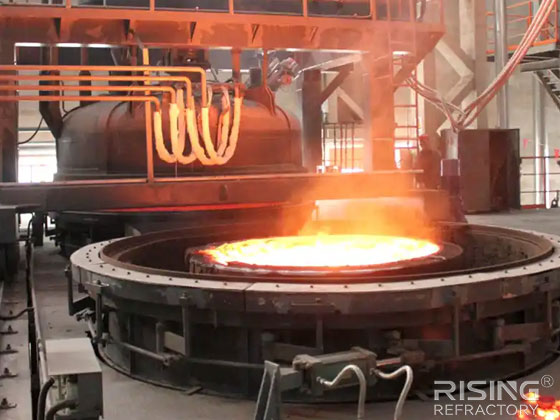
A VOD (Vacuum Oxygen Decarburization) installation consists of seven main components: the ladle, the vacuum vessel, the bottom argon-blowing system, the oxygen lance system, the vacuum system, the temperature measurement and sampling system, and the alloy/material addition system. In the VOD process, molten steel—having already had its composition (excluding carbon and silicon) adjusted in a primary melting furnace—is placed into a refining ladle, which is then transferred into a vacuum vessel. Once the pressure inside the vacuum vessel reaches the desired level, oxygen is blown into the steel to facilitate decarburization, while argon is introduced through porous plugs in the bottom of the ladle to provide stirring.
Refractory Materials for VOD Ladle Linings
Operating Conditions for VOD Furnace Linings
A VOD (Vacuum Oxygen Decarburization) furnace must be used in conjunction with a steel ladle; thus, the ladle is an indispensable component of the VOD process. Consequently, the quality of the refractory lining within the ladle directly determines whether the entire VOD refining process can proceed smoothly. The adoption of the VOD method significantly increases the demands placed on the ladle, leading to more severe erosion of the refractory bricks. The operating conditions for a refining ladle are as follows:
1) Corrosive alkaline slag with a wide range of basicity: During refining in an LF (Ladle Furnace), a synthetic slag—composed of lime, calcium carbide, and fluorspar—is utilized. Highly corrosive compounds such as CaF2 and CaAl2O3 form a liquid slag, causing significant fluctuations in slag composition. The basicity can range from 0.6 to 4, dropping as low as 0.3 at its most acidic. This highly acidic, high-temperature, and highly fluid slag continuously erodes and scours the slag-line area of the lining. During the initial oxidation phase, oxygen is blown from the top to remove carbon—a stage that accounts for approximately 80% of the total refining cycle. Throughout this period, the slag basicity is very low; the resulting acidic slag causes severe scouring and erosion of the refractory bricks, directly limiting their service life.
2) High vacuum levels: The VOD process employs a high vacuum—reaching approximately 133.3 Pa—which can cause certain components within the refractory bricks to volatilize. Under these conditions, acidic slag, along with molten steel, can penetrate the refractory bricks, further accelerating their degradation.
3) Intense gas-stirring within the ladle: To remove carbon monoxide (generated by the reaction between the injected oxygen and carbon) as well as other gaseous impurities, high-pressure argon is injected during the refining process. This lowers the partial pressure of carbon monoxide. The resulting boiling of the molten steel causes intense scouring of the refractory bricks, particularly at the slag line.
4) Excessively long holding times: The total duration—encompassing refining, cooling, and subsequent reheating—can reach approximately four and a half hours. This leads to an increase in the temperature of the furnace lining, which in turn accelerates the erosion and penetration of the refractory bricks.
5) Intermittent operation causing severe thermal shock: During the smelting process, the furnace lining is subjected to rapid cooling and heating cycles, which cause the refractory material to suffer damage through cracking and thermal spalling.
6) High temperatures: The use of submerged-arc heating results in significantly higher temperatures for the refractory bricks along the slag line compared to other areas. The fluidity of the molten slag, the corrosive effect of acidic slag on the refractory bricks, and the high-temperature operating conditions all cause substantial damage to the lining. Furthermore, the inherent instability of the submerged-arc heating method can occasionally create “hot spots” on the sidewalls of the ladle. These factors collectively impose more demanding performance requirements on the refractory bricks used in the ladle.
Refractory Materials for VOD Furnace Linings
Initially, VOD (Vacuum Oxygen Decarburization) furnaces utilized magnesia-chrome refractories for their linings. However, due to the significant pollution caused by chromium, this material was abandoned in favor of dolomite-based or magnesia-calcia-based alternatives. In recent years, zirconia-based refractories have also been employed for the bottoms of such ladles.
More recently, Japan has shifted from using primarily refractory bricks to monolithic (unshaped) refractories for ladle linings; castables—such as those based on semi-zircon or high-alumina compositions—have demonstrated excellent performance. In the United Kingdom, magnesia-carbon bricks are used at the slag line, while the side walls are lined with carbon-containing bricks based on a mixture of pitch and dolomite. In the United States, the common practice involves using resin-bonded dolomite bricks alongside castable materials. In France, the lining configuration typically consists of magnesia-chrome refractories at the slag line and dolomite-based products for the side walls. In China, a lining system has been developed that utilizes magnesia-carbon bricks at the slag line, with alumina-spinel-carbon or alumina-magnesia-carbon bricks used for the remaining sections; this approach has proven highly effective. Looking ahead, while monolithic ladle linings require further research and development, the outlook for refractory brick products remains very promising. High-quality basic (alkaline) refractories represent the inevitable future direction for this field.
Selection of Refractory Materials for VOD Ladle Linings
Only refractory materials possessing the following two characteristics are suitable for use as linings in VOD (Vacuum Oxygen Decarburization) furnaces:
1) Resistance to erosion by high-temperature slag.
2) Excellent resistance to spalling under conditions of rapid thermal cycling (sudden heating and cooling).
MgO is the primary component of magnesia-dolomite refractory bricks; when impurity levels are kept below 1.5%, the material exhibits high strength at elevated temperatures. Magnesia-dolomite bricks produced in Japan and several European countries typically contain between 60% and 90% MgO, with the combined content of MgO and CaO reaching approximately 98%. Magnesia-dolomite bricks offer superior thermal shock resistance compared to magnesia-chrome bricks, as the calcium oxide (CaO) within the brick reacts with the slag to form new phases with very high melting points. This reaction mitigates erosion; furthermore, the CaO in the refractory lining increases the wetting angle, thereby enhancing the brick’s resistance to erosion by molten steel.
Magnesia-Chrome Bricks
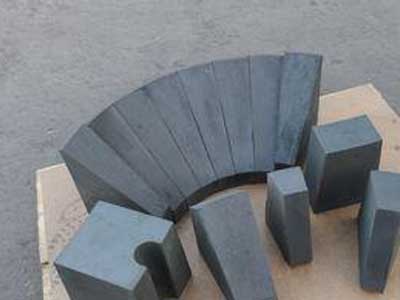
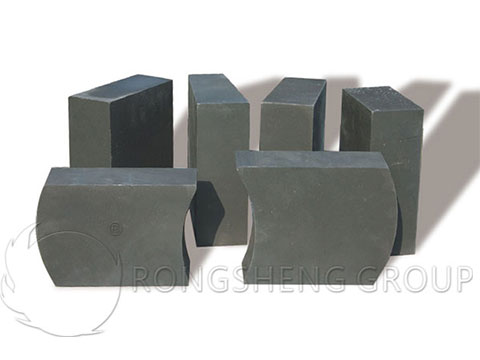
Magnesia-chrome bricks, which demonstrate strong resistance to erosion at high temperatures, are primarily used for VOD ladle linings. In Japan, a composite lining approach is often adopted, utilizing bricks with varying synthesis methods and compositions. Generally, direct-bonded bricks are used for most areas of the lining, while semi-rebonded bricks are applied specifically at the slag line. For both AOD (Argon Oxygen Decarburization) and VOD processes, co-sintered magnesia-chrome bricks are commonly employed due to their resistance to thermal spalling and structural disintegration. The chemical composition should be controlled within the following ranges: SiO₂ < 1.5%, Fe₂O₃ < 6%, Cr₂O₃ > 21%, and CaO < 1.0%. It is essential that the contents of Fe₂O₃, CaO, and SiO₂ remain within these specified limits.
VOD Furnaces Utilizing MgO-CaO Based Refractories
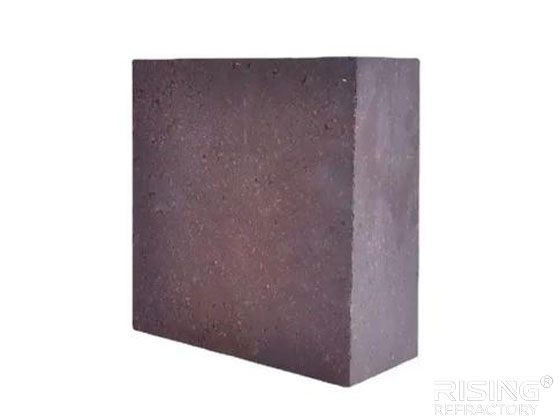
The linings of VOD (Vacuum Oxygen Decarburization) refining ladles are typically constructed using either MgO-CaO based or MgO-Cr₂O₃ based refractories. The bottom of the ladle may be lined with MgO-CaO or MgO-Cr₂O₃ based materials, though high-alumina refractories are also used; more recently, zirconium-containing refractories have also been employed. Utilizing MgO-CaO based refractories for VOD furnace linings facilitates the purification of molten steel and enables dephosphorization. Research indicates that sulfur removal efficiency peaks when the MgO content is between 30% and 50%. During the refining process, the CaO present in the dolomite contributes to desulfurization by facilitating the transfer of sulfur from the molten steel into the slag—a slag characterized by high sulfur content, low oxygen potential, and low viscosity. To mitigate structural spalling caused by the erosion of this low-viscosity slag, Japanese manufacturers developed dolomite bricks with low gas permeability. By modifying the brick structure and optimizing the particle size distribution, the pore size distribution is effectively controlled; this significantly reduces the connectivity between open and closed pores, resulting in low gas permeability and excellent resistance to slag penetration. Such bricks exhibit superior high-temperature performance—including enhanced erosion resistance, greater structural strength, and improved resistance to slag infiltration—which slows the rate of degradation and extends the service life of the VOD furnace. In Germany, for 40–60 ton capacity furnaces, MgO-Cr₂O₃ bricks are used for the ladle walls and bottom, while dolomite bricks are employed elsewhere. A gap (interlayer) is maintained between the permanent lining and the working lining to ensure the integrity of the ladle lining seal, achieving a service life of 35 heats. In Japan, fired magnesia-dolomite bricks are used for the side walls of 70-ton VOD furnaces, while fired magnesia-chrome bricks are used for the ladle bottom. Due to severe wear in areas subjected to the erosive action of molten steel, it has become necessary to line the entire vessel with unfired magnesia-dolomite-carbon bricks. These bricks exhibit an erosion rate of 5.6 mm per heat—a 50% to 60% reduction compared to the 12–14 mm per heat erosion rate of the previously used fired magnesia-chrome bricks—thereby more than doubling the service life of the lining.
Erosion Mechanisms of Magnesia-Calcium Bricks in VOD Furnaces
During the smelting process, the first stage is the reduction period, where the slag exhibits relatively low reactivity with high-calcium magnesia-calcium (MgO-CaO) refractory materials (which contain approximately 56% CaO). The second stage is the desulfurization period, characterized by high slag alkalinity; magnesia-calcium linings are particularly well-suited to the requirements of such highly alkaline slag. Consequently, magnesia-calcium refractories offer a relatively long service life in VOD (Vacuum Oxygen Decarburization) furnaces. The VOD process imposes significant thermal, mechanical, and chemical stresses on the furnace lining. Since these degradation mechanisms interact with one another, optimizing the entire process is a complex challenge. During operation, magnesia-calcium bricks are subjected to the erosive effects of various chemical media and mechanical forces, leading to cracking, deformation, and, ultimately, spalling of the brick material. Post-mortem analysis of VOD ladle linings reveals severe spalling and erosion of the refractories along the slag line, driven by thermochemical and thermomechanical stresses. At high temperatures (often exceeding 1750°C) and low pressures (1–200 mbar), aggressive silicate-based slag compounds prove particularly detrimental to the lining.