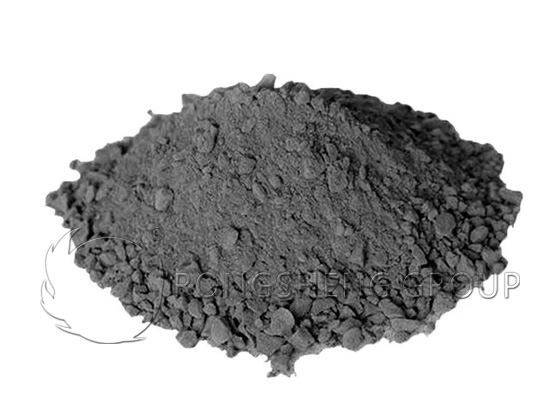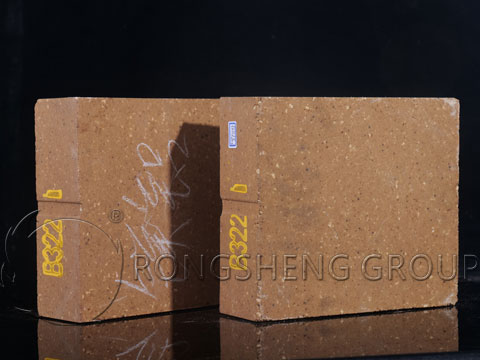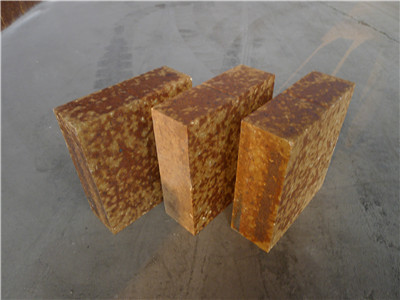
Production Process of Mullite-Sillimanite Bricks
Rongsheng Refractory Factory lists several production processes, formulas, and molding techniques for mullite refractory brick products. (For reference only)
Mullite-Sillimanite Bricks
Using Shandong calcined shale as aggregate, sillimanite, high-alumina bauxite, and binding clay as fine powders, and sulfite pulp waste liquor as a binder, mullite-sillimanite ceramic kiln furniture can be manufactured.
The raw material composition is as follows: 55% calcined shale clinker particles <3mm; 45% finely ground sillimanite, high-alumina bauxite clinker, and binding clay (<0.088mm). (Of which: 10% sillimanite, 22% high-alumina bauxite, 13% clay); 3% water; 1% sulfite pulp waste liquor (density 1.2g/cm3).
Particle size distribution (%): >5mm, 3; 5~2mm, 25; 2~0.5mm, 24; 0.5~0.088mm, 9.5; <0.088mm, 38.5; Moisture 9.0.
The order of adding materials for clay mixing is: granular material, binder and water, then fine powder. Mixing time is 10 minutes.
After drying, the green body is fired in a downdraft kiln at 1370℃.
The physicochemical properties of the product are as follows: Al₂O₃ 51.9%, SiO₂ 43.9%. Apparent porosity 23%, bulk density 2.27 g/cm³. Compressive strength 38.2 MPa, load softening temperature 1520℃. Thermal shock resistance (1100℃, water cooling) > 20 cycles.
Mullite-sillimanite bricks, used as pusher bricks in a ceramic pusher kiln, show no deformation or wear after approximately 25 uses.
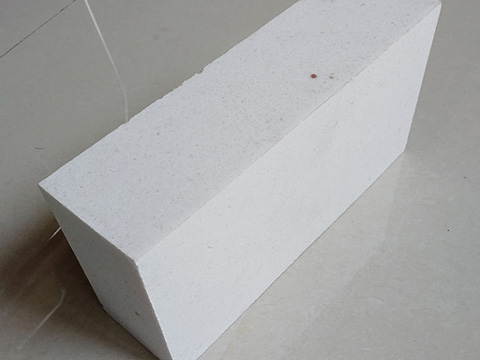
Sillimanite Bricks
Sillimanite bricks can be manufactured using synthetic mullite, high-alumina bauxite clinker, and coke clinker as aggregates, with Jixi sillimanite as the matrix, employing equipment and processes used for clay brick production.
The raw material proportions are as follows: sillimanite 45-50%, mullite + coke clinker + Grade II high-alumina bauxite 35-50%, Grade I high-alumina bauxite 5-10%, and clay 5-10%. The above raw materials are weighed according to the proportions and mixed in a mixer. Granular materials are added first, followed by the binder, and after thorough mixing, fine powder is added and mixed for 10 minutes. The moisture content of the clay is controlled at 3-3.5%.
Sillimanite bricks are formed using a friction brick press with a capacity of 300t or higher, with the green body density controlled at 2.53g/cm³ or higher. The formed green bodies are then dried in a tunnel drying kiln. The drying kiln inlet temperature is 40-50℃, and the outlet temperature is 150-200℃. Drying time is 8-10 hours, with residual moisture not exceeding 0.5%. The firing temperature of the sillimanite bricks is 1350-1400℃, with a holding time of 8-10 hours.
The main physicochemical properties of the sillimanite bricks are as follows: Al₂O₃ 61.45%; SiO₂ 35.15%. Apparent porosity 15.3%; bulk density 2.58 g/cm³. Compressive strength at room temperature 123.4 MPa; linear change after reheating at 1500℃ for 2 hours +0.17%; creep rate at 1450℃ for 50 hours 0.72%; thermal shock resistance (1100℃ to water cooling) greater than 15 cycles.
Sillimanite Rotary Tube
The rotary tube is the main working component of a glass tube drawing machine. Its working conditions are harsh; it must withstand the erosion and scouring of molten glass at 1150℃, and it must also operate while rotating. Therefore, the product must possess strong resistance to molten glass corrosion.
Sillimanite rotary tubes can be manufactured using Shandong premium grade coke as aggregate, and Jixi sillimanite and purple clay as fine powders.
The ingredient ratio is as follows: coke 60-65%, sillimanite 20-30%, clay 5-10%, plus 1.5% sulfite pulp waste liquor and 4% water.
The mixture is kneaded in a wet mill, with the following order of addition: coke, water, sulfite pulp waste liquor, clay, and sillimanite. The kneading time is 10 minutes. Clay particle size (%): >0.84mm 13-18, 0.84-0.50mm 15-20, 0.50-0.08mm 20-25, <0.08mm 40, Moisture 6%.
Formed by pneumatic hammer tamping, with a working air pressure of 0.39-0.49 MPa. After drying, the residual moisture content of the green body is <1%. The product is fired in a down-draft kiln at a maximum firing temperature of 1370℃ for 48 hours.
The physicochemical properties of the product are as follows: Al₂O₃ 49%, SiO₂ 47%. Apparent porosity 15.7%, load softening temperature 1550℃. Room temperature compressive strength 149.7 MPa. The product is ready for use after polishing.
Sillimanite Bowl
The bowl is the main working component at the bottom of the clarification tank of a glass melting furnace, used for the outlet of molten glass used to produce bottles and jars. Sillimanite bowls can be manufactured using sillimanite concentrate and clay as raw materials.
The raw material ratio is as follows: sillimanite concentrate 3-0.5mm 30-40%, 0.5-0.088mm 20-30%, <0.088mm 20-30%; clay 8-12%, plus 3% sulfite pulp waste liquor.
Mixing is carried out in a mixing mill. According to the clay ratio, first add granular materials and dry mix for 1 minute, then add binder and mix for 3 minutes, then add fine powder and mix for 4-6 minutes. The clay moisture content is controlled at 3-3.5%. The green body is formed under a pressure of 14.7 MPa, dried at 40-60℃ for 3-4 days, and fired at 1450℃.
The main physical properties of the product are as follows: apparent porosity 22.5%, bulk density 2.07 g/cm³, room temperature compressive strength 83 MPa, load softening temperature 1320℃, and thermal shock resistance (1100℃, water cooling) 18 cycles.
Sillimanite Balls
Sillimanite filler balls for blast furnace hot blast stoves can be manufactured using high-alumina bauxite clinker and Jixi sillimanite concentrate as raw materials, and soft clay and sulfite pulp powder as binders.
The raw material ratio is as follows: high-alumina bauxite clinker particles, 0.9-0.5mm, 55%; high-alumina bauxite clinker fine powder, <0.074mm, 15%; sillimanite fine powder, <0.045mm, 20%; binder clay fine powder, <0.074mm, 10%; and added pulp powder, <0.28mm, 5%.
The sillimanite fine powder, high-alumina bauxite clinker fine powder, and clay fine powder are ground together in a vibratory mill for 10-15 minutes according to the ratio. Mixing is carried out in a wet mill. First, add the high-alumina bauxite clinker, then add an appropriate amount of water, mix for 2-3 minutes, and then add the pulp powder. After mixing for 1 minute, add the fine powder and mix for another 7-10 minutes, maintaining a moisture content of 5-17%. Dry the shaped green body at 60-80℃ for 8-10 hours, ensuring residual moisture is <2%. Firing temperature is 1500℃, held for 10-12 hours.
Main physical properties of the product: Apparent porosity 25.41%, bulk density 2.45 g/cm³, room temperature compressive strength 54 MPa, softening temperature under load 1450℃, thermal shock resistance (water cooling at 1100℃) >30 cycles.

Andalusite Bricks
Andalusite bricks, made from andalusite as aggregate and high-alumina bauxite clinker, sillimanite, and fine clay powder as matrix, can be used to manufacture torpedo iron ladles.
Andalusite is crushed and graded for later use. High-alumina bauxite clinker and clay are mixed and ground finely in a vibrating ball mill. The raw material ratio is as follows: andalusite 50-55%, sillimanite 15-25%, high-alumina bauxite 15-20%, and clay 5-10%. The mixture is kneaded using a roller mill, adding large and medium particles first and dry-mixing for 2-3 minutes, then adding the binder and co-ground powder, with a total kneading time of 15 minutes.
The particle size distribution of the clay is: 3-2mm 25%, 2-1mm 15%, 1-0.5mm 6.5%, 0.5-0.088mm 10.5%, <0.088mm 43%. After being conditioned for 25 hours, the clay was formed using a 630t friction brick press, resulting in bricks with a density of 2.65-2.75 g/cm³. The finished bricks were dried and then fired in a tunnel kiln at a maximum firing temperature of 1350℃ for 8 hours.
The main physical properties of the finished bricks are: bulk density 2.48 g/cm³, apparent porosity 13.7%, room temperature compressive strength 110.8 MPa, load softening temperature 1560℃, creep rate (1350℃, 50h) 15%, reheat linear change (1450℃, 2h) 0.07%, and thermal shock stability (1100℃ water cooling) >30 cycles.
Sillimanite-Silicon Carbide Shelving Bricks
Sillimanite-silicon carbide shelving bricks can be manufactured using silicon carbide sand as aggregate, sillimanite and clay as matrix, and sulfite pulp waste liquor as binder. The formula is as follows: silicon carbide (grade 1) 50-65%, sillimanite 15-35%, clay 10-15%. The particle size distribution of the clay is as follows: 3-2mm 12-20%, 2-1mm 15-24%, 1-0.5mm 10-12%, 0.5-0.088mm 20-25%, <0.088mm 30-35%.
The clay is mixed in a mixing mill. The feeding sequence is: first add silicon carbide particles, then add sulfite pulp waste liquor, mix evenly, and then add the mixed fine powder. Continue mixing for 10 minutes before discharging. The moisture content of the clay should be controlled at 3-4%.
The molding process is carried out on a 500t hydraulic press, with a green body density of not less than 2.65 g/cm³. The green body is dried at 40℃ for 3 days, with residual moisture content less than 1%. Firing can be carried out in a down-draft kiln at 1430℃, with a holding time of 8-16 hours and a total firing time of 90 hours.
The physical properties of the sillimanite-silicon carbide kiln floor bricks are as follows: apparent porosity <21%, bulk density 2.30-2.35 g/cm³, compressive strength >35.2 MPa, load softening temperature >1520℃, and thermal shock resistance (1100℃, water cooling) >8 cycles.
This product can be used as floor bricks in ceramic tunnel kilns fired at 1370℃. It exhibits good thermal conductivity, thermal shock resistance, oxidation resistance, simple production process, and low cost, and can replace high-alumina floor bricks.