Search for:
Moisture Retention and High Temperature Performance of Refractory Plastic

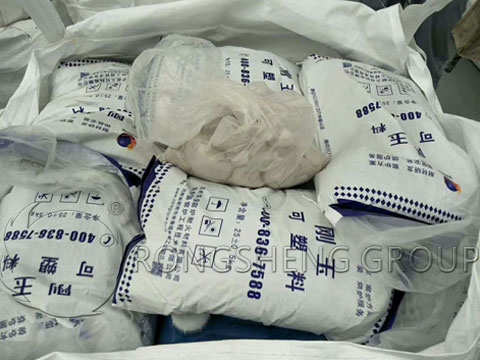
Refractory plastics are mainly used in heating furnaces, electric furnace tops, and other parts. Due to the shortcomings of short storage time and poor fire resistance, its application range is limited. However, this refractory material has some irreplaceable advantages, such as the high-temperature strength of the furnace body that can be constructed with plastic refractory materials, excellent thermal shock performance, low thermal conductivity, and flexible construction methods. Rongsheng refractory material manufacturer, based on years of production and sales experience, conducted some experimental analysis on the moisture retention performance and high-temperature performance of refractory plastics.
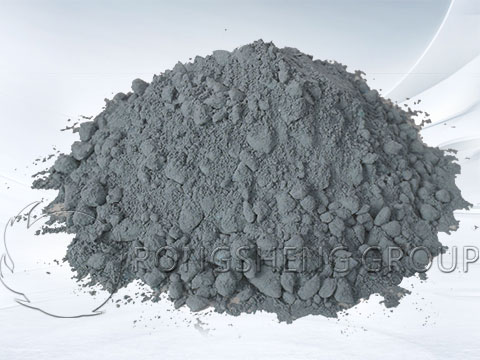
Rongsheng High-Quality Wear-Resistant Refractory Plastic

Free Quote

    Free Quote

    Your Name (required)


    Your Email (required)

    Your Phone

    Required Products (required)

    Enquiry Information

    Moisture retention and high-temperature performance of refractory plastic

    • (1) The use of super-grade downdraft kiln high-alumina bauxite as the main raw material can significantly improve the moisture retention performance of the refractory plastic.
    • (2) Using phosphoric acid and sulfuric acid in the form of a compound combination, and then adding an appropriate amount of admixture, it is possible to produce a refractory plastic with excellent moisture retention performance and strength indicators. Using a single combination method, the effect is not ideal enough.
    • (3) Select super-grade high-bauxite with dense sintering and low impurity content, minimize the content of iron oxide in the material, and add an appropriate amount of humectant, which can significantly extend the moisture retention period of the plastic refractory.

    Selection of Refractory Plastic Aggregate

    The new type of plastic refractory should have excellent plasticity, moisture retention, and high-temperature performance. To meet these conditions, it is very important to choose the right raw material. The raw material should have good volume stability. During the heating process, it can be well sintered and reacted with cement such as clay. The aggregate should have an appropriate particle size. And gradation, the critical particle size of general refractory plastic aggregate is less than 10 mm, the amount of aggregate is 55-65%, and the amount of powder is 35%-45%. Through the strength test and moisture retention test, it is found that although the refractory plastics produced with the third-grade high-alumina and the second-grade high-alumina as the main raw materials have higher strength after firing, the moisture retention performance of the material is poor. Therefore, it is determined to use super-grade high-bauxite as the main raw material which requires dense sintering and low impurity content. In order to improve the moisture retention performance, the content of iron oxide in the material should be strictly controlled.
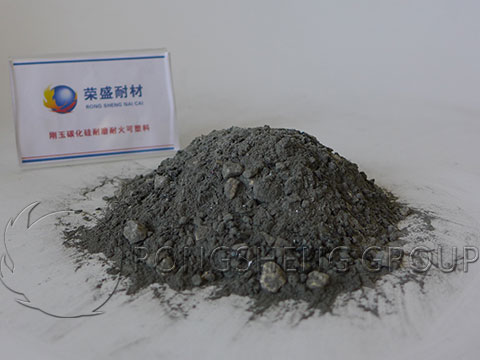
    Corundum silicon carbide wear-resistant refractory plastic
    Corundum Silicon Carbide Wear Resistant Refractory Plastic

    Free Quote

      Free Quote

      Your Name (required)


      Your Email (required)

      Your Phone

      Required Products (required)

      Enquiry Information

      Influence of the amount of clay and fine powder adding on refractory plastics properties

      Adding bonded clay to the refractory plastic, it mainly acts as a cement, and at the same time improves its plasticity and sintering performance. The particle size of clay should generally be less than 200 mesh. Its dosage should be reduced as much as possible while ensuring plastic refractory viscoplasticity and cementation ability. If the amount added is too much, it is easy to cause the linear shrinkage of refractory plastics to increase after high-temperature burning, the softening temperature under load will decrease, and the high-temperature creep will increase. If the amount added is too small, the plasticity of the material cannot be guaranteed. The manufacturer of Rongsheng refractories has determined through experiments that the amount of clay added is 5% to 15%. In order to reduce the change of the burnt line of the plastic refractory, an appropriate amount of kyanite can be added. Because kyanite produces volume expansion at high temperatures, it can offset the partial shrinkage of the plastic refractory, its fineness is 150 mesh, and the adding amount is controlled at about 5%. In order to improve the plasticity and thermal shock performance of the plastic refractory, and further reduce the impurity content in the raw materials, alumina micro powder and silica micro powder are added. This can not only improve the construction performance of the material but also increase the medium-temperature and high-temperature strength of the product. The total addition of the two is generally controlled at 6% to 12%, which is more reasonable.

      It is found through experiments that when the plasticity index is about 14%, the plasticity is relatively hard and the construction performance is poor. When the plasticity index is around 26%, the plasticity feels softer and the construction is easier. In order to facilitate the construction and meet the requirements of other performance indicators, through repeated experiments, it is confirmed that the plasticity index of refractory plastic is about 28%.

      Choice of refractory plastic binder

      In order to make refractory plastics have higher strength and excellent moisture retention properties, Rongsheng refractory manufacturers have experimented with various binders, such as phosphoric acid, water glass, and aluminum sulfate. It can be proved by experiments that using phosphoric acid as a binder can make refractory plastics have higher strength indicators. However, due to the strong acidity of phosphoric acid and the high content of iron oxide in the raw materials, phosphoric acid is easy to produce chemical reactions with iron oxide, which makes the moisture retention performance of refractory plastics worse. Using aluminum sulfate as a binding agent, the plastic refractory has a longer moisture retention performance, but the strength index of the plastic refractory cannot meet the use requirements. Using water glass as a binder, the moisture retention performance of the material is better in a short period of time, but after a long storage time, the construction performance of the plastic refractory will deteriorate. In addition, when the refractory plastic combined with water glass is baked, the strength of the plastic refractory construction body will be adversely affected due to the hard shell formed on the surface. Through repeated experiments, it is determined that phosphoric acid and aluminum sulfate are used in combination so that the moisture retention performance and strength indicators of the plastic refractory can meet the use requirements.
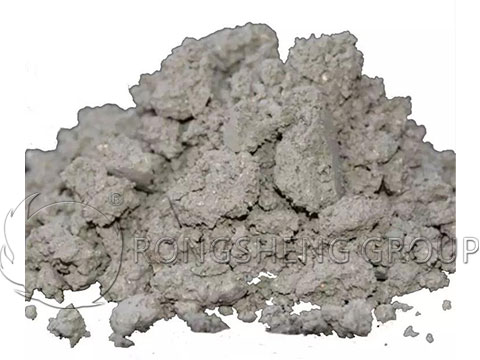
      High-Alumina Wear-Resistant Refractory Plastics
      High-Alumina Wear-Resistant Refractory Plastics

      Free Quote

        Free Quote

        Your Name (required)


        Your Email (required)

        Your Phone

        Required Products (required)

        Enquiry Information

        Factors Affecting Humidity Performance of Refractory Plastics

        1. Influence of aggregate type

        Through continuous moisture retention experiments, it is found that the moisture retention performance of the refractory plastic with super-grade downdraft kiln high alumina aggregate is significantly better than that of other low-grade aggregates. This is due to the dense sintering of super aggregates and the low water absorption of particles.

        2. Influence of the type of binder

        Binders have the greatest impact on the moisture retention properties of refractory plastics and also play a key role in other properties. If the choice is not appropriate, the plastic refractory will not be able to meet the requirements of use.

        Through the experimental research on the moisture retention performance and compressive strength performance of the test block, as well as the comprehensive consideration of the cost of raw materials, phosphoric acid, and aluminum sulfate were finally selected and determined to be used as composite binders. In this way, it can not only meet the moisture retention performance requirements of the refractory plastic but also meet the requirements of medium-temperature and high-temperature strength.

        3. Influence of the type of admixture

        It can be seen from experiments that adding organic acid (such as oxalic acid), dextrin, and other admixtures can prevent or delay the reaction between the binder and the refractory material, and play a role in prolonging the moisture retention performance of the refractory plastic. Some admixtures are oily, which can effectively reduce the phenomenon of refractory plastic agglomeration, which mainly prolongs the moisturizing performance of the material from the physical aspect. The main binders such as oily moisturizers and phosphoric acid are not miscible, but they can reduce the chance of chemical reaction between phosphoric acid and raw materials so that the moisturizing effect is better.

        Used in furnaces such as heating furnaces and annealing furnaces, refractory plastics have certain advantages over castables. It does not need on-site mixing equipment and can be directly constructed. It is viscous and does not flow. It is easier to combine with the old lining when repairing, and it can be partially repaired without a template. Because of its low water content, the requirements for baking conditions are not very strict.

        Rongsheng Refractory Plastic Manufacturer

        Rongsheng refractory material manufacturer is a refractory material manufacturer with rich production and sales experience. Our refractory products have been sold to more than 80 countries and regions all over the world. For example, South Africa, Chile, Egypt, Colombia, Uzbekistan, Italy, Indonesia, Ukraine, Hungary, Spain, Kenya, Syria, Zambia, Oman, Venezuela, India, Peru, the United States, Ethiopia, etc. Our technical team has rich experience and actual customer cases, whether it is in the solution of refractory lining materials or in the design of refractory materials for the rotary kiln insulation layer. To purchase high-quality refractory plastic materials, please contact us. We can provide free samples and quotations.
          Get Free Quote

          Your Name (required)

          Your Email (required)

          Your Phone

          Required Products (required)

          Enquiry Information

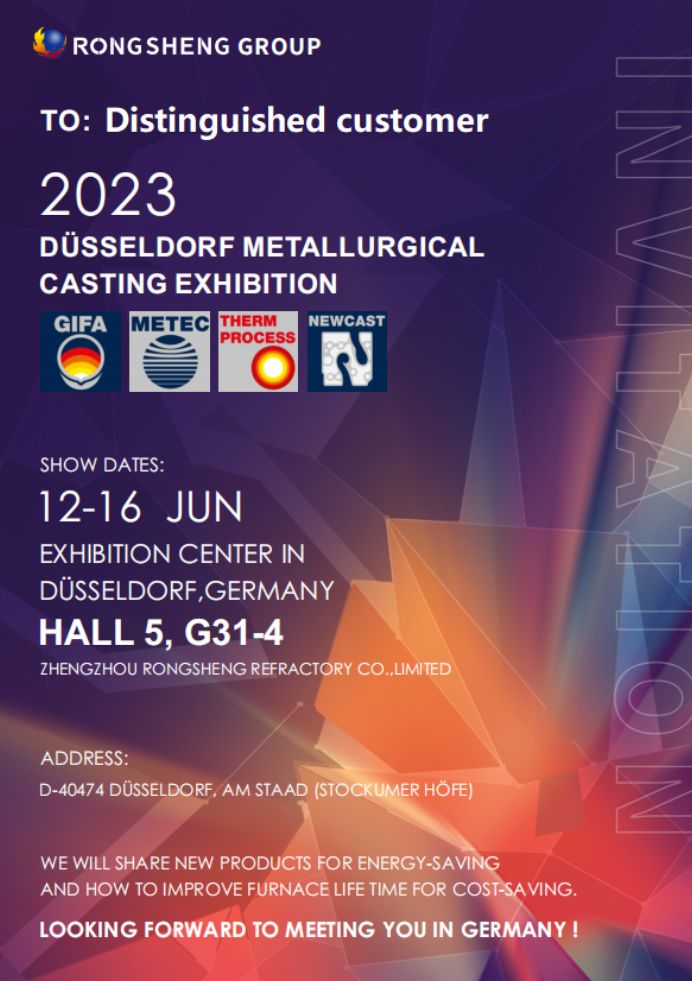
          RONGSHENG METEC2023/GIFA2023 INVITATION

          In 2023, after dormant, RS Alumina Refractory Manufacturer will bring newly high-end refractory products to customers at the 2023 Dusseldorf Metallurgical Casting Exhibition.

          Dates: 12-16 JUN

          Booth No.: HALL 5, G31-4

          RONGSHENG WILL BE THERE WAITING FOR YOU!

          RONGSHENG METEC2023/GIFA2023 INVITATION

          RS Alumina Refractory materials manufacturer has rich experience in the production and sales of refractory materials. Our refractory bricks factory and environmentally friendly monolithic refractory castables factory are preparing to welcome our third member, the refractory precast factory. Together, they will serve our customers in more than 100 countries and regions around the world. Become our customer, we not only have high-quality refractory lining material products but also provide design and construction of refractory lining materials. Perfect customer service runs through the entire service cycle of refractory lining materials. Rongsheng is looking forward to working with you.

            Get Free Quote

            Your Name (required)

            Your Email (required)

            Your Phone

            Required Products (required)

            Enquiry Information

            How to Use Refractory Bricks to Build a Circular Furnace Lining?

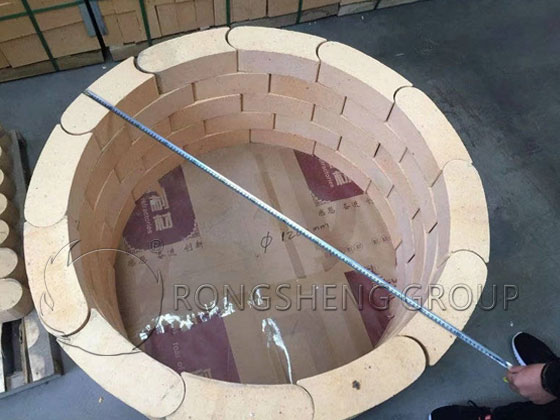
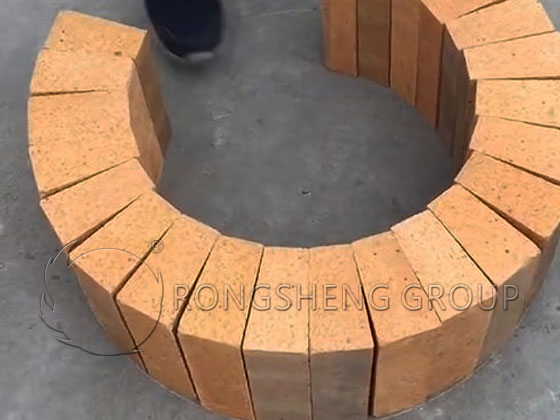
            How to build a round refractory brick furnace lining? How many options are there for building a round refractory brick furnace lining? Arc brick? Curved mother-in-law buckle brick? Knife brick? The following suggestions are given by experienced manufacturers and sales of refractory bricks, as well as the construction team of refractory brick linings.

            Arc High Alumina Bricks
            Arc High Alumina Bricks
            Arc High-Alumina Refractory Bricks for Ladle Lining
            Arc High-Alumina Refractory Bricks for Ladle Lining

            Free Quote

              Free Quote

              Your Name (required)


              Your Email (required)

              Your Phone

              Required Products (required)

              Enquiry Information

              Option 1: Building with arc bricks

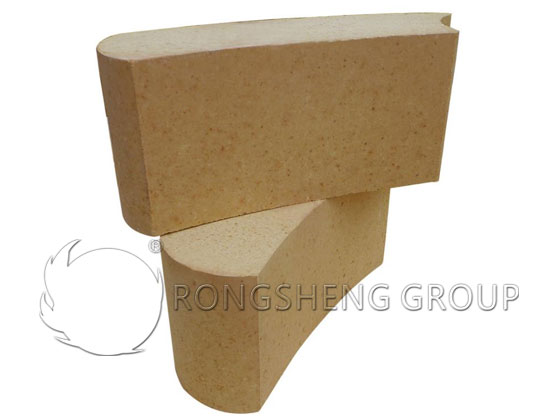
              The arc of the arc brick is a semicircle, and the other end is a groove, which can be flexible no matter how thick it is. Because it has no axis and the size is slightly deviated, it can also be built into a circle, so it is called arc brick. This kind of brick is used more in ladles. Curved high-alumina refractory bricks are mainly used as the lining of steel drums. In the past, it was mainly clay, but now it is gradually replaced by high alumina bricks. High-alumina arc brick is an aluminum silicate refractory material with an alumina content of more than 48%. It is formed and calcined from bauxite or other raw materials with high alumina content. High thermal stability, and refractoriness above 1770°C. Good slag resistance.

              According to the usage, we believe that high alumina arc bricks have the following advantages.

              1. High service life, more clinker clay bricks increase by 210%.
              2. The reduction of unit consumption also shows the characteristics of high alumina arc bricks. The reduction of unit consumption can explain the corresponding reduction of non-metallic inclusions in molten steel.
              3. Check that the cross-section of high-alumina bricks has better corrosion resistance to slag and molten steel than multi-clinker clay bricks.
              4. Due to the roundness at both ends of the arc-shaped refractory brick, it can be moved back and forth to adjust the roundness when laying bricks. Therefore, it is convenient to build refractory bricks, and the brick joints can generally reach 1 mm.
              5. The vertical joints of arc bricks are smaller, which is 70% less than that of standard refractory bricks. In this way, the erosion of the molten iron layer moving up and down and deep into the brick joints is corrected.
              6. Due to the improvement of the quality of refractory bricks, the thickness of the lining bricks can be reduced, and the capacity of the steel drum can be increased accordingly.
              7. Due to the long service life and the convenience of bricklaying, the labor required for laying steel drums behind the furnace is reduced, and the utilization rate of steel drums is increased.
              Arc-Shaped Buckle Refractory Brick
              Arc-Shaped Buckle Refractory Brick
              Lining of Arc Shaped Buckle Refractory Brick
              The lining of Arc-Shaped Buckle Refractory Brick

              Free Quote

                Free Quote

                Your Name (required)


                Your Email (required)

                Your Phone

                Required Products (required)

                Enquiry Information

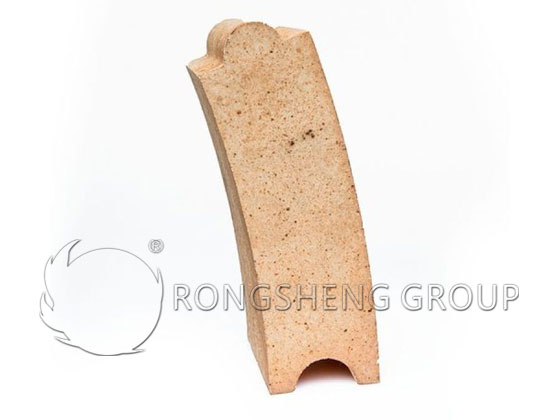
                Option 2: Masonry with arc-shaped mother-in-law buckle bricks

                The arc-shaped letter buckle refractory brick has a small semicircular protrusion at one end and a small groove at the other end. Compared with arc bricks, the masonry is stronger and the gaps are smaller, but the disadvantage is that there is no arc bricks that can change the arc at will. There is no arc brick for the masonry of circular furnace linings with different inner diameters. The curved letter buckle is also made of clay or high alumina, and the performance of high alumina is the overall clay refractory brick.

                Knife Bricks also Called Ax Bricks for Refractory Lining
                Knife Bricks also Called Ax Bricks for Refractory Lining
                Laying Bricks with Knife Bricks
                Laying Bricks with Knife Bricks
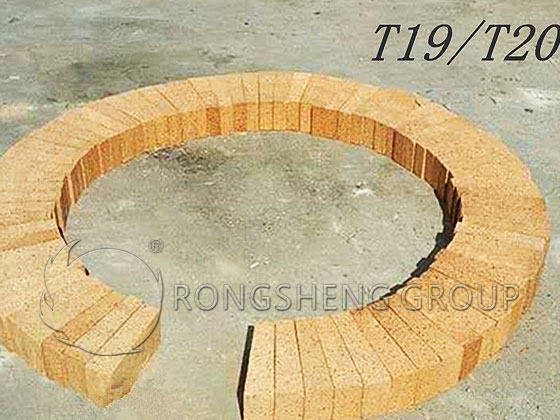
                Brick Linings of Ax-Bricks T19 and T20
                Brick Linings of Ax-Bricks T19 and T20

                Free Quote

                  Free Quote

                  Your Name (required)


                  Your Email (required)

                  Your Phone

                  Required Products (required)

                  Enquiry Information

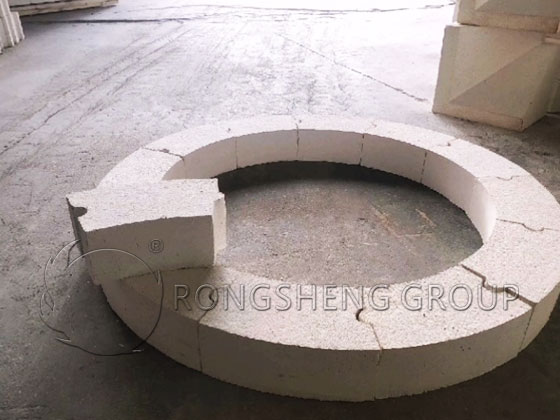
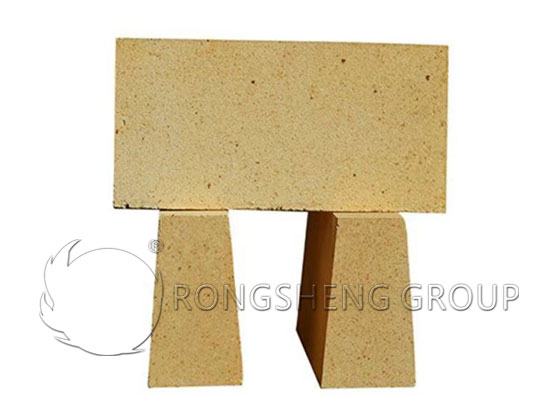
                  Option 3: Laying bricks with knife bricks or ax bricks

                  It can be built with knife bricks T38 and T39, or with ax bricks T19 and T20.

                  Rongsheng refractory brick manufacturers can provide high-quality masonry refractory bricks for circular refractory linings in various materials. Free consultation, info@aluminabricks.com.

                    Get Free Quote

                    Your Name (required)

                    Your Email (required)

                    Your Phone

                    Required Products (required)

                    Enquiry Information

                    High Aluminum Low Cement Refractory Castable Manufacturer

                    High-aluminum low-cement castable is a castable with a large number of monolithic refractories. That is to say, the addition of calcium aluminate cement is about one-half or one-third of the ordinary cement castable.

                    Compared with ordinary high-alumina castables, high-alumina, and low-cement castables use ultra-fine powder to reduce the amount of cement and greatly improve the strength and erosiveness of low-cement castables. While increasing the bulk density and reducing the porosity, the service life is increased.

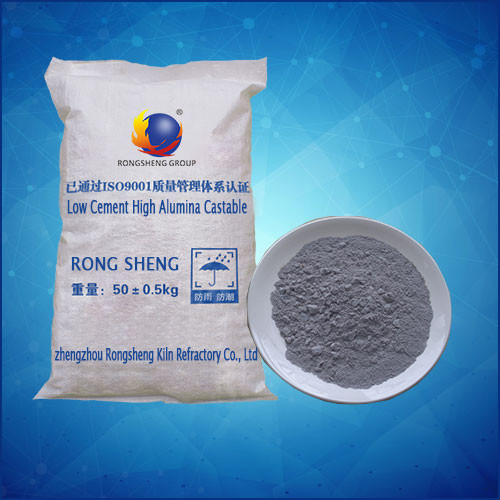
                    Low Cement High Alumina Castable
                    Low Cement High Alumina Castable

                    Free Quote

                      Free Quote

                      Your Name (required)


                      Your Email (required)

                      Your Phone

                      Required Products (required)

                      Enquiry Information

                      High-alumina and low-cement castables are used in industrial furnaces such as metallurgy, petroleum and petrochemical, electric power, and building materials. A large part has replaced refractory bricks, but as a manufacturer of low-cement castables, we still use different furnace types and temperatures according to users. According to the requirements of different use environments, some high-alumina and low-cement castables with different levels and different body densities are produced. Of course, the prices of different levels, different body densities, and low-cement castables are also different.

                      The characteristics of high-alumina and low-cement castables are also based on different grades of refractory micro-powder, different grades of main materials, and different grades of bonding agents to determine the quality of the product. In order to facilitate smaller particles, larger specific surface area, and better sintering ability, the castable is more suitable for the working needs of the user’s high-temperature kiln.

                      In the practical application of low-cement castables, especially in construction, it is also very important to control the amount of water added. Generally, when leaving the factory, the manufacturer will attach the construction instructions for the castable. During construction, it is necessary to strictly follow the construction instructions, and pour and maintain the castable well, so as to exert its maximum effect.

                      All in all, regardless of production or application, it is necessary to take into account the different effects of temperature, erosion, erosion, etc. on the refractory lining material according to the actual use. Only in this way can the refractory castables used be selected correctly, and with the appropriate construction technology, the service life of the refractory lining can be greatly extended. Save production costs.

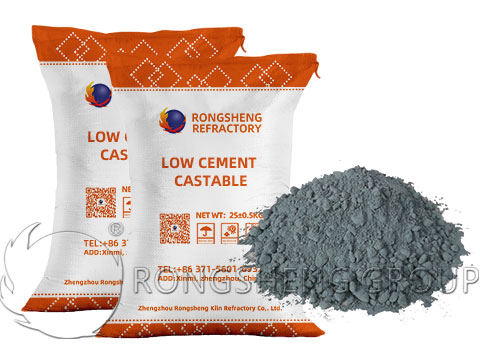
                      Rongsheng Low Cement Castable for Sale
                      Rongsheng Low Cement Castable for Sale

                      Free Quote

                        Free Quote

                        Your Name (required)


                        Your Email (required)

                        Your Phone

                        Required Products (required)

                        Enquiry Information

                        The Difference between LCC Refractory Castable and Ordinary Refractory Castable

                        Low-cement castables, ultra-low or no-cement castables replace most or all of the cement with superfine powders that have the same or similar chemical composition as the main material. It is formulated by scientifically optimizing particle gradation, micro-powder, particle shape, and other factors, and adding a small amount of dispersant (water reducer) and an appropriate amount of retarder and other compound admixtures.

                        Compared with ordinary refractory castables, the low cement castable series has many excellent properties.

                        • (1) Less water consumption. The water consumption of LCC low-cement castables is only 1/2-1/3 (about 5-7%) of ordinary refractory castables. Therefore, the bulk density is high, the porosity is low, and there is no obvious dehydration stage during baking. Good thermal shock performance, comparable to fired products.
                        • (2) Because the amount of cement is greatly reduced, the high-temperature performance and slag resistance of the material are improved.
                        • (3) There are few or no hydrates after forming and curing, and there is no hydration bond damage during baking to affect the medium temperature strength. Therefore, no matter at medium temperature or high temperature, its strength does not decrease but increases.

                        The main application of LCC low cement castable is suitable for petroleum, metallurgy, the chemical industry, and various silicate kilns. Such as some components of the refining device outside the furnace, the cover of the refining ladle outside the furnace, the integral spray gun for molten iron, the treatment of molten steel, and the roof lining of the electric furnace. Soaking furnace, heating furnace, annealing furnace lining, tapping trough. Tundish lining, high-temperature burner, blast furnace tapping ditch cover, ladle lining, etc.

                        The refractoriness of low-cement refractory castables is greater than 1790°C, and the load softening temperature (4% deformation) at 0.2MPa is 20-100°C higher than that of CA50 cement refractory castables. Therefore, the service temperature of low-cement refractory castables is generally about 100°C higher than that of CA50 cement refractory castables of the same material. The thermal expansion coefficient of low cement refractory castables shows the characteristics of expansion during the whole heating process. It can be seen that as the heating temperature increases, the thermal expansion rate increases, and reaches the highest value at 1250 ° C, which is about 0.68%. Then it began to shrink slowly, and the thermal expansion rate was 0.43% at 1400°C. When the temperature was 1500°C, the thermal expansion rate returned to 0.5%.

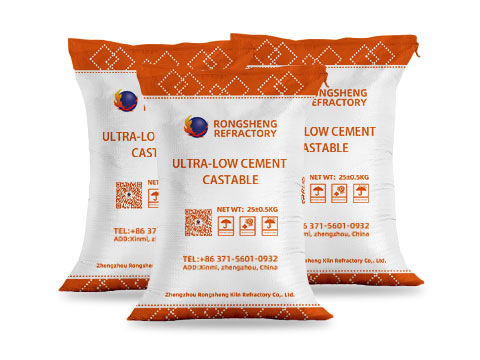
                        Ultra-Low Cement Castable
                        Ultra-Low Cement Castable

                        Free Quote

                          Free Quote

                          Your Name (required)


                          Your Email (required)

                          Your Phone

                          Required Products (required)

                          Enquiry Information

                          LCC Refractory Castable Ultra-Low Cement Castable

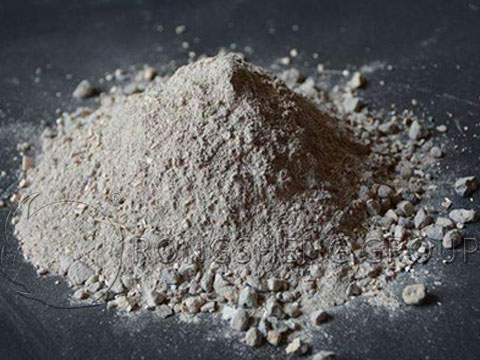
                          Low cement and ultra-low cement refractory castables refer to castable refractory materials with calcium aluminate cement added less than 8%. According to the US ASTM regulations, the CaO content in low-cement castables is required to be less than 2.5%, generally 1.0-2.5. When the CaO content is less than 1%, it becomes an ultra-low cement castable. The materials of low-cement and ultra-low-cement castables include clay, high alumina, mullite, corundum, carbon and silicon carbide, etc. Its ingredients are composed of refractory aggregate, refractory powder, an appropriate amount of superfine powder, an appropriate amount and small amount of calcium aluminate cement (delayed coagulation accelerator), and a trace amount of dispersant (high-efficiency debonding agent). Generally, multi-level ingredients are used, which are divided into 5~3mm, 3-1mm, 1~0.2mm, 0.2~0.074mm, 0.074~0.044mm, and less than 1 micron.

                          Corundum Spinel Low Cement Castable
                          Corundum Spinel Low Cement Castable

                          Free Quote

                            Free Quote

                            Your Name (required)


                            Your Email (required)

                            Your Phone

                            Required Products (required)

                            Enquiry Information

                            Mullite low-cement castables can be used as inner linings of various high-temperature burners, dressing linings of water-cooled pipes of heating furnaces, etc. Corundum and chromium-containing corundum low-cement refractory castables can be used as the lining of the triangular area of the top of the steelmaking electric arc furnace and the lining of some parts of the refining device outside the molten steel furnace. Such as integral spray gun lining for spray metallurgy, RH and DH vacuum degassing device and dipping tube lining, power frequency induction furnace lining, the high-temperature wear-resistant lining of a petrochemical catalytic cracking reactor, etc.

                            Al2O3-SiC-C low-cement castables are used as linings for blast furnace tapping troughs, iron furnace tapping troughs, and integral spray guns for molten iron pretreatment.

                            MgO-Al2O3 or Al2O3-MgO·Al2O3 low-cement castables are used as linings for ladles and tapping troughs.

                              Get Free Quote

                              Your Name (required)

                              Your Email (required)

                              Your Phone

                              Required Products (required)

                              Enquiry Information

                              Maximizing Blast Furnace Performance with Quality Checker Bricks

                              Blast furnace technology is a critical aspect of the iron and steel production process. This highly specialized technology requires various components, including checker bricks, to operate at optimal performance. Checker bricks are a unique type of refractory material that plays a vital role in enhancing the performance of blast furnaces. In this essay, we will explore the importance of using high-quality checker bricks to maximize blast furnace performance.

                              Checker Bricks for Blast Furnace
                              Checker Bricks for Blast Furnace

                              Free Quote

                                Free Quote

                                Your Name (required)


                                Your Email (required)

                                Your Phone

                                Required Products (required)

                                Enquiry Information

                                What’s a Checker Bricks for Blast Furnace?

                                Checker bricks are named after their unique checkered pattern. They are typically used in the lower portion of the blast furnace where they serve as a lining material. Checker bricks consist of a combination of carbon, silicon carbide, and alumina, which gives them high-temperature resistance and durability. They are designed to withstand extreme temperature and pressure conditions in the lower portion of the furnace and play a crucial role in enhancing the efficiency and productivity of blast furnace operations.

                                How to Maximize Blast Furnace Performance with Quality Checker Bricks?

                                One of the key benefits of using quality checker bricks in blast furnace construction is their ability to improve thermal efficiency. The lower portion of the blast furnace experiences some of the highest temperatures and pressures in the entire iron production process. Checker bricks help to regulate and control the flow of hot gases and materials through the furnace, ensuring optimal heating and combustion conditions. By regulating the flow of materials, checker bricks help to minimize heat loss and maximize thermal efficiency. This results in significant energy savings and improved overall blast furnace performance.

                                Quality Checker Bricks for Blast Furnace
                                Quality Checker Bricks for Blast Furnace

                                Free Quote

                                  Free Quote

                                  Your Name (required)


                                  Your Email (required)

                                  Your Phone

                                  Required Products (required)

                                  Enquiry Information

                                  Another important benefit of using quality checker bricks is their ability to reduce downtime and maintenance costs. Blast furnace downtime can be costly, resulting in lost production and revenue. Checker bricks that are of poor quality or not designed for the specific conditions of the blast furnace can fail prematurely, requiring frequent replacement and maintenance. High-quality checker bricks are designed to withstand the extreme conditions of the blast furnace, minimizing the risk of failure and reducing downtime and maintenance costs.

                                  Furthermore, quality checker bricks can help to improve the overall quality of iron production. The checker brick lining plays a vital role in ensuring that the blast furnace operates at optimal conditions, which results in high-quality iron production. Checker bricks help to regulate and control the flow of materials through the furnace, ensuring that the iron produced is of consistent quality and purity.

                                  Checker Refractory Bricks Used in Blast Furnace

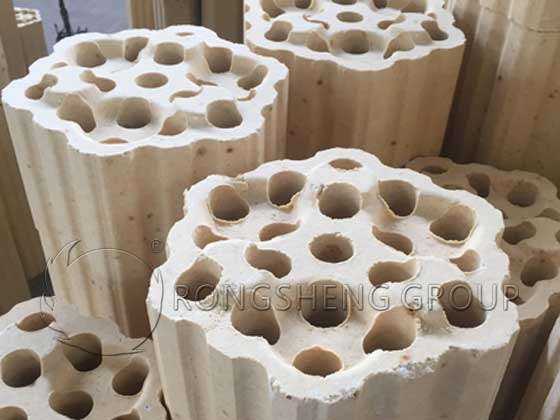
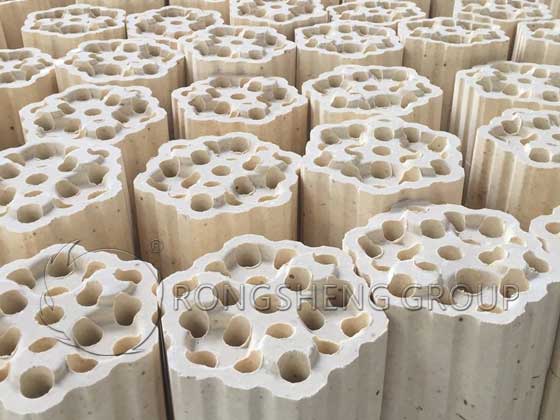
                                  Checker bricks, checker refractory bricks blast furnace, is a checker brick with many advantages such as strong heat exchange ability, large heat storage area, smooth ventilation, and low resistance, which is generally recognized and accepted by the ironmaking industry in the world. Checker brick is a heat transfer medium used in the blast furnace regenerator. It is usually arranged in an orderly manner in the regenerator, plays a heat storage role during the “burning period”, and heats the cold air into hot air through convective heat exchange and radiation heat exchange during the “air supply period”.

                                  Checker Refractory Bricks Used in Blast Furnace
                                  Checker Refractory Bricks Used in Blast Furnace

                                  Free Quote

                                    Free Quote

                                    Your Name (required)


                                    Your Email (required)

                                    Your Phone

                                    Required Products (required)

                                    Enquiry Information

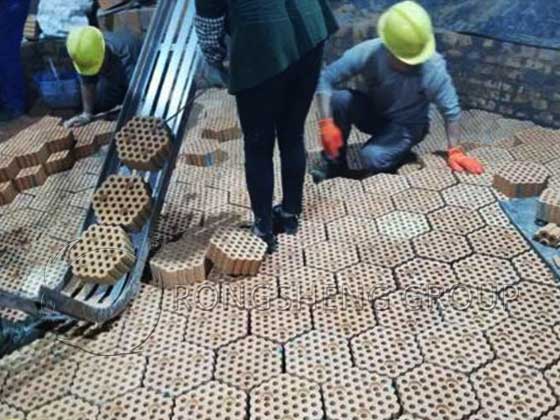
                                    At present, checker bricks, checker bricks blast furnaces, and checker bricks are mainly used in blast furnaces hot blast stoves, and flame furnaces. Checker bricks are mainly used in the regenerator of the hot blast stove. Checker bricks with grid holes in a certain structure are arranged in an orderly manner, and the upper and lower through holes of the checker bricks allow gas to pass through. According to the technical requirements of different temperature regions, silicon checker bricks, and clay bricks are generally used. In some hot blast stoves, there are also high alumina bricks, mullite bricks, sillimanite bricks, etc. to choose from. The function of the hot blast stove is to heat the cold air sent by the blower to the blast furnace into hot air. Then, the hot air is sent to the blast furnace through the hot air pipe for a combustion reaction. The blast furnace hot blast stove has a furnace firing period and an air supply period, and the rotation of the two task periods. During the firing period, the extinguished low-temperature flue gas passes through the holes of the checker bricks of the hot blast stove and transfers heat to the checker bricks. During the air supply period, the cold air from the blower enters the hot blast stove, is heated by the checker bricks to become hot air, and is sent to the blast furnace through the hot air pipe.

                                    Clay bricks for hot blast stoves belong to a secondary category of silicon-aluminum series products. They are refractory products with an Al2O3 content of 30-48% made of clay clinker as aggregate and refractory clay as a binder. The refractoriness of clay bricks is comparable to that of silica bricks, as high as 1690-1730°C, but the load hardening temperature is more than 200°C lower than that of silica bricks.

                                    In conclusion, maximizing blast furnace performance requires the use of high-quality checker bricks. These specialized refractory materials play a crucial role in improving thermal efficiency, reducing downtime and maintenance costs, and ensuring high-quality iron production. The use of quality checker bricks can result in significant energy savings, increased productivity, and improved overall blast furnace performance. It is essential to select the right type of checker bricks that are designed for the specific conditions of the blast furnace and to ensure that they are properly installed and maintained. By doing so, blast furnace operators can ensure optimal performance and maximize the efficiency of their iron production process. Buy refractory bricks used in blast furnace from Rongsheng.

                                      Get Free Quote

                                      Your Name (required)

                                      Your Email (required)

                                      Your Phone

                                      Required Products (required)

                                      Enquiry Information

                                      Rongsheng High Alumina Anchor Bricks Used in High-Temperature Furnace Linings

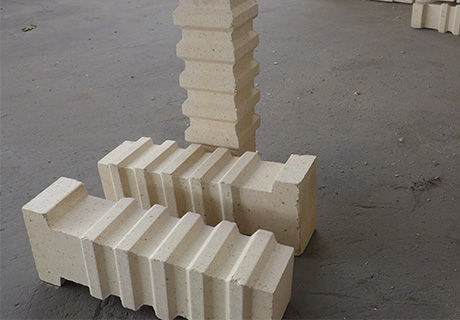
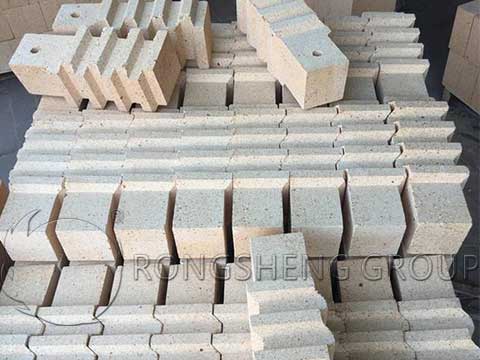
                                      High Alumina Anchor bricks are one of the most efficient materials used in high-temperature furnace linings. These materials are highly durable and provide an excellent heat-resistant environment for the operation of the furnace. High alumina anchor bricks are also called hanging bricks. It is mainly used to connect and support the structure of refractory bricks and ordinary fired bricks. It is used for heating the furnace top, furnace wall, or other parts.

                                      RS High-Quality Anchor Bricks used in high-temperature furnace linings
                                      RS High-Quality Anchor Bricks

                                      Free Quote

                                        Free Quote

                                        Your Name (required)


                                        Your Email (required)

                                        Your Phone

                                        Required Products (required)

                                        Enquiry Information

                                        High alumina anchor bricks are composed of special alumina-containing clay, followed by a high alumina anchor brick with an alumina content above 55%. The high aluminum content ensures excellent insulation and thermal shock resistance. Rongsheng high-alumina anchor bricks use natural high-grade bauxite as the main refractory raw material, add soft or semi-soft clay as a binder to the high-alumina clinker to start batching, mixing, then molding, drying, and finally firing. Shaped high alumina refractory bricks. High alumina anchor bricks can be customized for production and processing according to customer needs. The load softening temperature of the high-alumina anchor brick reaches 1550°C, which can meet the performance requirements of the furnace roof lining.

                                        Benefits of Using High Alumina Anchor Bricks in High-Temperature Furnace Linings

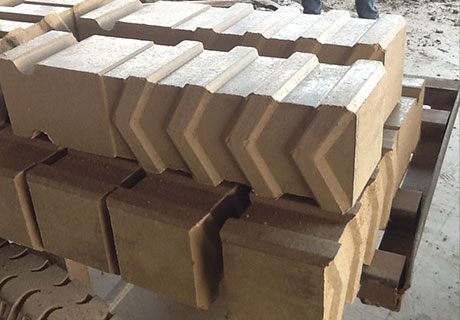
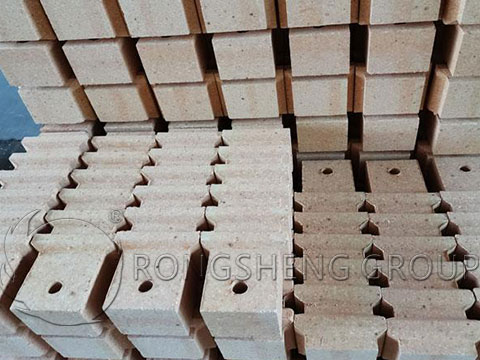
                                        High alumina anchor brick is a special-shaped high alumina refractory brick. The benefits of high aluminum anchor bricks compared to other materials are numerous. First of all, judging from the shape of the high-alumina anchor brick, it is a column composed of the hanging end and the anchor. Grooves are distributed at intervals on the surface of the anchor body. In addition, ribs are provided along the length direction on at least one surface of the anchor. Due to the reinforcement and pulling effect of the ribs, the tensile and flexural strength of the anchor body is significantly improved. Therefore, the stress generated at the groove is blocked at the rib and cannot continue to be transmitted, so the high-alumina anchor brick in High-Temperature Furnace Linings is not easy to break.

                                        High alumina anchor brick is a special-shaped high alumina refractory brick
                                        High Alumina Anchor Bricks

                                        Free Quote

                                          Free Quote

                                          Your Name (required)


                                          Your Email (required)

                                          Your Phone

                                          Required Products (required)

                                          Enquiry Information

                                          The benefits of high alumina anchor bricks compared to other materials are numerous. Firstly, they have excellent refractory properties, meaning they can withstand extremely high temperatures and provide the necessary insulation for the furnace. In addition, their compressive strength is very good, enabling them to withstand the huge loads in the furnace linings. Furthermore, their chemical composition helps retain their dimensional stability, making them excellent for linings with long service life. Such as the following listed characteristics.

                                          Characteristics of High Alumina Anchor Brick for Heating Furnace

                                          1. Stable volume at high temperature.
                                          2. Good corrosion resistance.
                                          3. The high softening temperature under load.
                                          4. Anti-stripping and high compressive strength.
                                          Anchor Bricks with Holes
                                          Anchor Bricks with Holes

                                          Free Quote

                                            Free Quote

                                            Your Name (required)


                                            Your Email (required)

                                            Your Phone

                                            Required Products (required)

                                            Enquiry Information

                                            Advantages of Anchor Bricks

                                            1. Cost-Effective
                                            2. Low Maintenance
                                            3. Wide Range of Applications

                                            High-alumina anchor bricks refer to high-alumina refractory bricks with a specific shape that is installed on the steel structure of the industrial kiln shell or supporting the furnace lining and embedded in the refractory lining for anchoring and connection. At room temperature, a bar-shaped sample with a certain size is loaded according to the specified conditions, and the ultimate tensile stress per unit area can withstand it before fracture.

                                            In summary, high alumina anchor bricks are a great choice for creating high-temperature furnace linings. They are highly durable, resistant to corrosion and thermal shock, and environmentally friendly. They are ideal for applications requiring extended service life and reduced maintenance costs. And, since they are made of natural materials, they are an excellent choice for implementing environmentally friendly construction methods.

                                            High Alumina Anchor Bricks for Furnace Wall and Top
                                            High Alumina Anchor Bricks for Wall and Top of Industrial Furnace

                                            Free Quote

                                              Free Quote

                                              Your Name (required)


                                              Your Email (required)

                                              Your Phone

                                              Required Products (required)

                                              Enquiry Information

                                              High Alumina Anchor Bricks from Rongsheng Manufacturer

                                              Rongsheng high aluminum anchor bricks use in high-temperature furnace linings. High-alumina anchor bricks are refractory bricks for the furnace roof and wall of the heating furnace. Rongsheng alumina refractory brick manufacturers can customize processing according to the size of high alumina anchor bricks provided by customers, also the refractory anchors with different shapes. In order to meet the high alumina bricks furnace lining requirements of the heating furnace and ensure the service life of the heating furnace lining, the index parameters can also be customized according to the actual working conditions of the customer’s kiln. In order to finally meet the economic benefits of improving the heating furnace.

                                                Get Free Quote

                                                Your Name (required)

                                                Your Email (required)

                                                Your Phone

                                                Required Products (required)

                                                Enquiry Information

                                                What Kind of Refractory Material is Used for the Lining of the Hydrogen Sulfide Incinerator?

                                                The working temperature in the furnace of the incinerator burning hydrogen sulfide is about 1150 ℃, and the working conditions are harsh. It belongs to an acidic combustion atmosphere, but the temperature of the furnace will reach 1400 ℃ due to the fluctuation of materials and air volume in actual production. The amount of hydrogen sulfide gas is very unstable, and every combustion fluctuation in the furnace is a big thermal shock to the furnace lining.

                                                corundum mullite bricks
                                                corundum mullite bricks
                                                high alumina brick
                                                high alumina bricks
                                                high alumina insulation brick
                                                high alumina insulation bricks

                                                Free Quote

                                                  Free Quote

                                                  Your Name (required)


                                                  Your Email (required)

                                                  Your Phone

                                                  Required Products (required)

                                                  Enquiry Information

                                                  And this kind of acid gas furnace lining is made of refractory materials, so it is very important to resist acid corrosion and thermal shock stability. The main body of the furnace can adopt a three-layer structure. Corundum mullite bricks should be used for parts that are in direct contact with the flame. It is characterized by strong wear resistance and corrosion resistance. The middle layer can choose three grades of high alumina bricks. Because the working layer does not directly contact the flame, the flexibility of the three-grade high-alumina brick is relatively good. The outer layer can be used as an insulation layer, and high-aluminum heat-insulating refractory bricks are used to keep the temperature down and reduce the temperature of the outer wall of the steel shell.

                                                  • Corundum mullite brick is a refractory product composed of mullite as the main crystal phase and corundum phase, which is sintered at a high temperature of 1650-1750 °C. It has good high-temperature strength, high-temperature creep resistance, thermal shock resistance, and corrosion resistance.
                                                  • The third-grade high-alumina brick is a series of aluminum products made of high-alumina raw materials and clay as a binder fired at a temperature of 1400°C. High thermal stability, and strong flexibility.
                                                  • Lightweight high alumina brick. It has the characteristics of small bulk density, large porosity, low thermal conductivity, and specific heat capacity, and has good thermal insulation performance for heat insulation layers. In the case of slow heat dissipation, it can save fuel and reduce the temperature of the steel shell.

                                                  The incinerator burning hydrogen sulfide is one of the rare furnace types, so the corundum mullite brick in the refractory brick used for its refractory lining is a high-grade refractory material. High-alumina bricks are neutral materials, and lightweight high-alumina bricks are used as a three-layer masonry lining to effectively improve the corrosion resistance of the incinerator. The refractory mortar of the same material is used for masonry during construction to ensure the long-term safe and reliable operation of the incinerator.

                                                    Get Free Quote

                                                    Your Name (required)

                                                    Your Email (required)

                                                    Your Phone

                                                    Required Products (required)

                                                    Enquiry Information

                                                    Requirements for the Use of Refractory Materials for Ladles

                                                    The steel ladles are the necessary equipment for receiving molten steel and for continuous casting. Because many steel grades need to be refined in the ladle, including argon blowing temperature adjustment, alloy composition fine-tuning, powder spray refining and vacuum treatment, etc. The working conditions of the ladle lining are getting worse and worse, and its working environment is.

                                                    • (1) The temperature of molten steel is higher than that of the die-casting ladle.
                                                    • (2) The residence time of molten steel in the ladle is prolonged.
                                                    • (3) The inner lining of the ladle volatilizes itself under a high-temperature vacuum and undergoes the stirring effect of molten steel.
                                                    • (4) The impact of the lining when it accepts molten steel.
                                                    • (5) Erosion of slag to the lining.

                                                    Therefore, the requirements for ladle refractories are:

                                                    • (1) High-temperature resistance. Can withstand high-temperature molten steel for a long time without melting and softening.
                                                    • (2) Thermal shock. Can withstand repeated loading and unloading of molten steel without cracking and peeling.
                                                    • (3) Corrosion is resistant to slag. Can withstand the erosion effect of slag and slag basicity changes on the lining.
                                                    • (4) It has sufficient high-temperature mechanical strength. Can withstand the stirring and scouring of molten steel.
                                                    • (5) The lining has a certain degree of expansion. Under the action of high-temperature molten steel, the inner linings are in close contact and become a whole.

                                                    Commonly Used Refractory Materials for Ladles

                                                    1. The bottom layer of the ladle. Clay bricks, also known as fired bricks. Clay bricks are made of clay (including shale, coal gangue, and other powders) as the main raw material, which is processed, shaped, dried, and fired with mud. There are solid and hollow.
                                                    2. Ladle working layer, high alumina brick. Among the refractory materials produced with aluminum-silicon-based raw materials, the bricks with Al2O3 as the main component are high-alumina bricks, mullite bricks, and corundum bricks.
                                                    3. The main body of the ladle is poured. Castable refers to the mixture composed of refractory aggregate, binder, and admixture, which is mixed with water (or liquid binder) to form mud that can be constructed by the pouring method. The difference from other unshaped refractories is that refractory castables have a certain setting and hardening time after construction. Therefore, after casting and molding, it needs to be cured for a certain period of time before it can be de-molded, and then it can be put into baking after an appropriate period of natural curing.
                                                    4. Ladle wall. Unburned bricks are also known as chemically bonded bricks. It refers to the refractory material that can be directly used for masonry without firing. The production process is relatively simple, it is made of refractory materials of different materials, and the combination of powder and granules in the product is mainly formed by the chemical action of the binder.

                                                    If the ladle is also used for refining, refractory materials that can also be used include zircon bricks, magnesia carbon bricks, magnesia carbon bricks, magnesia chrome bricks, magnesia chrome aluminum bricks, and the like.

                                                    Alumina Magnesia Carbon Bricks
                                                    Alumina Magnesia Carbon Bricks

                                                    Free Quote

                                                      Free Quote

                                                      Your Name (required)


                                                      Your Email (required)

                                                      Your Phone

                                                      Required Products (required)

                                                      Enquiry Information

                                                      Improvement of High Alumina Bricks Used in Refining Ladle

                                                      Modern refining ladles use natural andalusite and bauxite to produce high-alumina bricks. Compared with bauxite, the former has higher purity and thermomechanical stability (such as thermal strength). Because it contains more SiO2, it has poor corrosion resistance. Especially under the condition of alkaline slag, the lining of high-alumina brick masonry refining ladle produced with bauxite clinker as the main raw material has the following shortcomings and is being eliminated.

                                                      • ①Due to the volume shrinkage, the molten steel and slag are seriously penetrated and eroded, especially a thick slag layer formed at the brick joints.
                                                      • ②Due to the inherent brittleness of the brick itself and its structure, the ladle lining forms a thicker erosion zone and a slag layer.
                                                      • ③ Due to the inherent wettability of the lining to molten steel and slag, the erosion and penetration of the slag are more serious, and flake spalling occurs.

                                                      In order to overcome the above shortcomings of high-alumina bricks lined with a refined ladle, Al2O3-MgO-C bricks were developed to replace them. Compared with high alumina bricks, Al2O3-MgO-C bricks have the following advantages:

                                                      • (1) Good high-temperature resistance and tissue peeling resistance;
                                                      • (2) Good corrosion resistance to molten steel and slag;
                                                      • (3) Good residual expansion, even at higher temperatures, no cracks appear at the joints of the bricks.

                                                      Because, when the temperature is higher than 1650°C, the high-alumina bricks show obvious shrinkage, which will lead to the penetration of molten steel and slag into the brick joints. Different from high alumina bricks, Al2O3-MgO-C bricks will not shrink in the continuous casting temperature range (1650~1670℃).

                                                      Ladle Refractory Materials Manufacturers

                                                      Rongsheng refractory material manufacturer is a manufacturer of technical refractory lining material solutions with rich production and sales experience. Our excellent technical team specializes in solving the problem of refractory lining of high-temperature furnaces, including various ladle refractory problems. At the same time, our refractory brick production line and monolithic refractory production line are also the strong support of our team. From our customer base in more than 80 countries around the world, it is not difficult to see the strength of our team. Become a customer of Rongsheng Refractory Factory for free, our customer service will not let you down.

                                                        Get Free Quote

                                                        Your Name (required)

                                                        Your Email (required)

                                                        Your Phone

                                                        Required Products (required)

                                                        Enquiry Information

                                                        Castable Refractory for Circulating Fluidized Bed Boiler

                                                        There are many types of refractory castables, and the uses of each refractory castable are also different. Such as corundum wear-resistant refractory castables, low-cement refractory castables, lightweight heat-insulating refractory castables, and steel fiber refractory castables. Castables refractory for circulating fluidized bed boilers are mainly high-strength wear-resistant castables. Among them, corundum refractory castable has the characteristics of high strength and good fluidity, which is convenient for construction. It is mainly used for the parts that are easy to be washed and wear, such as the combustion chamber, separator, and flue of a circulating fluidized bed boiler.

                                                        Corundum Castable Refracotry for the C F B Boiler
                                                        Corundum Castable Refractory for the CFB Boiler

                                                        Free Quote

                                                          Free Quote

                                                          Your Name (required)


                                                          Your Email (required)

                                                          Your Phone

                                                          Required Products (required)

                                                          Enquiry Information

                                                          Corundum Wear Plastic Refractory
                                                          High-Strength Corundum Wear Plastic Refractory

                                                          Free Quote

                                                            Free Quote

                                                            Your Name (required)


                                                            Your Email (required)

                                                            Your Phone

                                                            Required Products (required)

                                                            Enquiry Information

                                                            Selection of Castable Refractory for Circulating Fluidized Bed Boilers and Precautions for Use

                                                            Selection of refractory castables and refractory plastics for circulating fluidized bed boilers. Taking the 75t/h circulating fluidized bed boiler as an example, the main refractory materials used are corundum wear-resistant plastics, diatomite thermal insulation castables, high-strength wear-resistant castables, phosphate refractory castables, lightweight thermal insulation bricks, diatomite thermal insulation bricks, refractory bricks, etc.

                                                            Among them, the wear-resistant layer at the lower part of the furnace and the outlet of the furnace are mainly made of corundum wear-resistant plastic. The inlet flue and target area of the separator use high-strength wear-resistant castables. The separator cylinder and cone are made of lightweight thermal insulation bricks, and the surface is made of high-strength wear-resistant castables. Phosphate refractory castables are used for air distribution devices, ignition air ducts, and furnace doors. Diatomite insulation bricks and refractory bricks are mainly used for the heating surfaces of the tail.

                                                            lightweight insulation castable
                                                            Insulation Castable

                                                            Free Quote

                                                              Free Quote

                                                              Your Name (required)


                                                              Your Email (required)

                                                              Your Phone

                                                              Required Products (required)

                                                              Enquiry Information

                                                              Corundum Castable
                                                              Corundum Castable

                                                              Free Quote

                                                                Free Quote

                                                                Your Name (required)


                                                                Your Email (required)

                                                                Your Phone

                                                                Required Products (required)

                                                                Enquiry Information

                                                                Corundum silicon carbide wear-resistant refractory plastic
                                                                Wear Refractory Plastic

                                                                Free Quote

                                                                  Free Quote

                                                                  Your Name (required)


                                                                  Your Email (required)

                                                                  Your Phone

                                                                  Required Products (required)

                                                                  Enquiry Information

                                                                  Precautions when using refractory castables and refractory plastics for circulating fluidized bed boilers.

                                                                  1. Clean water must be used, and the amount of water added is 6% ~ 8%.
                                                                  2. Use a forced mixer, and all mixing tools must be cleaned. Mix until homogeneous. When stirring, the amount of material added should not be less than the whole package. Dry mix for 15min before adding water to achieve the purpose of mixing evenly.
                                                                  3. The castable is reinforced with a large number of anchoring nails and the metal surface of the boiler. The anchoring nail is a metal material, and the thermal expansion coefficient is much larger than that of the refractory material, so the anchoring nail needs to be preheated before installation.
                                                                  4. The pouring surface of all molds should be coated with a layer of oil.
                                                                  5. Each batch of materials must be poured within 10 to 30 minutes after mixing. It needs to be poured to the specified thickness at one time and then vibrated until it is completely sealed.
                                                                  6. The mold is demolded 24 hours after pouring, and the total curing time is 3 days.

                                                                  How to remedy the falling off and cracking of castable refractory for circulating fluidized bed boilers?

                                                                  During the operation of the circulating fluidized bed boiler, some castable refractory for boiler will fall off and crack. This part of the pipe is more prone to wear than other places because most of it occurs in the dense phase area such as the refeeder and below the water cooling screen. When this happens, the usual approach is to repair with refractory castables or plastic refractories. When repairing, the repairing materials should be mixed and stirred first, and then suitable templates and molds should be made at the repaired part. Finally, pour and repair. The repaired material should be basically cured and formed, and then gradually baked according to the heating curve. This repair method is time-consuming, labor-intensive, and quite uneconomical. If it is repaired with blue mud, it can be ignited immediately after construction, which saves time and effort, and is convenient and quick.

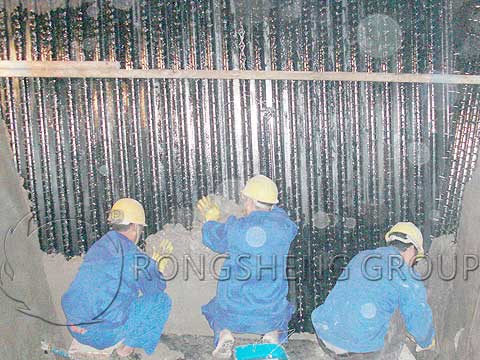
                                                                  Monolithic Refractory Construction for CFB Boiler
                                                                  Monolithic Refractory Construction for CFB Boiler

                                                                  Use special tools to repair the dropped boiler refractory castable to right-angle subsidence of not less than 20 mm, that is, the repair thickness is not less than 20 mm. Clean the repaired area with a brush, slice the blue mud, and stick the new side on the repaired area. Then ram it with a rubber hammer to make it firmly combine with the original refractory castable to form a flat surface.

                                                                  If the refractory castable falls off and exposes the pin, it can be repaired by cutting it into pieces with blue mud and tamping and compacting. If the drop area is not large, it can be completed in ten minutes before and after. The practice has proved that repairing refractory castables with blue mud is much better than repairing refractory castables with other methods.

                                                                  What boiler linings are refractory castables generally used for?

                                                                  The main application scenarios of castable refractory for boilers, power generation boilers, heating boilers, waste incinerators, and other industrial kilns. Specific applications of refractory castables for boilers are as follows.

                                                                  1. Water-cooled wall, cyclone separator, furnace, economizer, water-cooled air chamber, slag removal machine, cold ash bucket, etc. in the power generation industry.
                                                                  2. In the lining of boiler equipment such as civil boilers, biomass boilers, steam boilers, chain furnaces, pulverized coal furnaces, etc.
                                                                  3. Heating furnaces, soaking furnaces, forging furnaces, ladle furnaces, trolley furnaces, etc. in the foundry industry.
                                                                  RS Monolithic Refractories Factory
                                                                  RS Monolithic Refractories Factory

                                                                  Free Quote

                                                                    Free Quote

                                                                    Your Name (required)


                                                                    Your Email (required)

                                                                    Your Phone

                                                                    Required Products (required)

                                                                    Enquiry Information

                                                                    Manufacturers of Refractory Castables for Boilers

                                                                    Rongsheng refractory material manufacturer, environmentally friendly and advanced automatic unshaped refractory castable production line, with an annual output of tons. Can provide refractory castable lining materials for various industrial boilers. In addition, we can also provide high-quality refractory and wear-resistant plastics, refractory ramming materials, etc. It is matched with the high-quality refractory castable binder produced by Rongsheng, aluminum dihydrogen phosphate. Unshaped refractory lining materials can be formulated with the advantages of strong wear resistance, corrosion resistance, air erosion resistance, high strength, and stable performance. Improve the service life of boiler refractory castable lining. Rongsheng can also design various economical and practical unshaped refractory linings for boiler linings according to the needs of customers and the actual working conditions of boilers. Contact us for free samples and quotes.

                                                                      Get Free Quote

                                                                      Your Name (required)

                                                                      Your Email (required)

                                                                      Your Phone

                                                                      Required Products (required)

                                                                      Enquiry Information

                                                                      Two Different Types of Low Cement Castables

                                                                      In the refractory castable combined with calcium aluminate cement, the castable with CaO content less than 2.5%, that is, the castable with calcium aluminate cement added about 1/2 to 1/3 of the ordinary calcium aluminate cement castable, It is called low cement castable. Low cement castable materials are clay, high alumina, mullite, corundum, chromium corundum, zircon mullite, zirconium corundum, alumina-spinel, and carbon and silicon carbide, and many more. According to its operating performance, it is divided into vibrating castable and self-flowing castable. Rongsheng refractory manufacturer will introduce the above two different types of low-cement refractory castables for you.

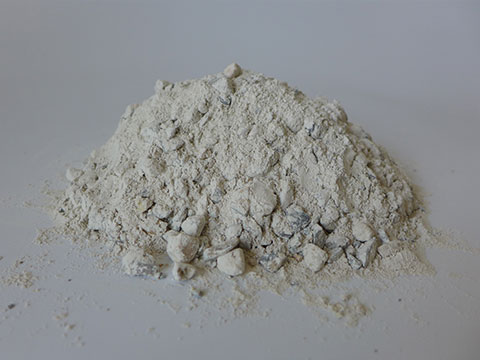
                                                                      Rongsheng Low Cement Castable for Sale
                                                                      Rongsheng Low Cement Castable for Sale

                                                                      Get Free Quote

                                                                        Free Quote

                                                                        Your Name (required)


                                                                        Your Email (required)

                                                                        Your Phone

                                                                        Required Products (required)

                                                                        Enquiry Information

                                                                        Two Different Types of Low Cement Castable Composition

                                                                        The ingredients of vibrating low cement castables are generally: refractory aggregate 60% ~ 70%, refractory powder 18% ~ 22%. Calcium aluminate cement 3% to 7% (low cement type) or 1% to 2% (ultra-low cement type). Silica (soot silica) micro powder (or reactive alumina micro powder) 3% ~6%. Trace dispersant. The particle size composition can be according to Andreassen’s particle size distribution equation, and the q value is 0.26 ~ 0.35.

                                                                        The batching composition of the self-flowing low-cement castable is similar to that of the vibrating low-cement castable, but the particle size composition and fine powder content are different. Generally, the maximum critical particle size of aggregate is not more than 6 mm, and the particle size distribution is in accordance with the Andreassen or Dinger-Funk particle size distribution equation. The value of the particle size distribution coefficient q should be controlled between 0.21 and 0.26, and a larger self-flow value (greater than 180) can be obtained between this value. When the q value is greater than 0.26, the flow value becomes smaller, and it is difficult to cause self-flow. When the q value is less than 0.21, the powder content is too large, which will affect the physical properties of the castable. The content of micro powder (silica micro powder) in the particle size composition is generally 5% ~ 6%. At the same time, high-efficiency dispersants must be used.

                                                                        Low Cement Castable Refractory Materials Manufacturer
                                                                        Low Cement Castable Refractory Materials Manufacturer

                                                                        Get Free Quote

                                                                          Free Quote

                                                                          Your Name (required)


                                                                          Your Email (required)

                                                                          Your Phone

                                                                          Required Products (required)

                                                                          Enquiry Information

                                                                          Low Cement Castables Physical and Chemical Indicators

                                                                          Table 1 shows the typical vibrating low-cement clay, high-aluminum, and corundum casting performance. 

                                                                          Table 1 Vibrating Low-Cement Castables physical and chemical indicators
                                                                          Items Clay Low Cement Castable High-Alumina Low Cement Castable Corundum Low Cement Castable
                                                                          w(Al2O3) / % 45 75 92
                                                                          w(SiO2) / % 50 12 5
                                                                          w(CaO) / % <1.8 <1.5 <1.5
                                                                          Bulk Density / g/cm3 110℃, 24h 2.30 2.60 3.00
                                                                          1350℃, 3h 2.26 2.61 3.10
                                                                          Compressive Strength / MPa 110℃, 24h 72 75 85
                                                                          1350℃, 3h 90 115 125
                                                                          Linear change rate after burning / % 1000℃, 3h -0.3 -0.2 -0.2
                                                                          1350℃, 3h ±0.3 ±0.5 ±0.5
                                                                          Max Use Temperature / ℃ 1450 1600 1700
                                                                          Mixing Water Demand / % 6.0 ~ 6.5 6.0 ~ 6.5 4 ~ 5

                                                                          Table 2 shows the general self-flowing low-cement alumina-spinel casting performance.

                                                                          Table 2 Self-Flowing Low-Cement Alumina-Spinel Castable
                                                                          Items A B C
                                                                          w(Al2O3) / % 90 88 85
                                                                          w(MgO) / % 6 6 6
                                                                          w(CaO) / % 3 5 8
                                                                          Bulk Density after Burning / g/cm3 110℃, 24h 3.20 3.10 3.05
                                                                          1000℃, 3h 3.10 3.08 2.92
                                                                          1600℃, 3h 3.15 2.95 2.86
                                                                          Flexural Strength after Burning / MPa 110℃, 24h 6.5 9.5 10.0
                                                                          1000℃, 3h 5.5 7.6 7.8
                                                                          1600℃, 3h 30.0 21.5 20.5
                                                                          Linear Change Rate after Burning / % 110℃, 24h
                                                                          1000℃, 3h 0.1 0 0
                                                                          1600℃, 3h -0.1 +0.8 +0.9
                                                                          Amount of Water / % 4.8 ~ 5.4 5.4 ~ 5.8 5.5 ~ 6.5
                                                                          Self-Flow Value / mm > 185 > 185 > 185

                                                                          Low Cement Castable Refractory Material Application

                                                                          Low cement castable refractory materials have a wide range of applications. In metallurgy, petrochemical, machinery manufacturing, electric power, building materials, and other industrial kilns, such castables have been widely used to replace some traditional fired refractory brick products as linings. Vibration-type low cement castable refractory materials are mainly used as thick-sized linings. Such as heating furnace, various heat treatment furnace electric furnace cover shaft kiln, rotary kiln, blast furnace tapping channel, ladle, hot metal ladle, etc. The self-flowing low cement refractory castables are mainly used as thin linings and linings for high-temperature refractory components with metal anchors. Such as the outer lining of the water-cooled pipe of the heating furnace, the lining of the integral spray gun for jet metallurgy, the lining of the immersion pipe of the RH and DH vacuum degassing device, and the air supply element of the ladle (breathable brick). And the high-temperature wear-resistant lining of the petrochemical catalytic cracking reactor.

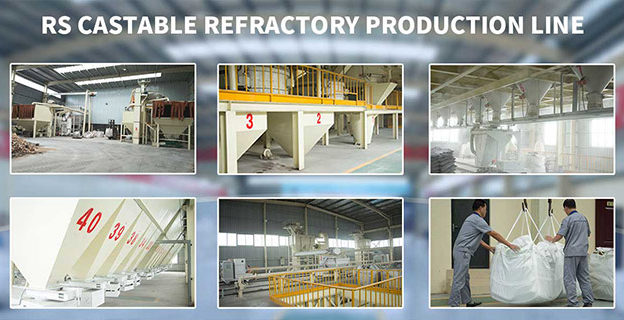
                                                                          Rongsheng Unshaped Refractory Materials Production Line
                                                                          Rongsheng Refractory Castables Manufacturers’ Production Line

                                                                          Get Free Quote

                                                                            Free Quote

                                                                            Your Name (required)


                                                                            Your Email (required)

                                                                            Your Phone

                                                                            Required Products (required)

                                                                            Enquiry Information

                                                                            Refractory Castables Manufacturers

                                                                            As one of the refractory castables, the unique advantages of low cement castables play an important role in refractory lining materials. Rongsheng refractory castable manufacturers have rich experience in production and sales. Its advanced environment-friendly and fully automatic unshaped refractory castable production line have an annual output of 80,000 tons. To provide our customers in more than 60 countries with high-quality refractory lining materials. For example, Russia, South Africa, Kazakhstan, Philippines, Chile, Malaysia, Uzbekistan, Indonesia, Vietnam, Kuwait, Turkey, Zambia, Peru, Mexico, Qatar, etc. Rongsheng used to customize low cement castables for customers, ultra-low cement castable, and high customer return rate. To obtain free refractory lining material configuration solutions for high-temperature kilns and solve difficult refractory lining material problems, please contact us. We will customize the refractory lining scheme for you according to your actual production situation.

                                                                              Get Free Quote

                                                                              Your Name (required)

                                                                              Your Email (required)

                                                                              Your Phone

                                                                              Required Products (required)

                                                                              Enquiry Information

                                                                              Brand Name and Logo Upgrade !!!