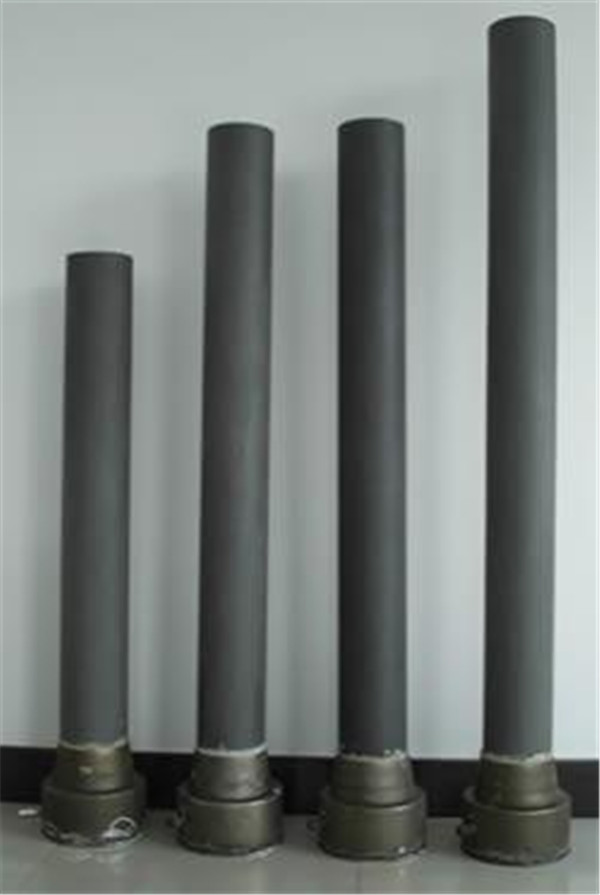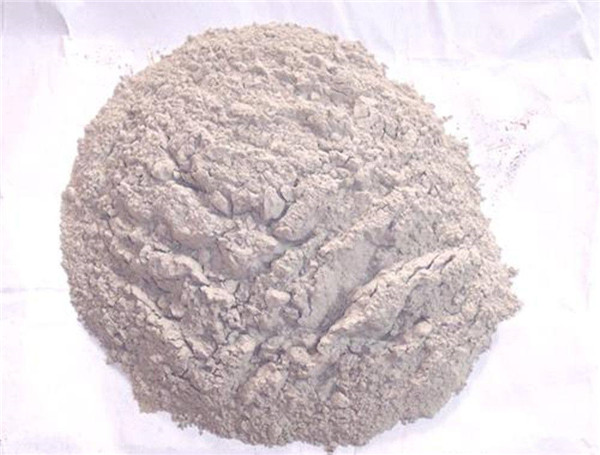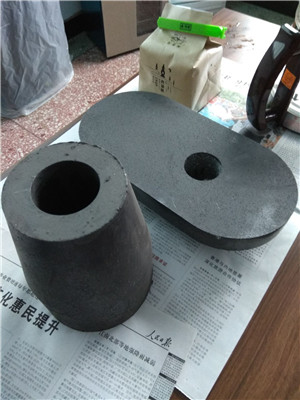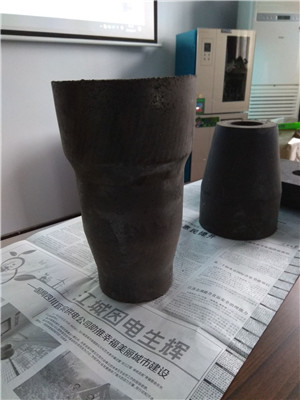
Alumina Rotary Kiln Refractory

Aluminum Smelting Industry Description

The world’s annual aluminum output takes the top position among nonferrous metals production, far larger than other nonferrous metals. Refractory material consumption of aluminum industry is much more than the total consumption of copper, lead and zinc smelting. The production of aluminum including 2 steps, first, produces alumina from bauxite by wet method, second,  uses industrial alumina as raw material, adopts molten salt electrolytic process to produce aluminum. High temperature kilns used for aluminum production are rotary kiln, molten salt electrolytic tank, aluminum smelting furnaces, etc.

Refractory material consumption of industrial aluminum smelting furnaces is large, that’s because, during producing Al2O3, basic material will have very severe corrosion to alumina rotary kiln refractory material. When smelting aluminum, even the temperature is relatively low, aluminum liquid has very strong permeability, once it permeates into firebricks, it will react with SiO2 and reduces Si from the firebricks, which will destroy their structure and cause the looseness, spalling and damage of furnace lining.

So SiO2 containing refractory materials are also not suitable for the masonry of aluminum smelting equipments. High alumina bricks and carbon refractories are usually used for ordinary aluminum industry furnaces.

Alumina Rotary Kiln Description

Rotary kiln is thermal equipment for the sintering of alumina clinker. During manufacturing alumina, alumina bauxite, pure alkali and lime are proportionally loaded into rotary kiln, calcined at 1200~1300℃, the calcined bauxite clinker needs to be further processed to make Al(OH)3. After sintering in 1200℃ rotary kiln, Al2O3 are produced by Al(OH)3.

The sintering process are: high temperature flame and the raw material reversely move in the rotary kiln. Lime and bauxite raw material pulp(contains 40% water) or Al(OH)3(contains 12%~18% water) is loaded form kiln tail. After low temperature drying and dehydration, heating and high temperature sintering, calcined clinker will be unloaded from kiln head, while high temperature gas flows from kiln head to tail. So the kiln can be divided into preheating zone and high temperature sintering zone. To avoid pulp material adhering to kiln lining during sintering and to strengthen heat exchange efficiency, chains are set between refractory material brickwork, when kiln body is in rotary motion, the chains will continuously strike raw materials and lining bricks, which will affluence the service life of kiln lining.

Alumina Rotary Kiln Refractories Properties

The rotary kiln body used for alumina production is steel board welded cylinder, inner lining is constructed by refractories. The working environment of refractory materials are harsh, so they should have these characteristics: strong alkaline corrosion resistance, can continuously work at 1200~1300℃ high temperature and won’t damage, can resist material erosion and impaction, can resist the souring of high temperature air current.

Alumina Rotary Kiln Refractories Category

Reractories used in rotary kiln are mainly high alumina bricks and magnesia bricks. Low temperature drying kiln usually adopts fireclay bricks as inner lining refractory. At sintering zone, there is often an insulating lining between kiln wall and firebricks inner lining, which is often built by diatomite bricks, ceramsite bricks or refractory fiber felts.

ItemKiln nameRefractory material
Sintering zone(1200~1300℃)Alumina clinker sintering kiln, aluminum hydroxide calcination kilnLow calcium aluminate bonded refractory concrete, phosphate bonded high alumina bricks, high alumina bricks, fireclay bricks
Cooling zoneAlumina clinker sintering kiln, aluminum hydroxide calcination kilnphosphate bonded high alumina bricks, fireclay bricks

Alumina Rotary Kiln Unshaped Refractories

Currently, unshaped refractories are popularly used in aluminum industry. Rotary kiln inlet where constantly suffers materials high temperature abrasion and thermal shock stress, is vulnerable to deformation damage. At alumina clinker sintering kiln transition zone, the temperature is between 400℃~1000℃, alkaline corrosion and mechanical damage are severe, the inner lining often spalls or falls off. So steel fiber castable which has good abrasion resistance is are usually used in rotary kiln.

ItemGJZL-40GJZL-45GJZL-70
Al2O3 % ≥404570
CaO %/≤2.5≤2.1
Refractoriness ℃16901710≥1790
Working temperature ℃125013001450
Fastness to alkaliIIII
Bulk density g/cm31200℃,3h1.802.302.57
Linear change rate %1200℃,3h-0.5-0.3-0.2
Cold crushing strength Mpa1200℃,3h305070
Modulus of rupture Mpa1200℃,3h8910
CharacteristicsBase resistance, abrasion resistance, thermal shock resistance, energy savingAlkali resistance, abrasion resistance, spalling resistance, thermal shock resistanceAlkali resistance, high strength, spalling resistance, thermal shock resistance
ApplicationsTransition zone, preheating zone, kiln hoopKiln inlet, preheating zone, chains zoneDecomposition zone, kiln inlet, cooling zone feeding chamber, cooler.

    Get Free Quote

    Your Name (required)

    Your Email (required)

    Your Phone

    Required Products (required)

    Enquiry Information

    Alumina Roasting Furnace Refractories

    Alumina Roasting Furnace Refractories Description

    The roasting of aluminum hydroxide is the last procedure of alumina production. Its main purposes are drying adhered water and crystallization water in aluminum hydroxide and transforming some γ-alumina into α-alumina. Most alumina manufacturer in China have totally or partly adopted fluidized roasting equipments. Fluidized roasting equipments are classified into fluidized flash roasting furnace, circulating fluidized roasting furnace and suspension roasting furnace. Refractories for these 3 types of roasting furnaces are not the same, but large quantity of unshaped refractory( plastic refractory and refractory castable) are used, more specifically, 50%~70% of refractory consumption is unshaped refractory.

    Alumina gas suspension roasting furnace is the specialized equipment for aluminum hydroxide roasting. The craft and automation level are both very high, roasting process takes place at high temperature furnace body ( 1200℃) and high speed atmosphere. The processed alumina has high rigidity, good flowability, meanwhile, there are strict quality standard on alumina products, any mixing of impurity can directly affect the product performance. So the refractory materials used in alumina gas suspension roasting furnace should have the following characteristics: high refractoriness, good abrasion resistance, high strength, good thermal stability, good integrity, good tightness.

    Alumina Gas Suspension Roasting Furnace Refractory

    ItemSLH-1SLH-2SLH-3SLH-4
    Al2O3 % ≥45656545
    Refractoriness ℃1710177017301690
    Working temperature ℃1100130013001100
    Suggested quantity  t/m32.502.603.303.25
    Bulk density g/cm31200℃,3h/2.302.30/
    Linear change rate %1200℃,3h/±0.3±0.3/
    Cold crushing strength Mpa1200℃,3h/9060/
    Modulus of rupture Mpa1200℃,3h/148/
    CharacteristicsGood volume stability, high low & middle temperature strength, scouring resistance, abrasion resistance, thermal shock resistanceStrong adhesion ability, good volume stability, thermal shock resistance, scouring resistance, high low & middle temp. strength
    ApplicationsThe casting of low & middle temperature liningThe casting of high temperature liningThe gunning and coating of high temperature lining and low workability partsThe gunning and coating of low &middle temperature lining and low workability parts

      Get Free Quote

      Your Name (required)

      Your Email (required)

      Your Phone

      Required Products (required)

      Enquiry Information

      Aluminum Reduction Cell Refractory

      Aluminum Reduction Cell Description

      Aluminum reduction cell is the core equipment for the production of electrolytic aluminum. Aluminum reduction cells are usually rectangular steel shells, with carbon bricks inner linings. Carbon anode suspends in aluminum reduction cell, while carbon cathode locates at the bottom. Molten Cryolite, aluminum fluoride, lithium fluoride and so on are usually used as electrolyte. Al2O3 is smelted at 970℃ and electrolyzed into metal aluminum at bottom cathode and oxygen at anode, oxygen can react with carbon anode and produce CO2 or CO. The heat released by electrochemical reaction can keep aluminum and aluminum reduction cell molten state, aluminum liquid is discharged from reduction cell at intervals, and some quantity of alumina and cryolite are added into the cell. Electrolysis  temperature is kept between 900~1000℃.

      Aluminum Reduction Cell Cathode Refractory

      Refractory materials used in aluminum reduction cell cathode should have good electricity conductivity and good cryolite, NaF and aluminum liquid corrosion resistance. The bottom working lining of aluminum reduction cell is formerly lined by carbon block, but it can react with sodium and form new compound, the working lining’s structure becomes loose, mechanical strength deceases, and crack also appears in the carbon blocks. Electrolyte and aluminum liquid can permeate into carbon block through the cracks,  and react with carbon to form Al4C3, which causes the further expansion of carbon block cracks, and finally leads to the severe corrosion of inner lining and the deformation of aluminum reduction cell shell. Therefore, amorphous carbon bricks are gradually replaced by semi graphitized carbon bricks or graphitized carbon bricks.

      Aluminum Reduction Cell Side Wall Refractory

      The damage reasons of aluminum reduction cell side wall inner lining are air  caused material oxidization, high temperature molten cryolite, NaF and aluminum corrosion, moving molten liquid scouring and erosion, temperature fluctuation and thermal expansion caused thermal stress.

      Amorphous carbon blocks and graphite carbon blocks are used to mason the side wall of aluminum reduction cell, the lethal defect of carbon based refractories is bad oxidization resistance and low mechanical strength. To prevent oxidization, and keep relatively large electric resistance, SiC refractory materials are gradually developing, among them, silicon nitride bonded silicon carbide bricks have the best application effect. The advantages of silicon nitride bonded silicon carbide bricks are: excellent high temperature mechanical performance, good thermal conductivity, easy to form condensed slay at inner side, large electric resistance, can reduce side way electricity loss, good oxidization resistance, won’t react with aluminum liquid, cryolite and other molten body, can large scale reduce lining bricks thickness and increase reduction cell volume. For example, the carbon bricks lined side way thickness is about 200~400mm, while the thickness of silicon nitride bonded silicon carbide bricks lined wall is only 75mm.  

      Silicon Nitride Bonded Silicon Carbide Bricks Physiochemical Index

      ItemStandard valueTested value
      SiC %≥7273
      Si3N4 %≥2123
      Si %≤1.00.3
      Fe2O3 %≤1.00.4
      Apparent porosity %≤1715
      Bulk density g/cm3≥2.652.70
      Cold crushing strength Mpa≥150220
      Modulus of rupture Mpa(1400℃,0.5h)≥5365
      Thermal conductivity w·(m·K)-1(1000℃,2h)≥1718.5

      Aluminum Reduction Cell Bottom Blockage Layer

      During electrolytic aluminum production, Na and NaF vapor, liquid can permeate into insulating lining from bottom cathode materials. So the thermal conductivity of insulating lining will increase and correspondingly decrease aluminum reduction cell thermal efficiency, the working atmosphere will degenerate till the damage of reduction cell. A new type of dry impervious material can be paved between cathode refractory and insulating lining, it can not only prevent the permeation of electrolyte but also has good heat preservation performance.

      Dry Impervious Material Physiochemical Index

      ItemDry impervious material
      (Al2O3+ SiO2) %≥90
      Refractoriness ℃≥1630
      Bulk density g/cm31.60~1.65
      Thermal conductivity w·(m·K)-1(400℃)0.40
      Thermal conductivity w·(m·K)-1(600℃)0.47

        Get Free Quote

        Your Name (required)

        Your Email (required)

        Your Phone

        Required Products (required)

        Enquiry Information

        Aluminum Smelting Furnace and Holding Furnace Refractory

        Aluminum Smelting Furnace and Holding Furnace Description

        Gas-combustion or oil-combustion fixed or tilting reverberators are usually used for aluminum ingots and scrap aluminum melting and alloying, sometimes, resistance reverberator or induction crucible furnace are also adopted.

        Although the temperature of aluminum liquid and aluminum alloy is only 700~800℃, magnesium, silicon, manganese and other element in aluminum and aluminum alloys are very active, easy to react with some components in refractory material and cause refractory damage. The main damage mechanisms of aluminum smelting furnaces are:

        1. Aluminum liquid has very low viscosity, is easy to permeate into refractory material.
        2. Some alloy elements in aluminum and its alloys have very strong reduction ability, their reduction-oxidization reaction is strong heat release reaction. Some alloy elements such as Mg have very high vapor pressure, their vapor is more liable to penetrate into refractory material and then be oxidized, finally cause the metamorphism , structure looseness and damage of refractory material.
        3. During large scale aluminum smelting furnace working, continuously added aluminum ingots and alloy will have great impaction and abrasion to furnace inlet and furnace bottom.
        4. The addition of aluminum ingots, the discharge of aluminum liquid and temperature fluctuation in furnace can do thermal shock damage to refractory lining.

        Aluminum Smelting Reverbertator Refractories

        Aluminum smelting reverbertator refractories should resist aluminum liquid and magnesium vapor infiltration, have excellent abrasion resistance and thermal stress impaction, etc. Furnace lining where contact with aluminum liquid usually adopts high alumina bricks containing 80%~85% of Al2O3. For high purity aluminum smelting, corundum bricks or mullite bricks are usually adopted. At furnace bed slope and scrap aluminum feeding parts, where corrosion and abrasion is frequently happened, silicon nitride bonded silicon carbide bricks are often used. At aluminum runner and aluminum tapping hole, aluminum scouring is severe, so self bonded or silicon carbide bonded silicon carbide bricks are adopted, zircon bricks are also used for the masonry of inner lining. For furnace lining, where don’t contact with aluminum liquid, clay bricks, fireclay castable or plastic refractory are usually used. The inner lining of aluminum running trough usually adopts silicon carbide bricks or fused foam silica precast blocks.

        With the enlargement aluminum smelting furnace and the strengthening of smelting, high strength anti-aluminum permeation castable which has excellent permeation resistance, abrasion resistance and thermal impaction resistance are widely used in aluminum smelting furnace.

        High Strength Anti-Aluminum Permeation Castable

        ItemIndex
        Al2O3 %75.6
        CaO %1.25
        Refractoriness ℃1790
        Bulk density g/cm3(110℃,24h)2.85
        Crushing strength MPa (1000℃,3h)126.42
        Modulus of rupture Mpa (1000℃,3h)15.67
        Linear change rate %  (1000℃,3h)+0.01
        Abrasion index4
        Thermal shock resistance times (1100℃,water cooling )≥5

          Get Free Quote

          Your Name (required)

          Your Email (required)

          Your Phone

          Required Products (required)

          Enquiry Information

          Tundish Refractory

          Tundish Refractory Description

          The main function of tundish is keeping the temperature of steel liquid stable, making impurity float to the surface of steel liquid, promising the smooth going of the continuous casting during steel liquid shortage or steel ladle changing. The capacity of tundish is usually 15%~30% of steel ladle. Every continuous casting machine will equip 7~12 tundishes. Tundish Steel liquid temperature is 1510~1570℃. Learn more about the tundish refractory, please continue reading.

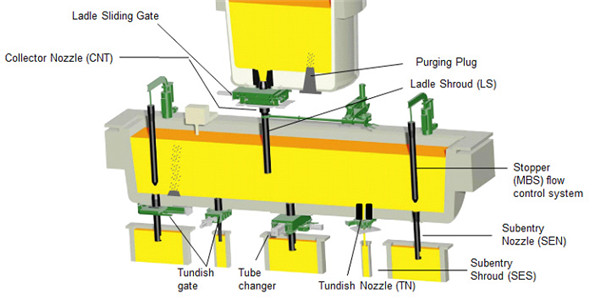
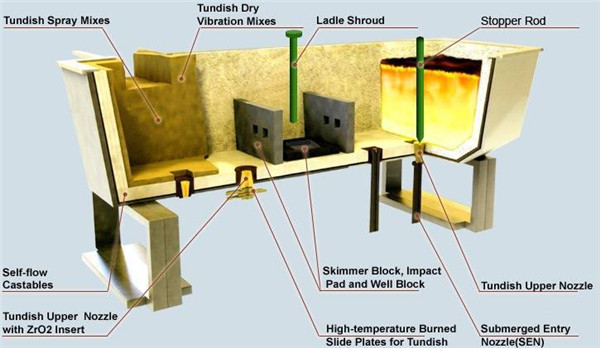
          As a transition device between the ladle and the mold during the continuous casting process, the tundish is not only storage and distributor of the molten steel, but also a refining vessel of the molten steel. It can be used to stabilize the steel flow, reduce the scouring of the billet shell in the mold by the steel flow so that the molten steel has a reasonable flow field and a proper long residence time in the tundish. In order to ensure the uniform temperature of the molten steel and the separation and floating of non-metallic debris, the cleanliness of the molten steel and the continuous casting of multiple furnaces are an important part of improving the quality of steel and the efficiency of continuous casting. The structure diagram of the tundish is shown below.

          Tundish refractory
          Schematic Diagram of Tundish Structure

          The Main Function of the Tundish

          • (1) Diversion of molten steel. For multi-stream and continuous casting machines, the molten steel is distributed to each mold through the tundish.
          • (2) Steady flow. Reduce the static pressure of the molten steel to maintain a stable liquid level in the tundish. Pour molten steel into the mold steadily.
          • (3) Store molten steel. When replacing the ladle with multiple furnace continuous casting, the drawing speed is not reduced. Create conditions for multiple furnace continuous pouring.
          • (4) Purify molten steel. In a long pouring time, the temperature of the molten steel is basically unchanged, and the inclusions in the molten steel are further raised. Avoid contact between molten steel and air, and avoid oxygen and nitrogen absorption.

          Refractory Materials for Tundish

          Refractory materials for tundish can be divided into three categories in terms of function.

          • The first category is lining materials. It is mainly composed of the thermal insulation layer, permanent layer, and working layer.
          • The second category is steady flow components. Including slag weir, slag baffle, impact plate, etc.
          • The third category is the flow control part. There are stoppers, sliding nozzles, sizing nozzles, and intrusive nozzles.

          For billet continuous casting, the core of efficient continuous casting is high drawing speed. This requires that on the basis of the quality of the molten steel meeting the requirements, the continuous operating rate of the continuous caster and the casting speed should be increased as much as possible. To achieve higher billet temperature and cast billet quality. These technical indicators put forward two requirements for tundish refractories, one is a high performance, and the other is long life.

          integral stopper

          submerged nozzle

          long nozzle

          The Flow Control Part of the Tundish

          Get Free Quote

            Free Quote

            Your Name (required)


            Your Email (required)

            Your Phone

            Required Products (required)

            Enquiry Information

            Composition of the Refractory Lining in the Tundish

            The tundish is lined with refractory materials and generally includes the following parts. Refractory materials for different parts of the tundish are introduced respectively.

            (1) Insulation layer (10-30mm), this layer is next to the steel shell of the tundish. Asbestos boards, insulation bricks, or lightweight castables are usually used. The best effect is aluminum silicate fiber felt, which has low thermal conductivity and is easy to build. Insulating lining. Insulating lining usually adopts clay bricks or insulating board, some steel mills may have no insulating lining.

            (2) Permanent layer (100-200mm), which is in contact with the insulation layer. The material is generally clay bricks. The overall permanent lining is the most common, and the castable is generally high-alumina or mullite self-flowing castable. Permanent lining. The permanent lining is made from low cement or ultra-low cement alumina castable, which contains 60%~80% of Al2O3. The service life of permanent lining is between 200~1000 times, or even more.

            (3) Working layer (20-50mm), this layer is in contact with molten steel and is the key part. Nowadays, insulation boards or coatings are commonly used. Insulation panels are generally siliceous, magnesia, or forsterite. The paint is magnesia, magnesia chromium, and magnesia calcium. The paint is sprayed mechanically or applied by hand. Corrosion lining. Corrosion lining is made from magnesia coating mix, insulating boards, or dry ramming mass.

            (4) The Well Blocks are inlaid at the bottom of the tundish and used to install the tundish nozzle. The material is usually high alumina.

            (5) The material of the bottom of the tundish is basically the same as that of the working layer. The bottom working layer of the tundish is easily damaged by the impact of molten steel, which requires corrosion resistance and wear-resistance. High-alumina bricks or dense high-alumina bricks and alumina-chrome bricks are generally used, and large, high-strength tar magnesia bricks are also used. The impact part of molten steel is reinforced with zircon bricks or prefabricated blocks.

            (6) The tundish cover covers the tundish, which can play the role of heat preservation and molten steel splashing. The material is made of clay or high-alumina castable as the cover, usually adopts the alumina-silica castable with 60% of Al2O3.

            high alumina castable
            high alumina castable

            Get Free Quote

              Free Quote

              Your Name (required)


              Your Email (required)

              Your Phone

              Required Products (required)

              Enquiry Information

              (7) The slag retaining wall (weir), which is built in the tundish, can be a single wall or a double wall. The material of the slag retaining wall weir is usually high-alumina bricks, but can also be made into prefabricated blocks, and its purpose is to block. In order to improve the cleanliness of molten steel, a molten steel filter can also be installed on the slag retaining wall.

              • Impaction zone. Impaction zone can use high alumina precast blocks or high alumina bricks, magnesia precast blocks or magnesia carbon bricks can also be used.
              • Slag baffle. Slag baffles are mainly made from magnesia precast blocks. Magnesia calcium slag baffle which can adhere impurity in steel liquid is also under development.
              • Stopper. Alumina carbon integral stopper.
              • Metering nozzle. Zirconia metering nozzle. For small billet continuous casting, metering nozzle zirconia content can reach 94%, bulk density can reach 5g/cm3. Its service life can be longer than 20 hours.
              • Upper nozzle. Alumina carbon upper nozzle or sintering mullite upper nozzle.
              • Sliding gate. Alumina carbon sliding gate or alumina-zirconia carbon sliding gate.
              • Coating mix. Magnesia calcium coating mix can significantly decrease oxygen content and sulfur content in steel liquid, impurity index can decrease 37%.
              • Tundish nozzle. Corundum mullite nozzle or alumina carbon nozzle are usually used in the tundish. To avoid blockage during killed steel casting, there is also argon-blowing purging nozzle.

              Tundish Refractory Materials Physiochemical Index

              ItemLZ-1LZ-2LZ-3LZ-4LZ-5LZ-6
              NameMagnesia chrome coating mixMagnesia coating mixMagnesia coating mixMagnesia coating mixMagnesia coating mixMagnesia calcium coating mix
              Cr2O3 %5~10/////
              MgO %≥708585858570
              CaO%/////≥10
              SiO2 %≤466666
              Bulk density g/cm3(110℃,24h)≥2.2≥2.21.8~2.01.4~1.61.1~1.25≥1.80
              Crushing strength Mpa (110℃,24h) ≥454333
              Thermal conductivity W·(m·K)-1 (500 ℃) ≤1.21.00.80.60.40.8
              Reheating linear change rate(1500℃,3h)0~-1.50~-2.00~-2.50~-2.50~-2.50~-3.5


              ItemLZ-7LZ-8LZ-9LZ-10LZ-11LZ-12
              NameMagnesia dry mixMagnesia calcia dry mixSilica insulating boardSilica insulating boardMagnesia insulating boardMagnesia insulating board
              MgO %≥90CaO 93//≥85≥94
              CaO%/≥10////
              SiO2 %≤2≤2≥94≥94≤6≤3
              Bulk densityg/cm3(110℃,24h)≥2.45≥2.4≤1.4≤1.6≤1.5≥2.6
              Crushing strength Mpa≥15 (1500℃,3h)≥15 (1500℃,3h)//≥20≥30
              Thermal conductivity W·(m·K)-1 (500 ℃) ≤1.51.30.450.60.61.8
              Reheating linear change rate(1500℃,3h)0~-1.00~-1.00~20~20~-1.5±0.6


              ItemLZ-13LZ-14LZ-15LZ-16LZ-17LZ-18
              NameHigh alumina brickHigh alumina castableHigh alumina castableHigh alumina castableMullite purging upper nozzleAlumina carbon down nozzle
              MgO %75≥6061.962.181.2580.85
              CaO%/≥10////
              SiO2 %≤2≤0.70.640.68//
              Apparent porosity %19-21///215.5
              Bulk density g/cm3≥2.5≥2.55 (110℃,24h)≥2.39 (110℃,24h)2.41 (110℃,24h)2.672.87
              Crushing strength Mpa≥60≥20 (110℃,24h)≥14.7 (110℃,24h)≥17.6 (110℃,24h)83.6101
              Refractoriness ℃>1790>1790>1790>1790//
              Reheating linear change rate(1500℃,3h)-0.2~0±0.5    


              ItemLZ-19LZ-20LZ-21LZ-22LZ-23
              NameMagnesia slag baffleMagnesia carbon temperature measuring casingElectric conduction brickClay brickHigh alumina mortar
              Al2O3 %///>4082.36
              MgO %>90>70>80//
              (F.C) %/>15>10//
              Apparent porosity %<17<5<5<18/
              Bulk density g/cm3>2.80>2.80>2.802.2/
              Crushing strength Mpa60>20>40>40Adhesion time: 1~3 Min
              Modulus of rupture Mpa>8>10>10/8(1500℃,2h)


                Get Free Quote

                Your Name (required)

                Your Email (required)

                Your Phone

                Required Products (required)

                Enquiry Information

                Heating Furnace Refractory

                Heating Furnace Refractory Description

                Heating furnace is thermal equipment used for heating steel billets or small steel ingots during steel rolling or steel forging. Heating furnace’s working temperature is usually below 1400℃. For continuous or circular heating furnaces, there are three temperature zones: low temperature zone, middle temperature zone and high temperature zone, i.e., preheating zone, heating zone and soaking zone, the temperature is 800~900℃, 1150~1200℃, 1200~1300℃, respectively.

                The main damage reason of furnace lining is temperature fluctuation caused by discontinuous operation or alternative stop and open of furnace. Furnace bottom and furnace wall base part are mainly damaged by chemical reaction of molten iron oxide and firebricks. So different refractory materials should be chosen for different parts. If the working condition of heating furnace is good, the service life will be longer than 2 years.

                Heating Furnace Refractory Classification

                Alumina silica refractories are usually used in heating furnaces. Working lining of heating furnace is built by alumina silica firebricks, while outer lining is built by lightweight clay bricks, insulating boards and so on. For example, the roof of soaking zone and heating zone can adopt high alumina hoisting bricks. From inner layer to outer layer, furnace wall is built by high alumina bricks, clay bricks, lightweight clay bricks and insulating boards. Heating zone furnace bottom should resist iron oxide slag corrosion, so magnesia chrome bricks or magnesia bricks can be used here. At preheating zone, working layer can choose clay bricks.

                With the development of castable, the ratio of casting refractory used in heating furnaces is increasing gradually. It brings great convenience for mechanization and automation. Meanwhile, the service life, heat preservation efficient and integration ratio are increased.

                ItemJRL-1JRL-2JRL-3JRL-4JRL-5
                NameHigh alumina mortarClay mortarMullite bricksClay bricksClay bricks
                ApplicationFurnace bottomFurnace bottom furnace wall, flueFurnace liningFurnace bottom flueFurnace bottom flue
                Al2O3 %66.2633.92>75>50≥40
                Fe2O3 %//<0.5/1.78
                Apparent porosity %//18<1818
                Bulk densityg/cm3//2.602.272.30
                Crushing strength Mpa//121.654.660
                Refractoriness ℃17901690183017301750
                Reheating linear change rate///-0.71(1500℃,3h)Thermal shock resistance ≥8 times(1100℃,water cooling)
                ItemJRL-6JRL-7JRL-8JRL-9JRL-10
                NameSemi silica bricksCalcium silicate boardInsulating castableInsulating castableClay insulating bricks
                ApplicationFlueFlue, inner liningFlueFlue, inner liningFlue
                Al2O3 %19.49/>30≥3040.33
                Fe2O3 %1.91/<3≤5/
                Apparent porosity %17////
                Bulk densityg/cm32.120.2181.81.100.90
                Crushing strength Mpa25.5/1.8>63.58
                Refractoriness ℃16101000(Max working)1200(Max working)1100(Max working)1710
                Reheating linear change rate/1.34(1000℃,3h)-0.4(1500℃,3h)-0.5 (900℃)-1.0 (1300℃,2h)
                ItemJRL-11JRL-12JRL-13JRL-14JRL-15
                NameMagnesia chrome brickMagnesia brickCorundum SiC brickSintering chrome corundum brickHigh alumina SiC brick
                ApplicationHot air tubeHot air tubeSliding rail, well blockSliding rail, well blockWell brick
                Al2O3 %<4/>76>9060
                MgO%>60>90///
                Cr2O3 %>12//>3SiC, 12~15
                SiO2 %<2<4SiC, 12~15//
                Fe2O3 %<71.51.0<1.52.0
                Apparent porosity %<22<18<18<2022
                Bulk densityg/cm3>3.10>2.85>2.90>3.20/
                Crushing strength Mpa≥30>45>70>10049.0
                Refractoriness under load ℃>1700>1550>1650(0.4Mpa)>17001550(0.4Mpa)
                Thermal shock resistance/ times//>18/>8

                  Get Free Quote

                  Your Name (required)

                  Your Email (required)

                  Your Phone

                  Required Products (required)

                  Enquiry Information

                  Sliding gate
                  Sliding Nozzle System Refractory

                  Sliding Nozzle System Refractory Description

                  Sliding nozzle system are mainly used in two places, one is at the bottom of steel ladle, plays the role of steel liquid flowing rate control unit, the other is at the bottom of tundish, controlling steel liquid flowing rate from tundish to crystallizer. Sliding gate’s movement is controlled  by operation unit, so the hole of up-sliding gate and down-sliding plate can be opened and closed at will, steel liquid flow rate is adjusted in this way.      

                  Sliding nozzle system is composed of well bricks, sprue bricks and sliding gate. As to ladle sliding gate, high quality alumina zirconia carbon sliding gate and alumina carbon sliding gate’s service life is about 2~4 times. For tundhish sliding gate, it should serve a continuous casting cycle, which means the service life is usually below 8 times. For ordinary steel casting, alumina carbon sliding gate and alumina zirconia carbon sliding gate can meet production requirement. For up-long nozzle, corundum bricks, alumina carbon bricks and chrome corundum bricks are usually adopted. Their service life is between 20~30 times.

                  sliding nozzle

                  Ordinary casting sliding gate system refractory

                  ItemAlumina carbon up nozzleAlumina carbon mortarAlumina zirconia carbon sliding gateAlumina carbon down nozzleAlumina down nozzle
                  ApplicationSteel ladle sliding nozzleSliding nozzle masonrySteel ladleSteel ladleSteel ladle
                  Al2O3 %90≥65≥7075.6≥60
                  F·C %4.74.7≥74.87/
                  Fe2O3 %/1.60ZrO2≥6//
                  Apparent porosity %4.7/25.713.6
                  Bulk density g/cm33.18/3.072.862.40
                  Crushing strength MPa112.3/117105.565
                  Modulus of rupture Mpa/3.8(1500℃, 3h)
                  Refractoriness under load(T2) ℃>1700/≥1700≥1700/
                  Reheating linear change rate %/Setting time: 60~150min
                  ItemUp nozzle well blockWell blockUp nozzleAC sliding gateAZC sliding gateSliding gate mortar
                  MaterialCorundumHigh aluminaChrome corundumAlumina carbonAlumina zirconia carbonAlumina chrome
                  Al2O3 %9781.5879377.784
                  Cr2O3 %//10//4.5
                  SiO2 %/11/6.2/4
                  CaO %2.4TiO2: 3.3////
                  ZrO2 %/P2O5: 2.2P2O5: 2.0/6.5P2O5: 5
                  C %///98.2/
                  Apparent porosity %/2217.5169/
                  Bulk density g/cm33.02.753.252.793.07/
                  Crushing strength MPa>5080/>30200/
                  Modulus of rupture Mpa(1450℃)2.8//>712/
                  Refractoriness under load(T2) ℃/>1430>1700≥1700//
                  Reheating linear change rate %(1450℃,3h)/1.0////

                  Main Damage Reasons of Sliding Gate

                  1. Carbon boning sliding gate can be oxidized in middle temperature oxidizing condition and lose strength, the surface of sliding gate will be abraded irregularly. It is the main damage reason of sliding gate.
                  2. Another damage reason is thermal shock. Sliding gate will endure strong thermal shock and generate great thermal stress, which can induce sliding gate crack or crushing.
                  3. The third damage reason is steel liquid scouring and abrasion. Steel liquid flowing speed is very quick, can take away oxide granule and dissolve carbon in sliding gate, so the diameter of sliding gate’s hole is enlarged.

                  Sliding gate

                  High Oxygen Steel Casting Sliding Gate

                  For high oxygen steel casting, alumina carbon sliding gate and alumina zirconia carbon sliding gate’s service life can greatly decline. Sliding nozzle system must have good oxidization resistance, good iron oxide corrosion resistance, as well as thermal shock resistance and abrasion resistance. Through numerous research and application cases, alumina magnesia spinel carbon sliding gate, magnesia spinel carbon sliding gate and magnesia carbon sliding gate are tested to have good service life.

                  High Oxygen Steel Casting Sliding Gate Index

                  ItemAlumina magnesia spinel carbon  sliding gateMagnesia spinel carbon sliding gateMagnesia carbon sliding gate
                  Al2O3 %8010/
                  MgO %88489.7
                  C %853.5
                  Apparent porosity %667
                  Bulk density g/cm33.052.982.78
                  Crushing strength MPa150100160
                  Modulus of rupture Mpa(1400℃)121518
                  Thermal expansion rate(800℃)0.900.920.82

                    Get Free Quote

                    Your Name (required)

                    Your Email (required)

                    Your Phone

                    Required Products (required)

                    Enquiry Information

                    submerged nozzle
                    Submerged Nozzle

                    Submerged Nozzle Description

                    Submerged nozzle ‘s top end connects to the bottom of tundish, bottom end extends into crystallizer, so steel liquid flows from tundish won’t expose to air. The advantages of submerged nozzle are: avoiding steel liquid splashing, reducing impurity entry and protecting steel liquid from oxidization.

                    Submerged nozzle’s working condition is very harsh, such as very strong thermal shock, steel liquid scouring and erosion, crystallizer protection slag intense corrosion.  As protection slag is low melting point, low viscosity material which contains strong corrosive fluorite, K oxide and Na oxide, its corrosion to submerged nozzle is severer than long nozzle, submerged nozzle’s technical requirement is much higher than elongated nozzle.

                     submerged nozzle

                    Submerged Nozzle Types

                    Silica submerged nozzle is primary used in steel mills, but the corrosion rate is very quick, can only be used in those with lower continuous casting times. Quartz submerged nozzle is not suitable for high continuous casting level or special steel continuous casting mills. Composite submerged nozzle is improved on basis of molten quartz nozzle, slag line adopts composite refractory which has better corrosion resistance to improve service life.

                    To meet the quick development of continuous casting technique, alumina carbon submerged nozzle is designed. Its service life is significantly prolonged, but thermal shock resistance of alumina carbon submerged nozzle is not very good. To meet thermal shock resistance, some ratio of mullite and molten quartz are added into alumina carbon submerged nozzle. Composite submerged nozzle, such as alumina zirconia carbon submerged nozzle, zirconium boride submerged nozzle are developed, which have good slag corrosion resistance and steel liquid corrosion resistance.

                    submerged nozzle

                    Submerged Nozzle Physiochemical Index

                    ItemComposite submerged nozzle-1Composite submerged nozzle-2Quartz submerged nozzle
                    Main bodySlag line Purging partMain bodySlag line
                    MaterialAl2O3-CZrO2-CAl2O3-CAl2O3-CZrO2-CQuartz
                    Al2O3 %≥48/8045//
                    C %≥3015152012/
                    ZrO2%/77//80/
                    SiO2 %≤15//≤20/≥99
                    Apparent porosity %≤1718/201819
                    Cold compression strength Mpa ≥17//16/40
                    Cold rupture strength Mpa≥6//≥4//
                    Thermal shock resistance/ times≥5//≥5/≥5

                    For aluminum killed steel casting, nozzle will be blocked by clots, so argon blowing method can be used to avoid this problem, inner lining of submerged nozzle can adopt carbon free refractory and calcium zirconate to get better performance. Submerged nozzle also has another important problem, i.e., surface oxidation, which can make submerged nozzle lose structural strength and damaged. So, a layer of anti-oxidation material can be coated to the surface of submerged nozzle.   

                      Get Free Quote

                      Your Name (required)

                      Your Email (required)

                      Your Phone

                      Required Products (required)

                      Enquiry Information

                      Continuous Casting System Stopper

                      Continuous Casting System Stopper description

                      Continuous casting system stopper is installed above tapping nozzle. Through adjusting the gap between stopper and nozzle, steel liquid flowing speed can be controlled. The earliest sleeve bricks of stopper are high alumina bricks or clay bricks. Stopper end is made by alumina carbon refractory. They need to assemble with steel structural controlling rod for using. The service life of combined stopper is not very high, usually less than 6 hours. The main damage reasons of stopper are: On one hand, steel structure is softened in long term high temperature environment and loses controlling effect, on the other hand, sleeve brick is corroded too quickly. To solve this problem, steel controlling rod should have good high temperature performance, sleeve brick should have excellent corrosion resistance and stopper end should properly match with nozzle bowl part.

                      integral stopper

                      Another method to solve the problem of combined stopper’s low service life is adopting integral stopper, i.e., alumina carbon integral stopper. Alumina carbon integral stopper is made by isostatic pressing molding, solidifying, mechanical processing and carbonizing, there is no metal rod in alumina carbon stopper and avoids the problem of metal rod softening. The service life of alumina carbon integral stopper can reach to 10h. But stopper end and nozzle bowl part will be scoured irregular and not smooth, it will cause difficulty for flow speed control, or even can’t close. That is key factor constraining the service life of alumina carbon stopper.

                      Continuous Casting System Stopper Physiochemical Index

                      ItemChemical composition (w %)Cold CS/Mpa ≥Apparent porosity %  ≤High Temp. rupture strength MpaThermal shock resistance /times
                      Al2O3  ≥C≥ZrO2SiO2MgO
                      Integral stopper6025///1619≥5≥5
                      5523///15/≥4≥5
                      Combined stopperSleeve brick60//≤30/4018/≥20
                      Sleeve brick42//≤52/4018/≥20
                      Stopper end8010///4018≥12/
                      Stopper end7510≥6~9//406≥12/
                      Composite stopperMain body6025///1619≥5≥5
                      Slag line/14//80305≥10/
                      Slag line7510≥6~9//2510≥8/
                      End/5≥90//////
                      End855///////

                      alumina carbon stopper

                      Continuous Casting System Stopper applications

                      For steel mills using converter to produce ordinary construction steel , steel liquid supply is sufficient, it needs the long service life of stopper, the longer the better. For steel mills producing special steel, different types of steel have different corrosion to stopper, so stoppers which can resist different kinds of steel liquid corrosion is needed. For this reason, slag line part of stopper adopts magnesia carbon refractory, stopper end part adopts alumina zirconia carbon refractory.

                        Get Free Quote

                        Your Name (required)

                        Your Email (required)

                        Your Phone

                        Required Products (required)

                        Enquiry Information

                        RH and DH Refractory

                        RH and DH Refractory

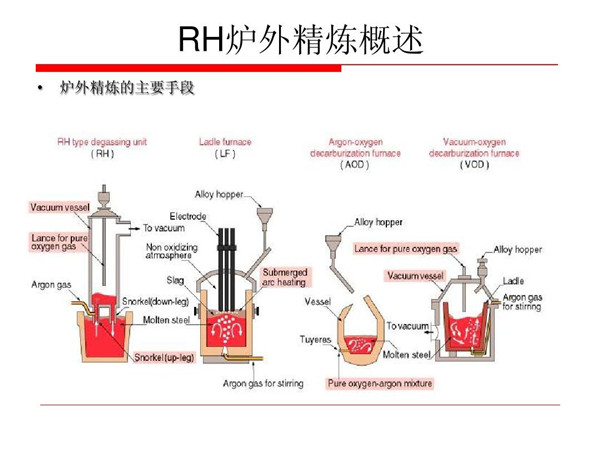
                        RH is vacuum argon blowing recycling degassing equipment for steel liquid refinery, and DH is vacuum degassing refinery equipment. By blowing high speed argon in immersion tube and vacuum chamber upper part, steel liquid in ladle will flow into bottom side of vacuum chamber and be degassed, and then flow back to ladle through the other dipping tube. Through vacuum recycling degassing, harmful gases such as nitrogen, hydrogen in steel liquid can be removed. If oxygen blowing is adopted, carbon content can be decreased to a very low extent. RH and DH refinery equipments are mainly used for low carbon steel, low nitrogen steel and low hydrogen steel. Under those working conditions, furnace lining refractory materials should have good scouring resistance, vacuum resistance and thermal shock resistance.

                        RH refinery

                        In concern of cleaning steel production, refractory materials should better contain no carbon, nitrogen and hydrogen. Usually, vacuum chamber can use magnesia chrome bricks, inner side of immersion tube can use magnesia chrome bricks, while the outer side can adopt alumina magnesia spinel castable. The service life of magnesia chrome bricks at vacuum chamber upper part can reach to 2000 times or more, but the lower part is only about 500 times. The service life of immersion tube is about 100 times, varies with working condition and maintenance quality.

                        RH furnace structure

                        Magnesia alumina spinel bricks can be a good replacement of magnesia chrome bricks, but the corrosion resistance is not as good as magnesia chrome bricks. Another replacement of magnesia chrome bricks is low carbon magnesia carbon bricks, which has good performance price ratio compared with MgO-Cr2O3 bricks. RH immersion tube can be integrally casted by magnesia alumina spinel castable or magnesia zirconia castable. Through patching, the service life of integrally casted immersion tube can reach to or exceed magnesia chrome bricks lining.

                        RH Refractory Material Physiochemical Index

                        ItemBasic mortarAlumina magnesia castableInsulating brickCalcium silicate boardDirect bonded magnesia chrome brick
                        ApplicationMasonry of magnesia chrome brickImmersion tube, vacuum chamber upper partVent pipe, vacuum chamberVacuum chamberVacuum chamber
                        MgO %92>2//80
                        Al2O3%/>9051.2//
                        Fe2O3 %//1.7//
                        Cr2O3 %////6~13
                        SiO2 %////1.98
                        Apparent porosity %////15
                        Bulk density g/cm3/≥2.90≤0.90.233.06
                        Compression strength Mpa/≥40(11o℃)7.37≥0.559.2
                        Rupture strength Mpa/≥8.4(110℃,24h)/0.52≥6.0(1200℃)
                        Reheating linear change rate %/±0.5(1500℃,3h)-0.431.5 (1500℃,3h)/
                        Refractoriness ℃>1790>1790/Max.1000/


                        ItemMagnesia gunning mixMagnesia chrome gunning mixMagnesia injection mixMagnesia carbon brickMagnesia spinel precast block
                        ApplicationVacuum chamber lower part, immersion tubeImmersion tube, vacuum chamber upper partImmersion tube, vacuum chamber upper partVacuum chamber lower part, immersion tubeVacuum chamber lower part, immersion tube
                        MgO %≥85≥70≥70≥8580
                        Al2O3%/43F.C≤510
                        Fe2O3 %/≤5≤5//
                        Cr2O3 %/≥5≥5//
                        SiO2 %≤6≤4≤5/≤2
                        Apparent porosity %≤24≤24≤24≤4≤15
                        Bulk density g/cm3≥2.2≥2.3≥2.4≥3.103.06
                        Compression strength Mpa≥25 (11o℃)≥20(11o℃)≥20(1600℃,3h)≥30 (11o℃)≥40 (11o℃)


                        ItemMagnesia chrome brickMagnesia chrome brickMagnesia chrome brickHigh alumina castableDirect bonded magnesia chrome brick
                        ApplicationRH vacuum chamber upper partRH lower part, recycling tube and immersion tubeOB gunning machine for RHVacuum chamberImmersion tube
                        MgO %8076.969.9/65
                        Al2O3%///92.8/
                        Fe2O3 %/////
                        Cr2O3 %8.410.918.67/19
                        SiO2 %1.61.461.52/≤2
                        Apparent porosity %161515/15
                        Bulk density g/cm33.053.113.002.79(1500℃,3h)≥3.12
                        Compression strength Mpa606661≥30(1500℃,3h)60
                        Rupture strength Mpa (1480℃)107.69.1≥8.4(110℃)60
                        Reheating linear change rate %///-0.27 (1500℃,3h)-0.27 (1500℃,3h)
                        Refractoriness under load ℃>1650>1700>1700/>1700
                        ItemRH gunning mixRH injecting mixCAS immersion tube castableKIP spray gun castable
                        ApplicationMasonry of magnesia chrome brickImmersion tube, vacuum chamber upper partVent pipe, vacuum chamberVacuum chamber
                        MgO %//≥4/
                        Al2O3%≥92≥92≥87≥95
                        Refractoriness ℃>1790>1790//
                        Bulk density g/cm3(110℃,24h)≥2.90≥2.60≥2.95≥3.00
                        Compression strength Mpa(1500℃,3h)≥50/≥40/
                        Rupture strength Mpa (110℃,24h)≥4.0≥4.0/≥4.0
                        Linear change rate %(1500℃,3h)±1.0±1.0/0~2.0

                          Get Free Quote

                          Your Name (required)

                          Your Email (required)

                          Your Phone

                          Required Products (required)

                          Enquiry Information